A castrum with a château, farm building and outbuildings surrounded by 13 hectares of woodland overlooking the valley, in Florac, in the south of the
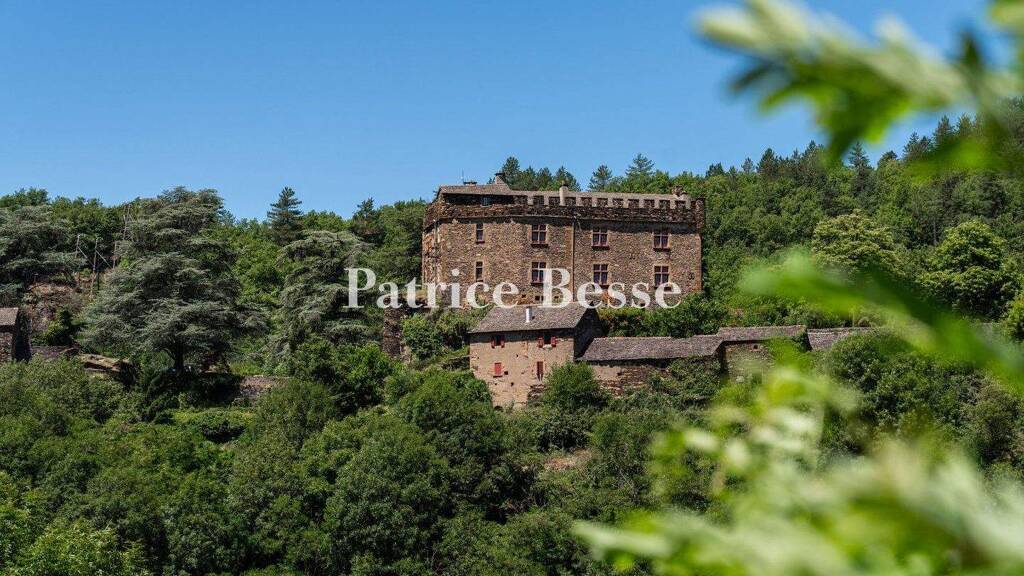
A castrum with a château, farm building and outbuildings surrounded by 13 hectares of woodland overlooking the valley, in Florac, in the south of the Lozère department.
Located in the Cévennes National Park, in a Natura 2000 zone, Florac, gateway to the Tarn gorges, lies at the foot of the Méjean plateau, a crossroads marked by its geological diversity. The schist of the Cévennes, the granite of Mont Lozère and the limestone of the Causses form a singular stone balance. At the confluence of three rivers (the Tarnon, the Mimente and the Tarn), the town once drew on the water's power. Founded in the 12th century, deeply marked by the Protestant Reformation and now a sub-prefecture, it still has a fine architectural example of a colonnaded temple from the days when silk worm farming was at its peak. With its population tripling during the summer season, the town has managed to maintain a dynamic economy. From the property, which is 1 hour from the A75, Nîmes and Montpellier can be reached in 2 hours, while Clermont-Ferrand is 2.5 hours away.
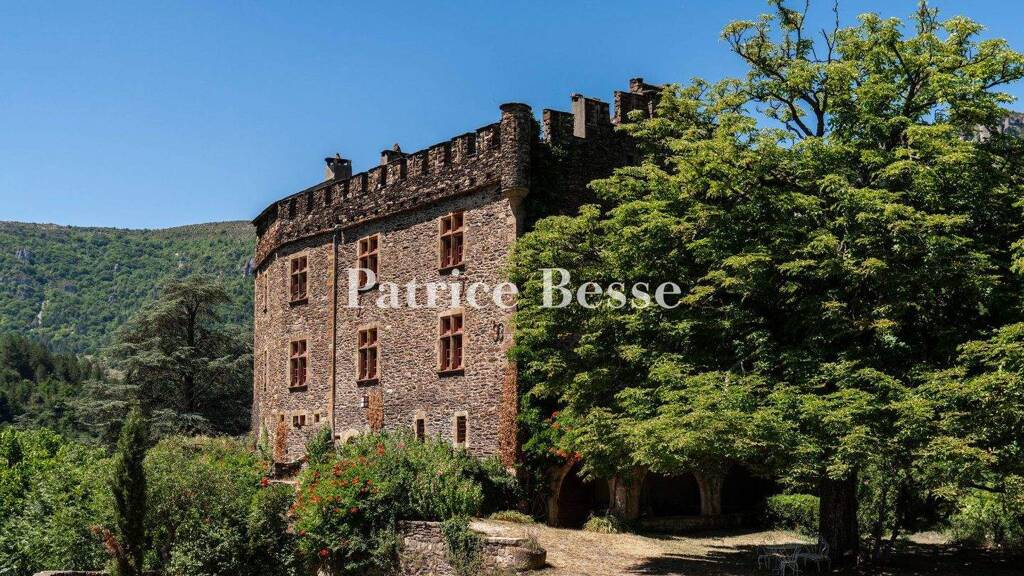
Situated in a dominant position on its rocky spur, the château with its crenelations can be seen from afar. The first foundations date back to the 12th century, but the current building probably dates back to the 15th century, when the fiefdom came under the control of the Bishop of Mende. It passed through various families through marriage and, in the 18th century, was damaged and then sold at auction during the Revolution. Acquired at the beginning of the 20th century, it has remained in the same family, who have maintained it as a holiday home until the present day. The 300-metre-long path leading to the property arouses curiosity and does not reveal its secrets until the last minute. The path opens out onto a magnificent view and the plain, which highlight the main building and the scene worthy of a painting. Built in heavy, unplastered local schist, with thick walls, the château has a certain austerity about it, typical of the Cévennes. The architecture retains characteristic traces from its origins, in particular cross windows and arched doors, while a remnant of a parapet walk enlivens the north façade. The layout of the windows is fairly regular, with ashlar surrounds and corner quoins, and small-paned windows. Built slightly below and not overlooked, the "Bancels" farmhouse occupies the southern slope. It includes a renovated house. Finally, the small house "la Gleyzette", with an independent access is slightly below to the west. The façades are made up of a schist bonding, only rendered on the dwelling that closes off the farm building to the west, with mostly straight windows of varying sizes. The roofs are of two slopes with lauze tiles. The uniqueness and unity of the estate can be seen immediately, and the absence of neighbours and low visibility from outside translate into peace and quiet for its occupants.
The châteauWith three storeys of living space, with attic space and cellars, the building has retained all the historic features that give it its distinctive character both inside and out. Once you have gone past the arched room adjoining the château, access to the south from the ground-level terrace is via a round-arched door opening onto a hallway.
The garden-level floor
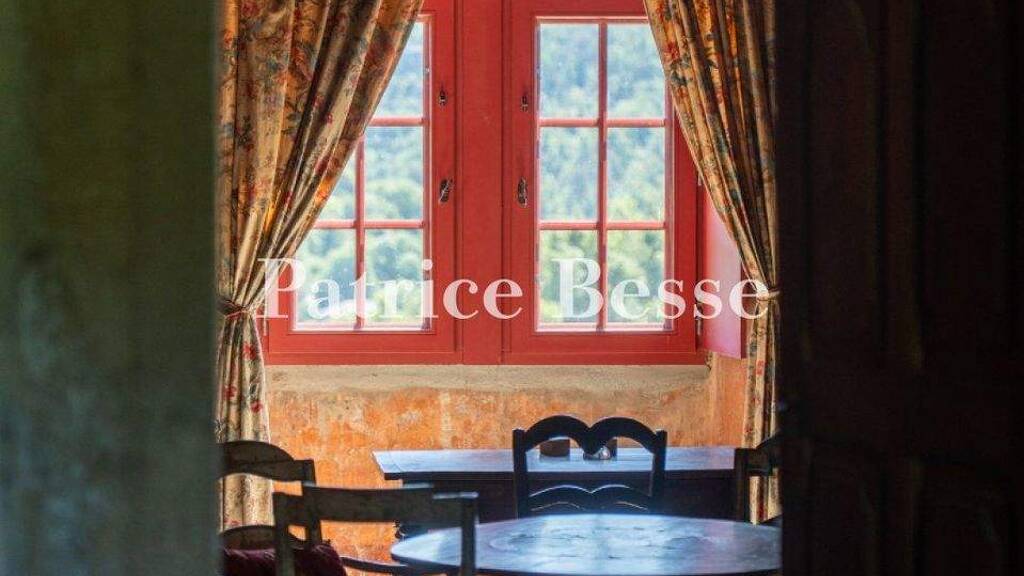
The first level features the original kitchen, perfectly preserved with its stove and fireplace, pantry and linen room, which opens onto a raised terrace, while to the east there is a vaulted dining room with plastered walls and two windows. The floors are stone, as is the staircase. At the back, to the north, several rooms are used as storerooms, workshops and toilets.
The first floor
The landing on the second floor opens onto a lounge, a covered walkway and the access landing to the upper level. The first floor has a vast lounge opening onto the covered ...