A 19th-century townhouse redesigned in an art deco style in the historical district of Arpajon, a town 30 kilometres south of Paris - ref 247166
A 19th-century townhouse redesigned in an art deco style in the historical district of Arpajon, a town 30 kilometres south of Paris.
The town of Arpajon lies in the north of France's Essonne department, equidistant from the beautiful Haute Vallée de Chevreuse and Gâtinais français regional nature parks. The property is only a 15-minute walk from a train station. From this train station, you can reach central Paris in 50 minutes by rail. A bus line takes you to Porte d'Orléans junction, on the Paris ring road, in one hour. And the N20 trunk road links Arpajon to Porte d'Orléans junction and to the outer ring road of the Paris region, so you can get onto the A10 and A6 motorways in less than 20 minutes. The town centre, which is a short stroll from the property, includes a medieval open-sided market hall, restaurants, a cinema, a library and many shops. Nearby, there are primary schools, lower secondary schools and three upper secondary schools.
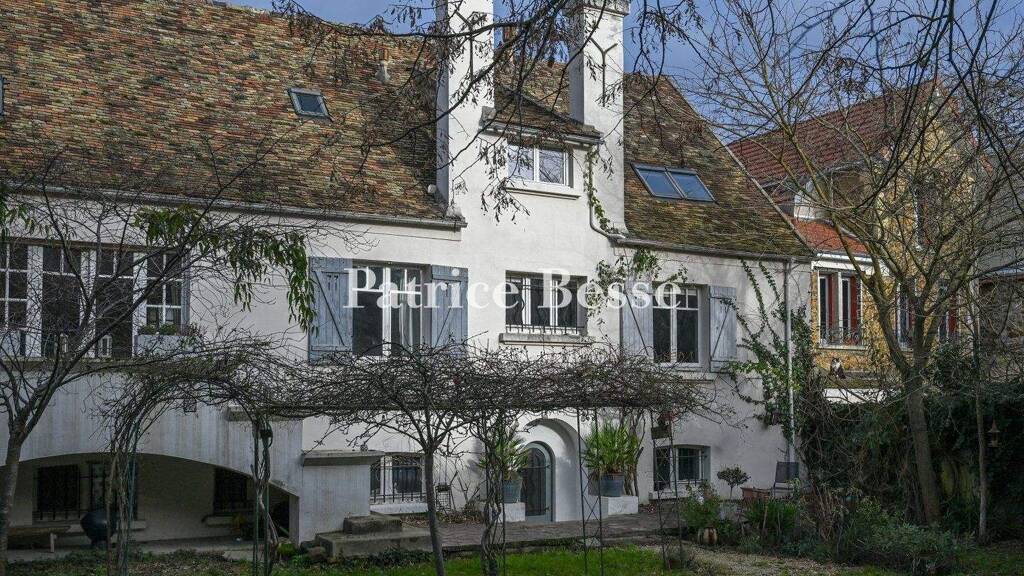
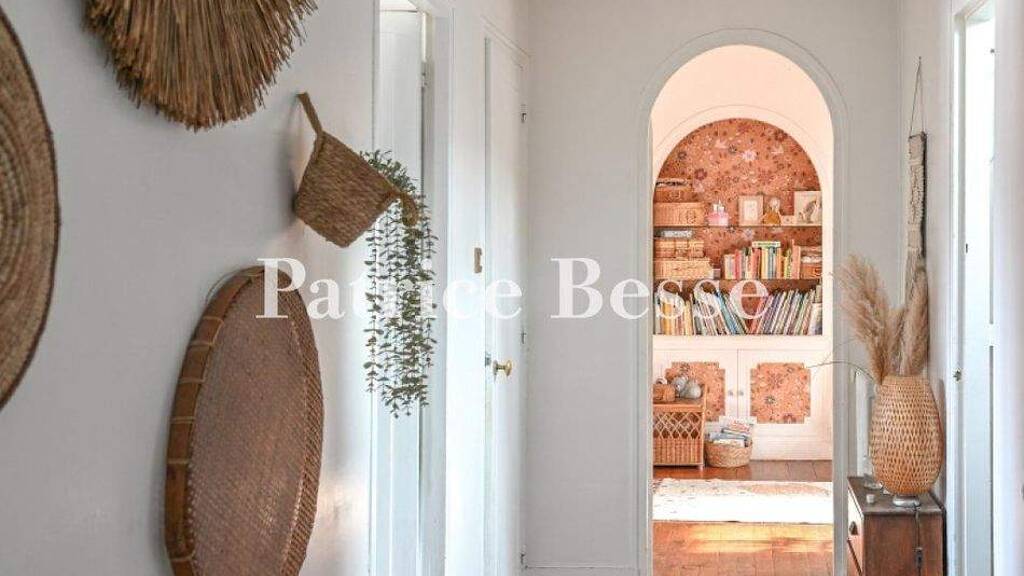
The house was built in 1850 on a 640m² plot, including 270m² for the garden and 230m² for the courtyard. The property lies on a calm residential street in the town's historical district. A carriage entrance gate leads into a large courtyard. This entrance is framed between tall stone walls. The old townhouse has kept its double layout: the main section with its staircase in the hallway and the domestic staff section that you reach via a separate door and a flight of backstairs. In the 1920s, a renowned glasses manufacturer redesigned the interior in an art deco style, creating alcoves, arched doors and vaulted ceilings. At the same time, the elevations were given new windows so that the interior would be bathed in an abundance of natural light and a large arch was added above the main entrance door, producing a dialogue of different styles. You step inside the house from the courtyard. A large alcove in the hallway heralds the house's style, which reflects the facade. Three rounded steps lead up to a raised level with three rooms and a large garage and to a main staircase, which takes you up to the first floor. A landing filled with natural light connects to a lounge, then to a dining room with a fireplace, a large fitted kitchen, a pantry and a smaller lounge or bedroom with a fireplace. On the second floor, in the roof space, which is filled with natural light, there are high ceilings. Up here, there are three bedrooms and a bathroom.
The houseThe townhouse is crowned with a gabled roof of old flat tiles. As soon as you look at the edifice, you are struck by its distinct character. The court-facing facade is symmetrical in design. It bears plain cornices and stringcourses, which underline the different floors of the house. The design naturally guides your gaze from the central door in its archway up to the shed dormer on the roof. The rear elevation is divided into four bays. It leads out onto a terrace, which you can reach from the reception room. This terrace extends the interior outside, then leads down to the garden via an outdoor flight of steps. The facade is rendered in a soothing light beige tone, which is brought out by the pale blue of the wooden shutters, the entrance door and the garage door. This creates a fine harmony of colours.
The ground floor
You enter the house from the courtyard. The entrance door leads into a hallway that connects to the two sections on this floor. On one side, there are storerooms and a door that leads straight out into the garden. On the other side, there are two bedrooms. Each one has a shower room. One of these bedrooms looks out at the courtyard and the other one looks out at the garden. They lead to the backstairs and the house's secondary entrance. The main entrance hall, which connects the two sections together, also leads upstairs via a large wooden staircase bathed in natural light from big ...