A vast, 17th century, stately residence adjoining a fuedal castle on the outskirts of Uzès - ref 350900
A vast, 17th century, stately residence adjoining a fuedal castle on the outskirts of Uzès.
On the Provencal side of the French department of Gard, just 5 minutes from Uzès (a totally listed town of art and history), in the midst of an ever-lively village, the Gallo-Roman origins of which are still visible (the illustrious Roman Pont-du-Gard aqueduct is but a few kilometres away). This residence borders a raised pedestrian square in the village, within the ramparts of the fortress. Several shops and amenities (post office, schools, doctors) are just a stone's throw away. 30 minutes from Nîmes (TGV train station and airport), 45 minutes from Avignon (TGV train station) and less than 20 minutes from the motorway network.
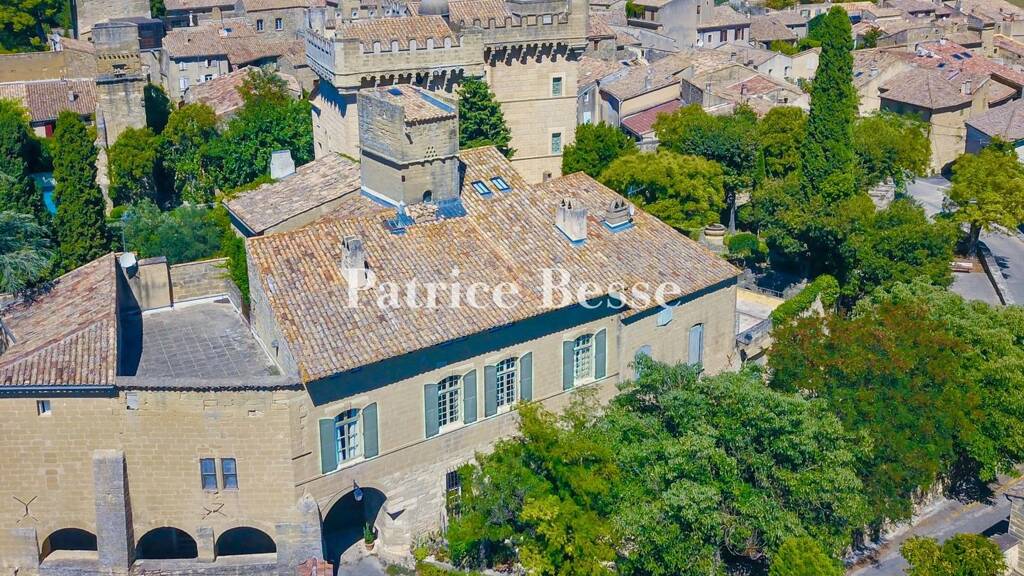
This vast, comfortable 17th century mansion house was built on the site of the old tower belonging to Uzès' Duke of Crussol. Facing the current village castle, its site is reminiscent of the wonderful homes of the numerous lords surrounding the Duchy of Uzès.
Topped with a dovecote, visible from afar and bearing witness to the fact that its co-owners were lords, this residence is set out around a little courtyard, bordered by an old road leading inside the ramparts of the fortress, now transformed into a little Mediterranean garden amidst the surrounding towers and buildings.
The two, south and north-facing buildings are connected by two covered balcony corridors on the first and second levels laid out around the courtyard.
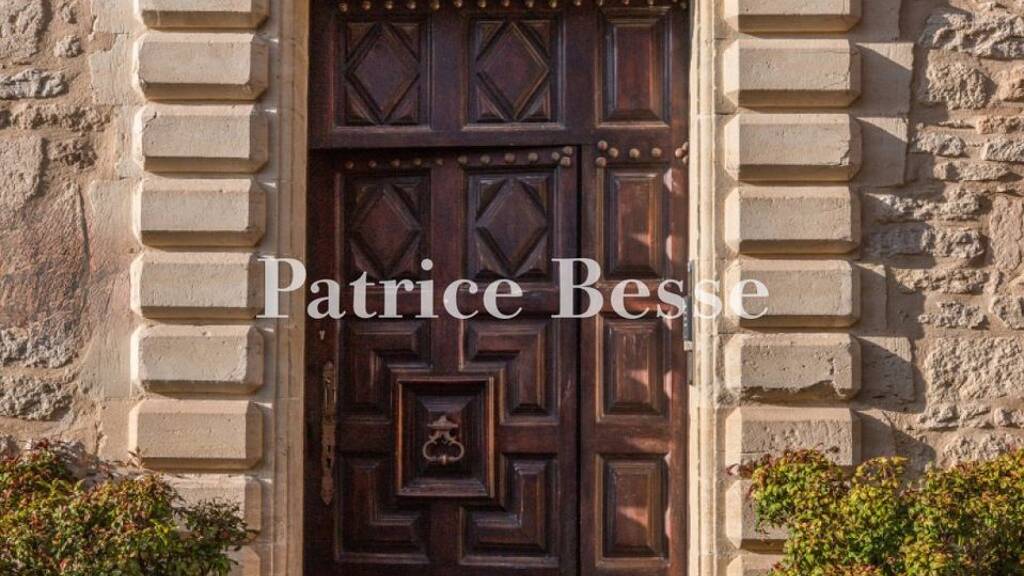
The wide, symmetrical, south facade, overlooking the pedestrian square, has two completely different facings. The ground floor is composed of simply hewn limestone blocks, whilst the first and second levels are constituted from dressed molasse (a type of sandstone), embellished here and there with limestone, particularly for the cornice enhancing the four large windows on the first level, the lintels of which outline the arches. The small-paned, casement windows fitted with double folding shutters on the first or noble floor elegantly contrast with the simplicity of the openings on the ground floor, on either side of the impressive, rusticated masonry entrance door. The eaves protrude over small windows aligned with those on the first level.
The facades on the courtyard side are very similar in appearance, except that the entire ground floor is composed of arcades, just like the Place-aux-Herbes in Uzès, and that the north building features two mullioned windows on its south and west sides. All the roofs are covered with old Roman tiles.
The 17th century mansion houseThis mansion house spans three levels constructed over cellars. The south building has vaulted rooms on the ground floor. The first level has adjoining reception rooms, with high ceilings, as well as numerous rooms overlooking the courtyard. The layout on the second floor is essentially the same as that of the floor below, the rooms featuring sloping ceilings under the rafters. A single stairway provides access to the cellars and upstairs. The inner courtyard and the garden are reached either via gates off the street, or via a door on the ground floor by the stairwell. The north building can be accessed on the first and second levels by covered balcony corridors, looking down on to the courtyard.
The ground floor
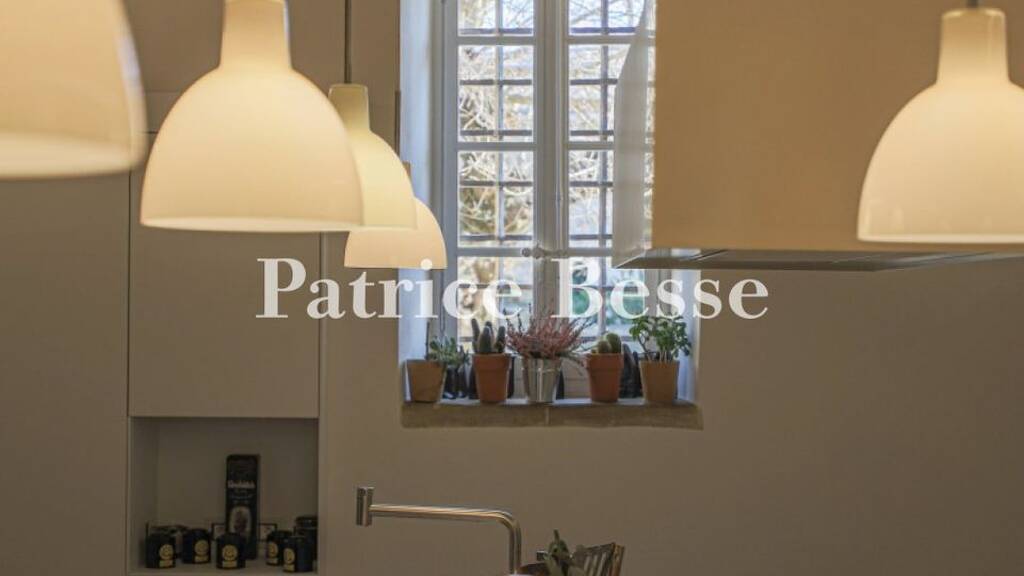
The ground floor comprises three rooms laid out in the south building: a vast, cross-ribbed room, featuring a keystone engraved with the year 1679, a second room in use as a kitchen, extended by a small storeroom and, lastly, the stairwell.
On the courtyard side, a porch and an outdoor, vaulted dining room take up the rest of the space on the ground floor.
The interior floors have recent coverings. The courtyard is, however, paved with large, old, "Bar de Beaucaire" flagstones. The walls are rendered and whitewashed, with the exception of the stairwell and the vaults all feature ...