A 16th-century country house with a renovated dwelling, nestled in one hectare of lush grounds with a lake and orchard near the town of Morlaix in Bri
A 16th-century country house with a renovated dwelling, nestled in one hectare of lush grounds with a lake and orchard near the town of Morlaix in Brittany.
The property is nestled in northern Finistère in a hamlet of several homes. The quaint town of Morlaix is no more than 15 minutes away by car. The unspoilt coast and beaches of Locquirec and Carantec are a 35-minute drive away. The nearest village with shops lies four kilometres from the property. From Morlaix train station, you can reach Paris in three hours by high-speed rail. Brest and its airport are about 40 minutes by car from the site.
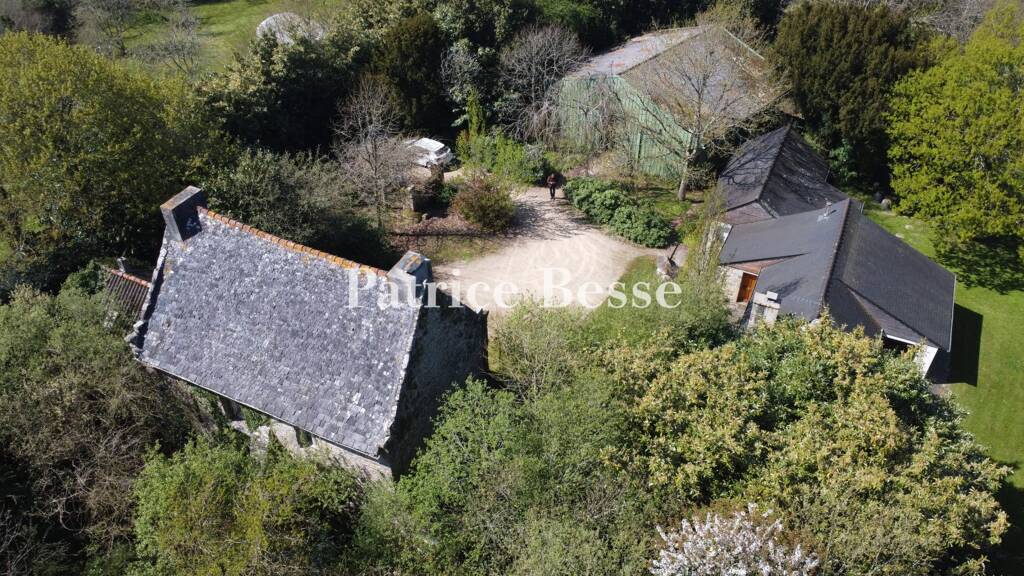
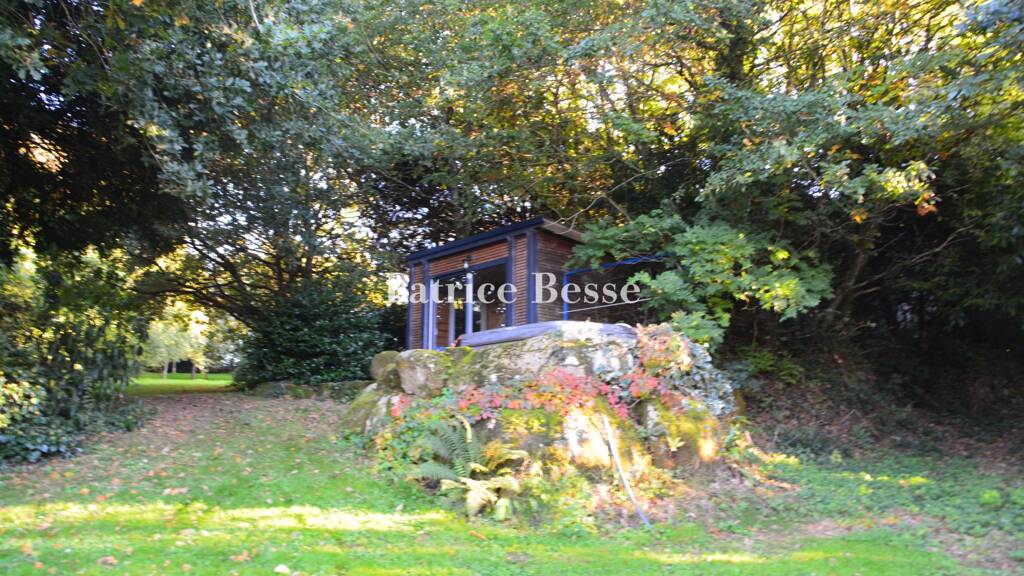
This beautiful property offers absolute privacy, far from the main roads. It is close to places that are full of life, yet isolated enough to be an oasis of bucolic calm. A little road leads up to the estate, the entrance to which opens out into a courtyard where an old country house and a charming dwelling stand. Behind them, a garden dotted with fruit trees slopes gently down to a summer lodge that overlooks a lake at the bottom. Facing the courtyard entrance is a passage into a vegetable garden.
The renovated dwellingThis house was recently renovated with high-quality materials. It is made up of two former outbuildings that have been cleverly joined together. It blends seamlessly into its landscaped environment, neighbouring the old country house at a right angle. The dwelling is spacious and comfortable. It is built of rubble granite and crowned with a gable slate roof. It has a single floor.
The ground floor
The main entrance door is in a gable. It leads to a wide tile-floor hall. The hall is coated with lime-hemp plaster and bathed in daylight from a large picture window that looks across the old country house's courtyard. On one side, this hall connects to a private section made up of bedrooms and a shower room. On the other side, it leads to two big reception rooms and a kitchen. The living room is extensive, with a considerable ceiling height and exposed beams and framework. A picture window fills it with daylight. Its floor is tiled with warm hues. The walls are lime-coated and a granite fireplace is fitted in a corner. The kitchen is subtly laid out opposite. Right of the hall, another passage takes you into the dining room, which is flooded with daylight from picture windows that look out into the garden behind. From the hall, a door leads to a corridor that connects to two large bedrooms, a shower room and a lavatory. Each bedroom is brightened up with daylight from picture windows that overlook the garden.
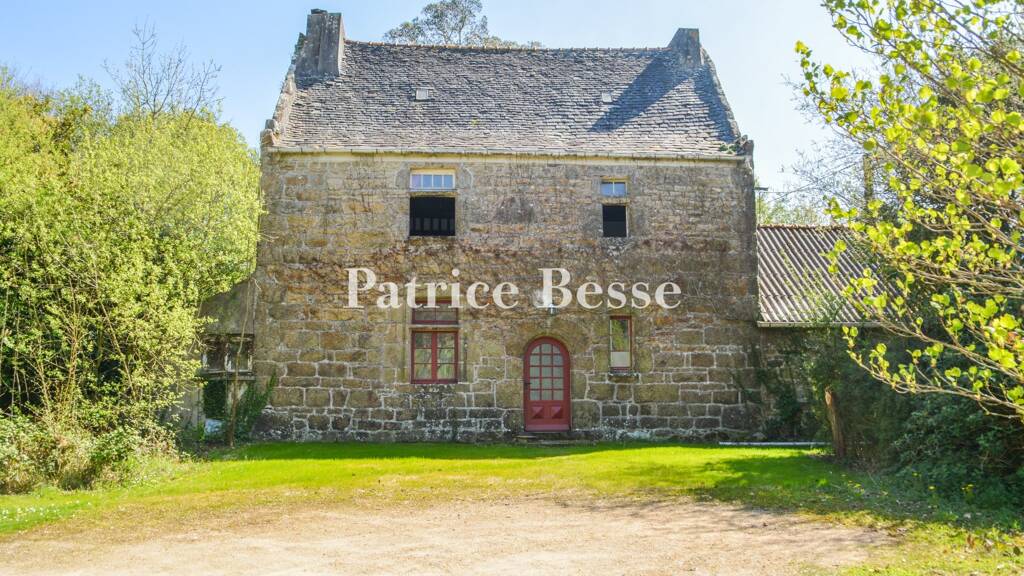
The 16th-century country houseThe old country house's architecture reflects the period when it was built: a transition between the Gothic style and the Breton Renaissance. The main building, built from the 16th century onwards, is made of rubble granite and crowned with a gable slate roof. Two chimney stacks rise up from this roof. The facade of this two-storey edifice is punctuated with four windows with single horizontal stone bars, neatly framed with dressed granite stone. In line with this building, a wing made of rubble granite extends beneath slate roofing on one side of the house. And on the other side stands a recent lean-to to be renovated. An arched door forms the entrance in the house's facade.
The ground floor
The main entry door, in the middle of the house, leads to a wide room with a tiled floor and exposed beams. The walls are lime-coated. Two sections have kept the pointed stonework bond. The entrance leads into a large room that contains a wooden staircase. The living room is spacious and features exposed beams. Windows brighten it up with daylight and a door opens out to the rear. A granite fireplace is capped with a dressed-stone lintel. On one side, a door leads to the ...