A renovated 14th-century dwelling with an interior courtyard and medieval tower, in the middle of a historical Brionnais city, in the south of Burgund
A renovated 14th-century dwelling with an interior courtyard and medieval tower, in the middle of a historical Brionnais city, in the south of Burgundy.
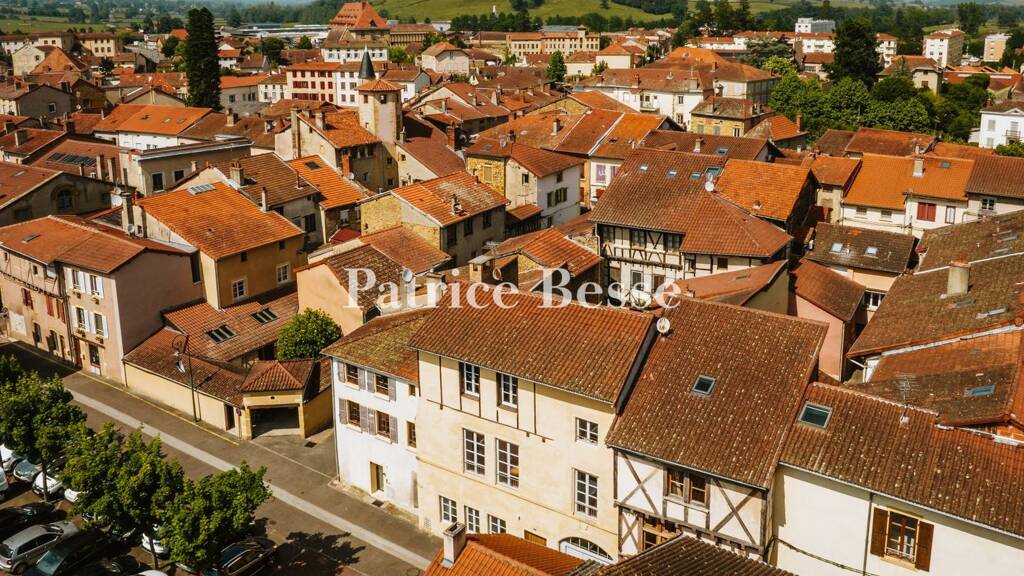
Within the small natural region of Brionnais, situated in southern Burgundy and known for its Romanesque churches, chateaus, gastronomy and verdant landscapes, the dwelling is located in the historical downtown area of a town proud of its living heritage and ranked as one of the "hundred prettiest detours in France". Neighbouring a 9th-century abbey, the village square and half-timbered houses, the dwelling is near many shops as well as a weekly green market, while the town also includes private and public schools, from early childhood to upper secondary. In addition, access to the nearby motorways makes it possible to quickly reach regional capitals such as Roanne and Mâcon, as well as the high-speed rail stations of Lyon-Saint-Exupéry and Creusot.
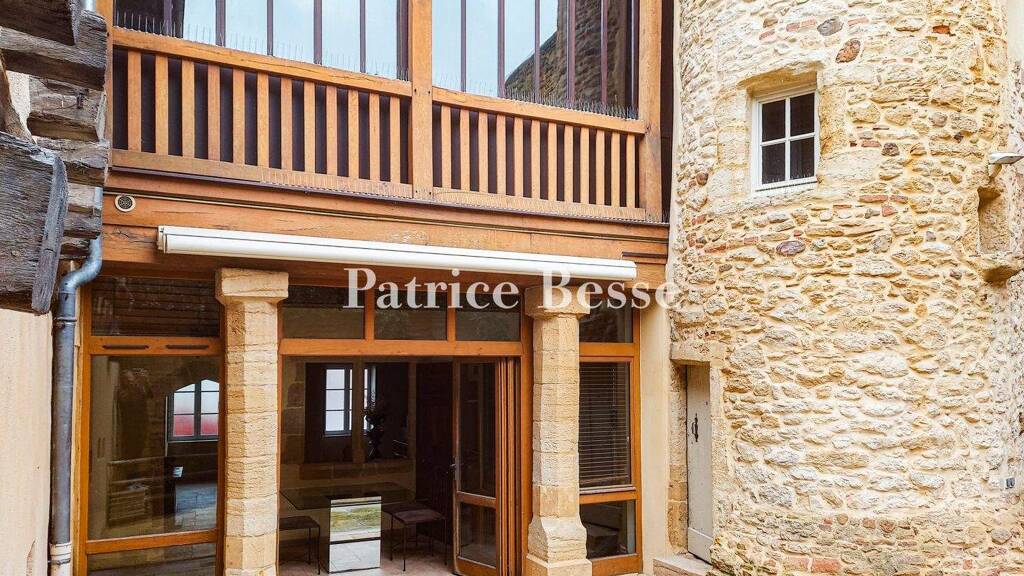
The three-storey dwelling is located along the edge of the town hall square, where the fresco marking the 1,150th anniversary of the Saint-Fortuné de Charlieu abbey was recently inaugurated. Along with the town's other historical dwellings and timber-framed buildings, the property is part of a preserved medieval ensemble and boasts a freshly refurbished lime plaster façade and a Sainte-Foy tile gable roof, also recently restored. As for the dwelling, with a floor area of approximately 184 m², it includes a 14th-century building, facing west towards the courtyard and a medieval tower, which provides access to the house's galleries located on each of its three floors. Sharing common walls on all sides with the neighbouring dwellings, a separation wall covered in honeysuckle demarcates one side of the courtyard.
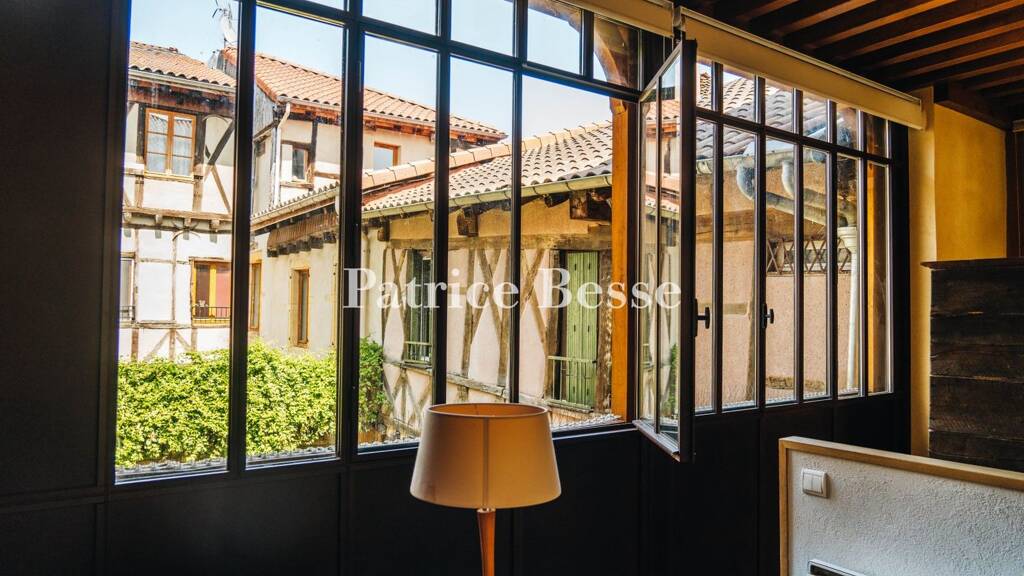
The Main DwellingWith its initial layout and several of its original materials still in place, including its timber framing, the dwelling has undergone a full renovation.The Ground FloorThe solid wood front door opens onto a hallway, fitted with a number of cupboards, which provides access to the original gallery, topped with sculpted stone corbels that support imposing oak rafters. With stone floors and lime plaster walls in neutral and light-colour tones throughout this level, the hallway also leads to the main living room, decorated with a massive local stone fireplace, as well as a laundry room and the garage. As for the ancient gallery, now incorporated into the dwelling itself, it contains the staircase that provides access to the first floor, a lavatory, as well as a storage room used as a pantry, while the adjacent dining room, bathed in natural light thanks to a picture window facing the courtyard, abuts the fitted and fully functional kitchen. The First FloorLinked to the ground floor via a double-turn staircase, the steps of which have been worn down by time, the first-floor landing provides access to the gallery, currently used as a study - modernised and fitted with a fixed atelier-type window - which provides access to the medieval tower at one end. With doors and windows surrounded by finely carved ashlar stone, the exposed beam ceilings are supported by sculpted stone corbels, while a small side corridor provides access to the sleeping quarters, which include a bedroom, a bathroom and a separate lavatory.
Following on from here, is a space used as a study, an adjacent fitness room and a large bedroom. With hardwood floors throughout, except for one bedroom and the small corridor, clad in two-toned terracotta floor tiles, an adjoining shower room is fitted with a double washbasin and relaxing amenities such as a two-person sauna, the latter of which is fully ventilated for seamless performance, while recessed lighting has been ...