An entirely renovated, 295-m² flat, in a neoclassical chateau, thirty minutes from Paris - ref 307543
An entirely renovated, 295-m² flat, in a neoclassical chateau, thirty minutes from Paris.
The flat is located approximately 20 kilometres south of Paris in the Ile-de-France region, within the Essonne department. The area, which was once the home of noble families, powerful abbeys, the bourgeoisie and, finally, artistic circles and Parisian intellectuals, became a sought-after residential area in the 20th century and was even the site of the first garden city in France. Today, the city is mainly residential and is naturally protected by the Sénart forest and the banks of the Seine. In addition, it is ideally located near national thoroughfares, such as the N6 and N7 A roads, which facilitate access to the Francilienne ring road and other major motorways.
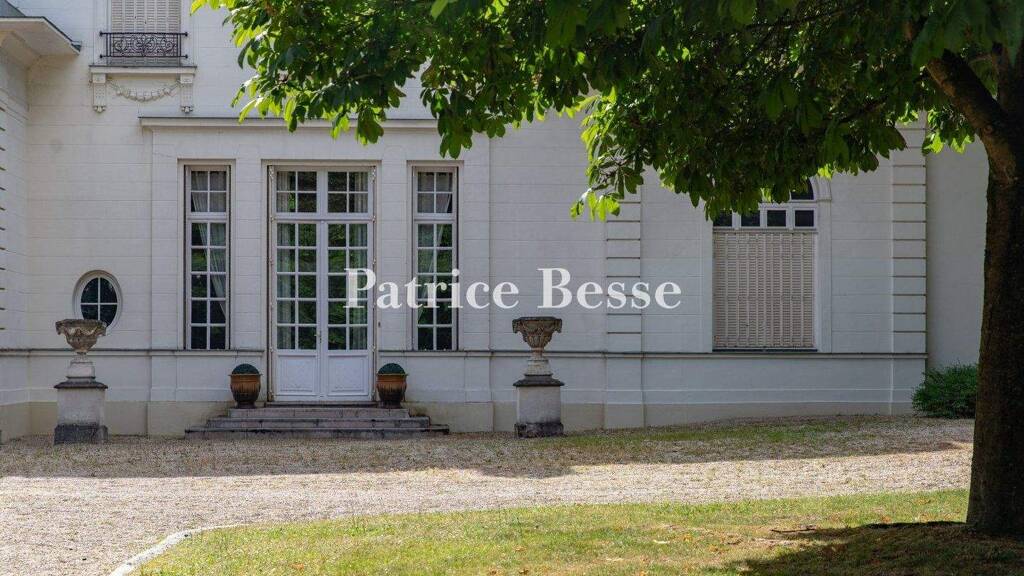
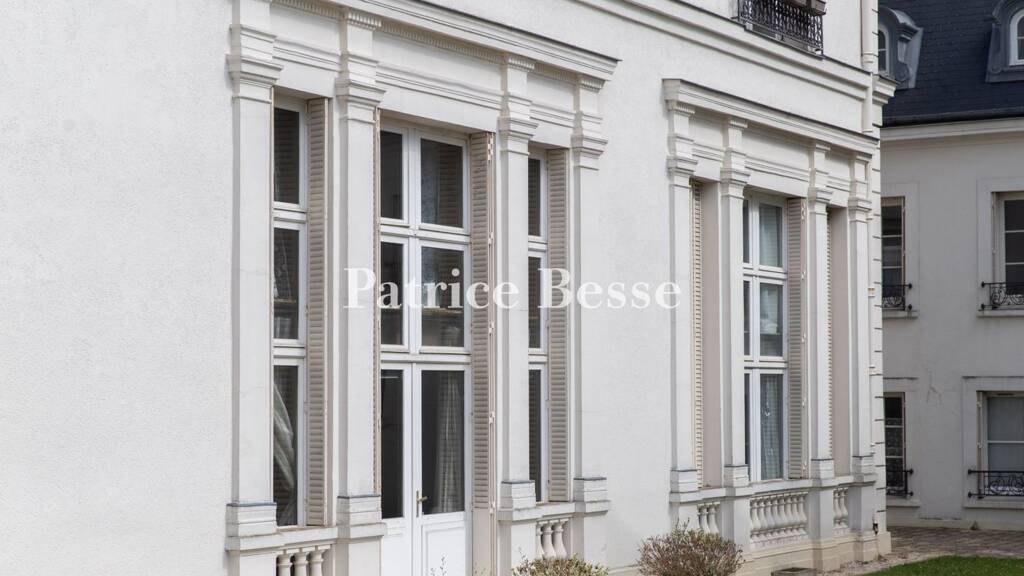
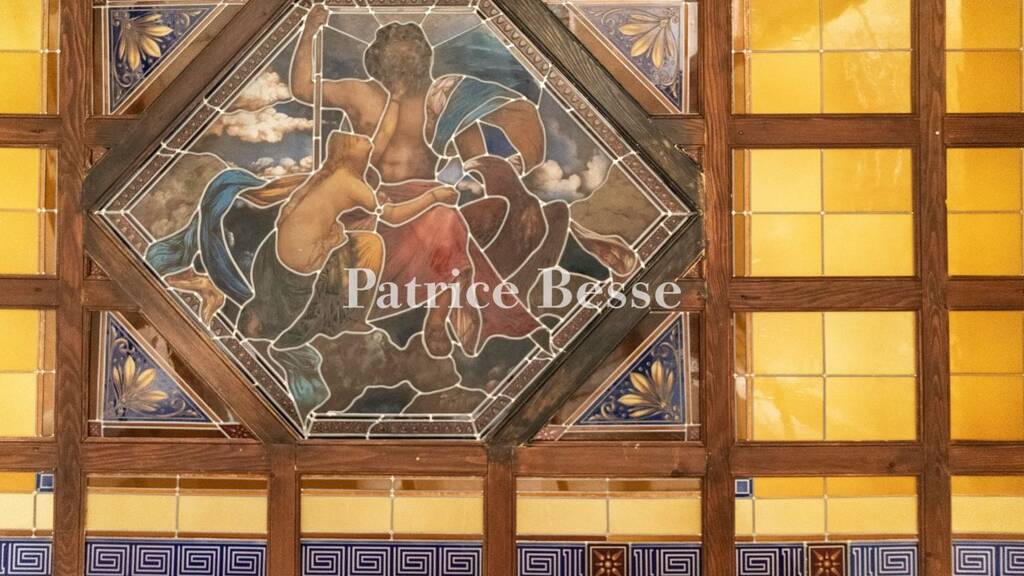
Behind a wrought-iron gate and sheltered from view, the chateau stands proudly behind its contemporary-looking courtyard. According to archival records, in 1746, the estate was first bought by the farmer-general Marin de La Haye, before it was acquired in 1790, on the eve of the Revolution, by Madame de Saint-Sauvery, who built a house here, which would then be transformed in the middle of the 19th century into a chateau with an eclectic architectural style by the architect Cannissié, who added an Italian neo-Renaissance style chapel, connected to the central building via a gallery, and designed stables inspired by Swiss chalets. In 1873, an outdoor sitting area covered by a metal and glass truss frame was constructed next to the stables by the André et Fleury company of Neuilly-sur-Seine, while, in 1857, the estate was purchased by the two brothers of the industrialist Jules Laveissière, owner of the chateau at that time, who then carried out an in-depth renovation and replaced it with a neoclassical style edifice in 1902. Lastly, in the 1990s, a four-storey, L-shaped building was attached to the back of the plaster-coated brick chateau, the central building of which is topped with a long-span gable roof and flanked by two protruding wings, which are, in turn, crowned with long-span hipped roofs. In addition, the central building is extended by a forepart on the ground floor topped with a terrace, as are the two side pavilions located on either corner.
As for the flat, it occupies the first two levels on the chateau's western side and faces the garden and ornamental pond, while the commonhold property, set within immense grounds of 1.5 hectares, includes three buildings in total: the chateau, the stables and the recent neoclassical-style wing.
The Flat
The ground floor
The flat's front door opens onto an initial immense room of approximately 50 m² with immaculate white walls and a stone tile floor, which could be used as a drawing room or dining room. To the left, an elongated space with hardwood floors, accessible via three sliding doors, could be used as laundry room, while a second sitting room boasts a decorative mosaic floor motif that extends in front of a massive neoclassical-style fireplace adorned with a reconstituted ashlar stone mantel and a brick fireback. In addition, the room enjoys abundant sunlight thanks to its many rectangular small-paned, wood-framed windows and provides access, behind a contemporary staircase, to a third large living room of more than 60 m², comparable to the first. Last, but not least, adjacent to the latter is an immense fitted kitchen, accessible via double doors, followed by a small storeroom and a furnace room that could be reconverted for other purposes.
The upstairs
With moulded ceilings in graphic geometrical patterns throughout this floor, the flat's wood and tempered glass staircase opens on to a large landing with an initial bedroom with hardwood floors, which is illuminated by the indirect light coming from the first drawing room on the ground floor. To the right, a spacious bedroom of ...