A former 18th-century monastery and its garden, in the fortified village of Mareugheol, within the Puy-de-Dôme department - ref 126643
A former 18th-century monastery and its garden, in the fortified village of Mareugheol, within the Puy-de-Dôme department.
Located in the west of the Auvergne region and the Puy-de-Dôme department, Mareugheol is one of the best-preserved fortified villages in the area. Built by its inhabitants in the 14th and 15th centuries in order to protect themselves from plunderers during the Hundred Years War, today the fortified village still bears the vestiges of its medieval origins, with its narrow lanes, densely packed edifices and the remains of its quadrangular ramparts, while from the village, perched on a hill, the view extends over a rolling landscape alternating between farmland and forests, creating a mosaic of constantly changing colours.
Featuring a rich cultural heritage with the Battle of Gergovia Museum, Gallic archaeological sites, Romanesque churches and the immersive Aventure Michelin Museum, this exceptional region also boasts the Chaîne des Puys - Limagne Graben natural region, a Unesco World Heritage Site, as well as the Volcans d'Auvergne regional natural park. As for the property, it is located below the fort on a quiet street and, up until the Revolution, housed a chapter of monks, before being occupied in the 19th century by the Sisters of Our Lady of Mercy from Billom.
In addition, shops and services are located ten minutes away by car and the charming hamlet provides easy access to Issoire in less than twenty minutes and Saint-Flour in forty minutes, via the A75 motorway, the slip road to which is about a dozen kilometres away, while Clermont-Ferrand and Le Puy-en-Velay are one hour and 1.5 hours away, respectively, by car.
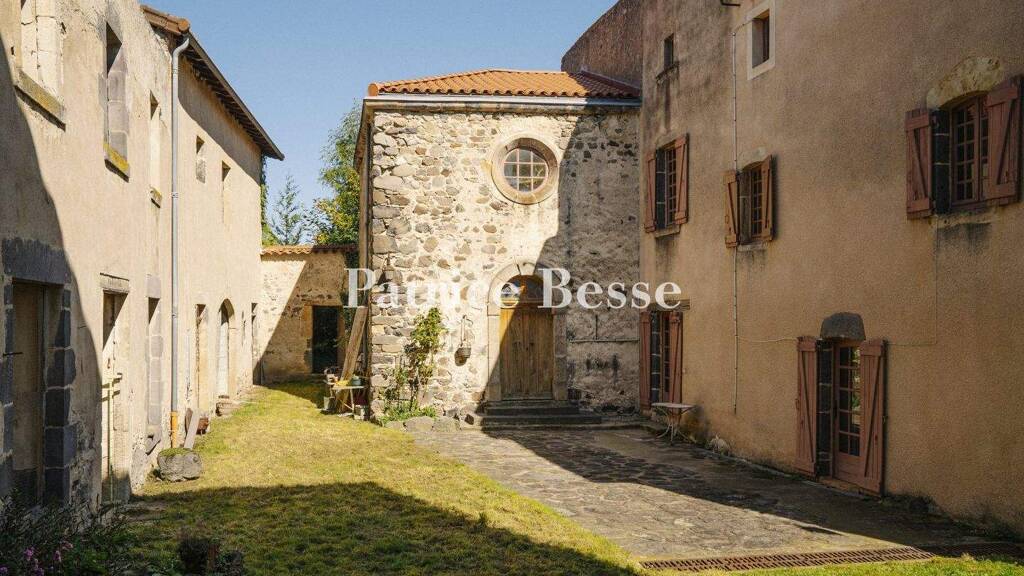
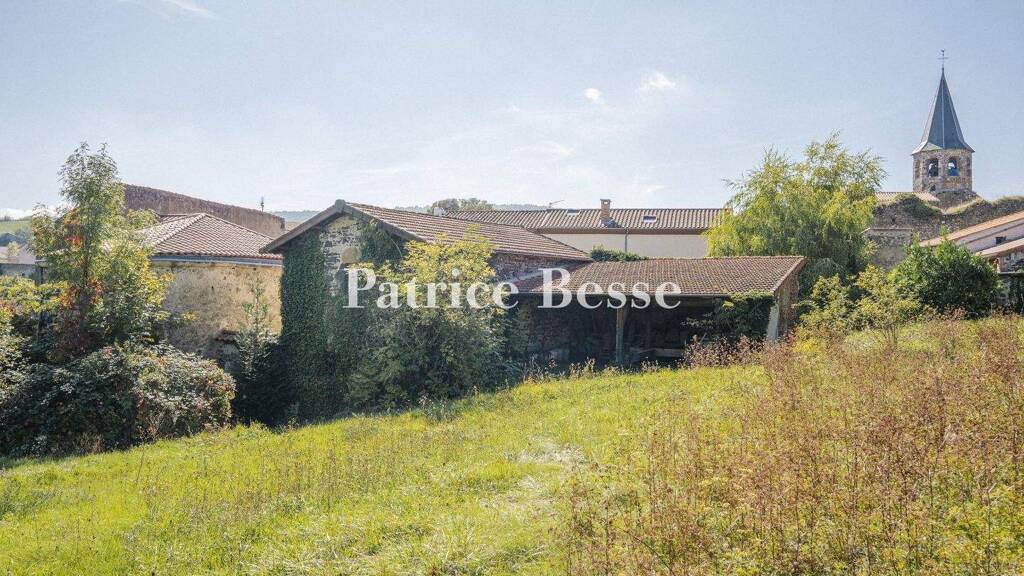
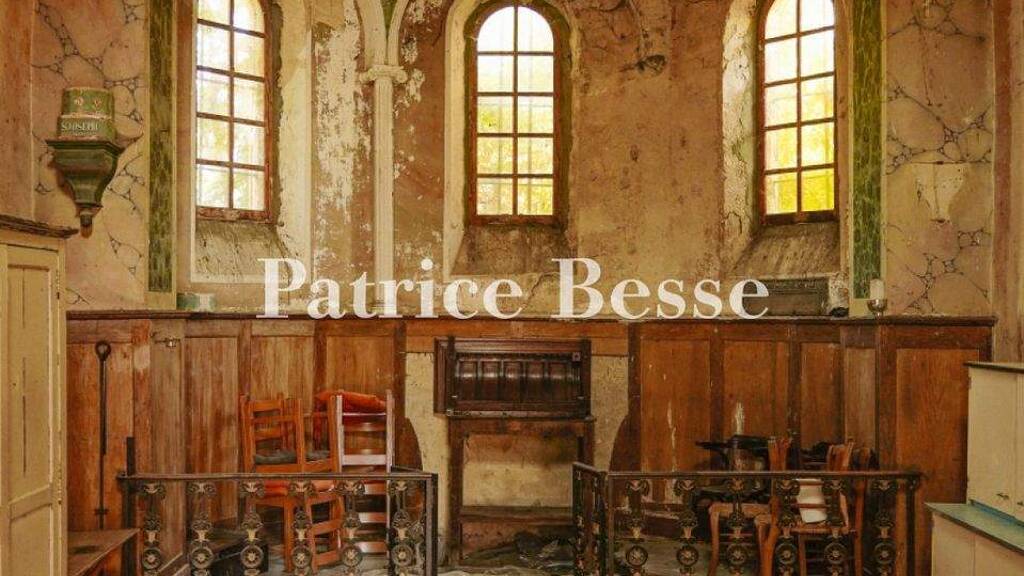
The dwelling is concealed behind a carriage entrance gate and a pedestrian door, topped with a niche with a statue of the Virgin Mary, while the former monastery, grouped around an interior courtyard, features a main dwelling with southern-style architecture: red tile roofs, highlighted with genoise cornices, ochre plaster and red louvred shutters. Extended to the north by a second building with two storeys as well as to the southwest with a former chapel, the property also includes many outbuildings, such as cellars, an old fermentation room, a former parlour and a storeroom. As for the back garden, planted with lilacs and cherry trees, it reaches all the way to the cemetery.
With approximately 170 m² of inhabitable floor area, the main dwelling features thick walls as well as vaulted ceilings, which keep the house nice and cool during the warm summer months. Last, but not least, the main façade, facing south, has three different entrances, one of which is accessible via a staircase that communicates directly with the first floor.
The Main DwellingResulting from the transformation of a former monastery, the rectangular, three-storey building is topped with a barrel tile hipped roof, typical of the region, while its three-storey construction is characteristic of village dwellings in a mountainous region such as this one. In addition, its many wings reflect the different extensions that were added to the monastery over the centuries, but its architecture was readjusted so many times that, today, the original building blends in seamlessly with the later constructions. As for its different levels, they are connected by flights of ascending or descending stairs, which create the house's central backbone.The Ground FloorPast the front door, the premises reveal the charm of an ancient dwelling, while a recent stone and briquette fireplace indicate that this entry space was once used for another purpose. Providing access to the vaulted dining room with roughcast textured walls, the beating heart of this dwelling features a floor area of approximately 42 m², ideal for lively conversations as ...