A large burrstone house to be reinvented, with vast living spaces, four bedrooms, a workshop and two enclosed garages, nestled in Châtillon, bordering
A large burrstone house to be reinvented, with vast living spaces, four bedrooms, a workshop and two enclosed garages, nestled in Châtillon, bordering Clamart.
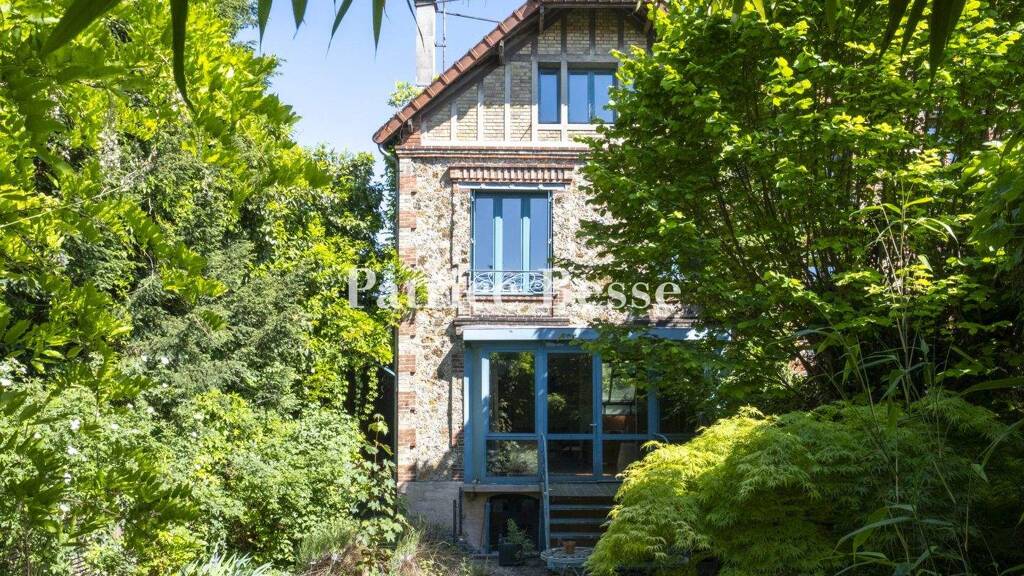
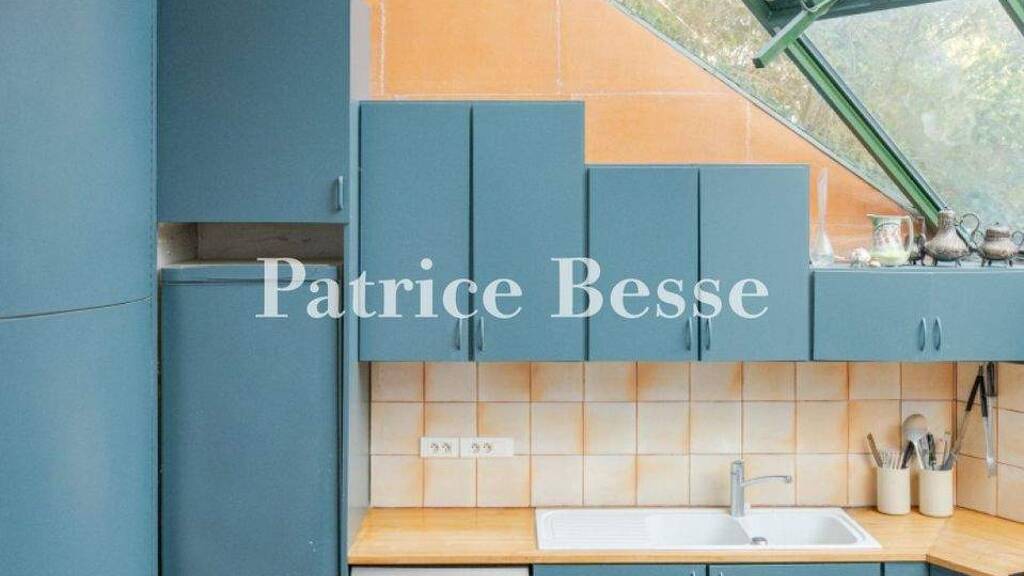
Dating back to the early 20th century, the three-storey burrstone house with a basement level is highlighted on its exterior by beige and red brickwork, cast-iron lintels adorned with glazed-ceramic flowers, and Art Nouveau guardrails. The reception room, which opens onto the garden through a large bay window created in the 1990s, measures over 55 m² and features a working fireplace. A terrace on stilts provides access to the garden. The lounge is adjacent to a kitchen with a glass roof that is accessible after descending a few steps. The kitchen overlooks a room that could be used as a conservatory or workshop that communicates with the semi-underground basement level.
The first floor includes three large bedrooms, which look out over the calm neighbouring gardens, as well as a bathroom with a window and a separate lavatory. On the second floor, there is a spacious bedroom with an open bathroom, a separate lavatory and a terrace built into the roof.
Lastly, in the garden, a separate workshop with an arched window and its own shower room and lavatory, blends harmoniously into the vegetation and adjoins two closed garages - with surfaces of 14 m² and 16 m² - that can be easily reached from the road.
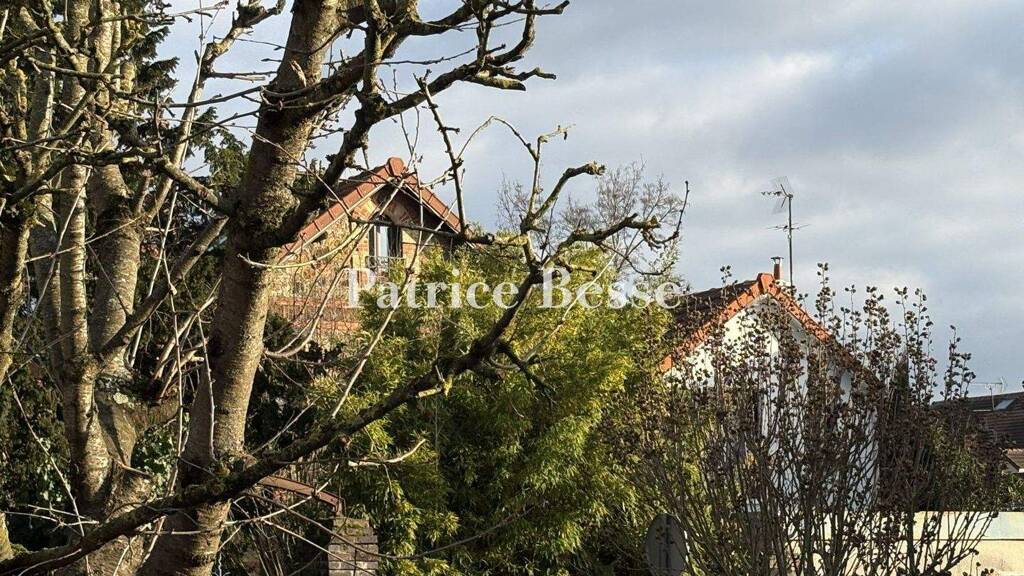
The houseThe right side of the house adjoins an edifice from the same era, which, since then, has been divided into flats, while the other sides of the dwelling do not adjoin any other structures.
The burrstone facade is embellished with touches of beige and red brickwork. The first-floor windows and the living room's side window have preformed cast-iron lintels, adorned with glazed ceramic flowers. They are framed within a fine decor of brickwork and Rocaille-style burrstone. The windows are also safeguarded with Art Nouveau-style guardrails and traditional metal louvred shutters. The upper part of the house, along the second floor, is decorated with beige brickwork and a plaster geometric pattern, a modern reinterpretation of timber framing. This decor showcases a triple-casement window beneath the eaves of the roof's clipped hipped end.
The garden-level floor has a large picture window, the metal and wood frame of which repeats the original bluish colour of the windows and louvred shutters. Installed in the 1990s where the main room's two windows used to be, it gives onto the garden via a wooden terrace and serves as a viewpoint for admiring the vegetation outside.
On the left side of the edifice, a conservatory leads to the main entrance hall. At the back, an extension beneath a glazed roof was built where there used to be a courtyard, creating a bright space that has been transformed into a kitchen and conservatory.
The garden-level floor
When you step through the original wooden front door, topped with a fanlight and punctuated with glazed portions decorated with wrought-iron arabesque motifs, you reach a short hallway that leads to the reception rooms as well as the basement and first floor. A spacious reception room with contemporary boat-deck style flooring and comfortable proportions stands to the right. Its size easily accommodates a lounge area and a separate dining area. The large window overlooks the garden, providing afternoon light and views of the greenery. In the right-hand corner, a black-marble Napoleon III-style fireplace with lion-claw jamb bases, will provide roaring fires once it has been swept. Outside, the terrace upon stilts, which is level with the living room, cleverly extends the reception space and makes it possible to enjoy the garden in spring, while its structure allows natural light to reach the semi- underground basement.
The spacious reception room communicates, after descending a few steps, with ...