A former municipal tax collection office renovated into a village dwelling, between Mount Lozère and Mount Aigoual, in the Cévennes National Park - re
A former municipal tax collection office renovated into a village dwelling, between Mount Lozère and Mount Aigoual, in the Cévennes National Park.
On the southern border of the Lozère department and within the Cévennes National Park, the dwelling, at 900 metres in altitude along France's drainage divide and benefitting from a mountain climate, is located in a village whose history is firmly rooted in the former nobility of the historical Gévaudan province, which was once the site of one of the twelve fiefdoms that provided eligibility to the States Provincial. As a region steeped in history, in the early 18th century it was upset by the Camisards revolt and, today, is listed as a Natura 2000 site within immediate proximity to the Stevenson trail, ideal for setting out on long hikes through the surrounding peaks and valleys.
In addition, the area is part of the great Mediterranean mixed farming cultural landscape of the Causses and Cévennes regions, recognised as Unesco World Heritage in 2011, where nature and history go hand-in-hand on a daily basis. In approximately twenty minutes, Florac-Trois-Rivières contains all the services found in a subprefecture, while, only 10 kilometres away, Sainte-Croix-Vallée-Française contains local shops as well as a typical Cévennes Sunday green market. As for the city of Alès, sixty kilometres to the east, it provides rail service to the high-speed rail station in Nîmes, whose trains can reach Paris in only three hours, whereas Nîmes also boasts an airport with regular connections to London, Brussels, Dublin and Porto.
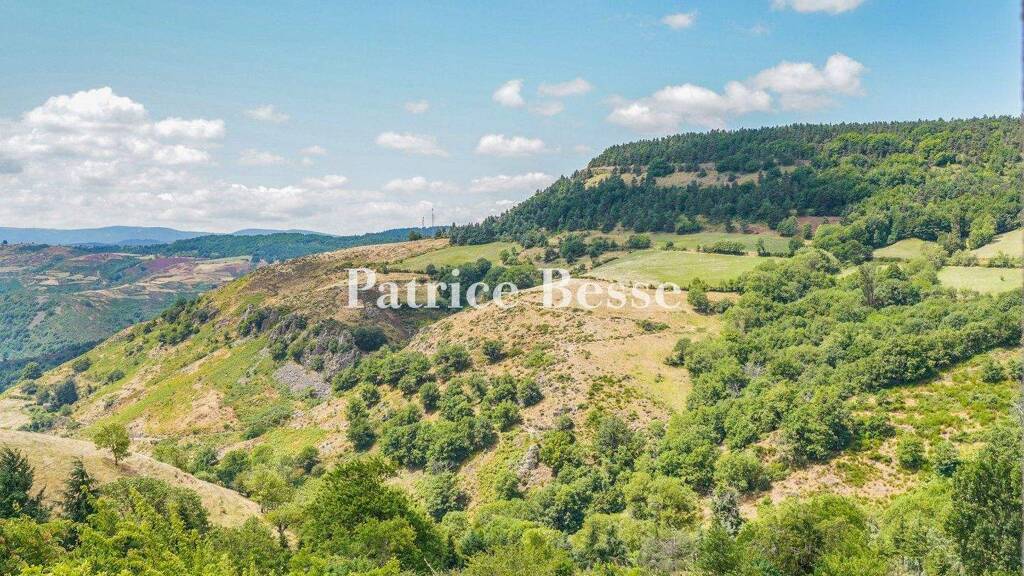
In the village, the former municipal tax collection office - which once housed the local school a century ago - has been entirely restored and converted into cosy guest accommodations. With approximately 170 m², the house stands out thanks to its high ceilings and rooms bathed in light, which provide 180° panoramic views of the surrounding Cévennes valleys that extend as far as the eye can see. Facing south, it marks the village's southern border and is extended by a wooden patio that seems to float above the landscape. As for its renovations, they were able to conserve the soul of the premises, while still retaining its original materials and incorporating all modern comforts, such as a pellet furnace, fibre optic cable, a contemporary kitchen and bathrooms.
The DwellingWith two storeys as well as a cellar and a converted attic level, it stands out thanks to its new Lauzes slate roof as well as its double-glazed, wood-framed windows, chestnut floors and stone window/door surrounds.
The ground floor
From the village's main street, a few steps lead to the dwelling's front door, which opens on to a foyer, of approximately 15 m², designed to welcome visitors. With a guest lavatory, it leads to a large living area, which includes a kitchen and a dining room over approximately 44 m², bathed in light and with spacious floor-to-ceiling heights. Featuring stone floor tiles as well as original paint on some of its walls, it was tastefully renovated in a contemporary style, while the whole is heated by a wood-burning stove and a glass door opens on to a wooden patio, of approximately 14 m², looking out towards the landscape. As for the kitchen, designed with a modern and practical feel, it is separated from the living area by wood-framed atelier windows and comes with state-of-the-art appliances and built-in cupboards.
The first floor
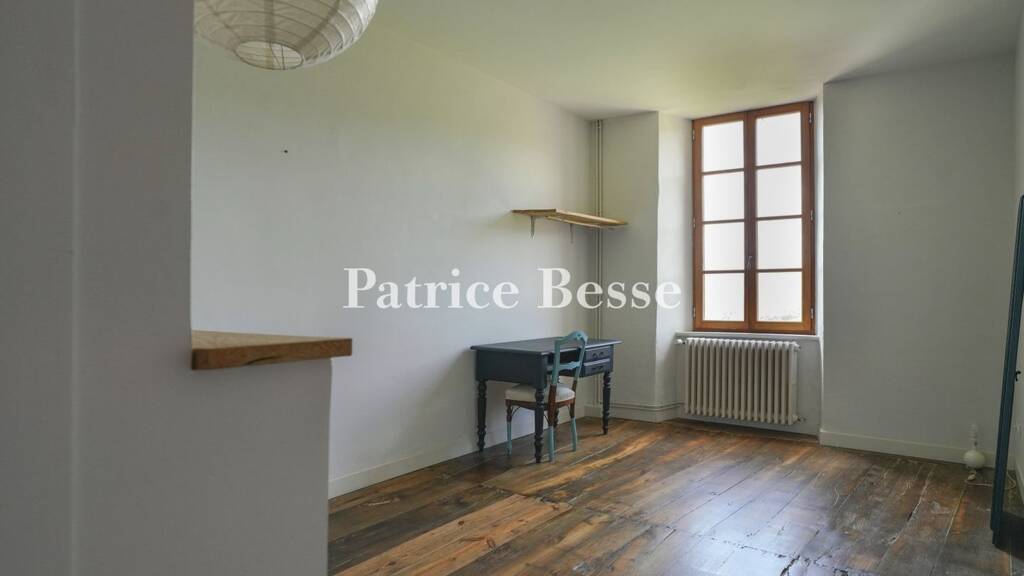
With original chestnut floors throughout this level, the house's wooden staircase leads to an immense landing with two large windows, which could be used as a small study. Two bedrooms, each with approximately 14 m², abut a shower room with a separate lavatory, while their two large windows each provide views of the valley and bathe these spacious volumes in abundant sunlight.
The second floor
The ...