A former priory from the 13th century, listed as a historical monument and nestled in the Morvan regional nature park in Burgundy - ref 443724
A former priory from the 13th century, listed as a historical monument and nestled in the Morvan regional nature park in Burgundy.
The property is tucked away in France's Yonne department, in the heart of the spectacular Morvan hills and the beautiful natural region around the town of Avallon. This former Romanesque monastery is now a cultural venue. It is set back from a little village and offers clear views of the Morvan countryside with its wooded hills, fields and pastureland. You can easily reach the property from the A6 motorway, which has a slip road just eight minutes away. You can get to Paris in 2 hours and 15 minutes, the town of Auxerre in 50 minutes and the city of Dijon in 1 hour and 10 minutes. You can find shops and amenities in Avallon, a medieval town steeped in history. Avallon is only 10 minutes away. The town offers a wealth of built heritage with its ramparts, towers, gardens, half-timbered dwellings and quaint alleys.
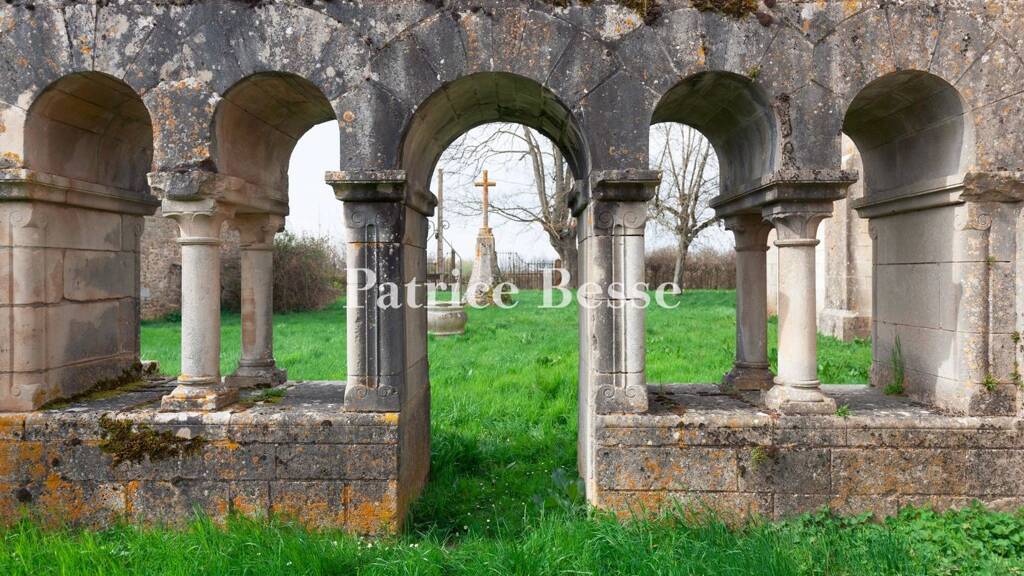
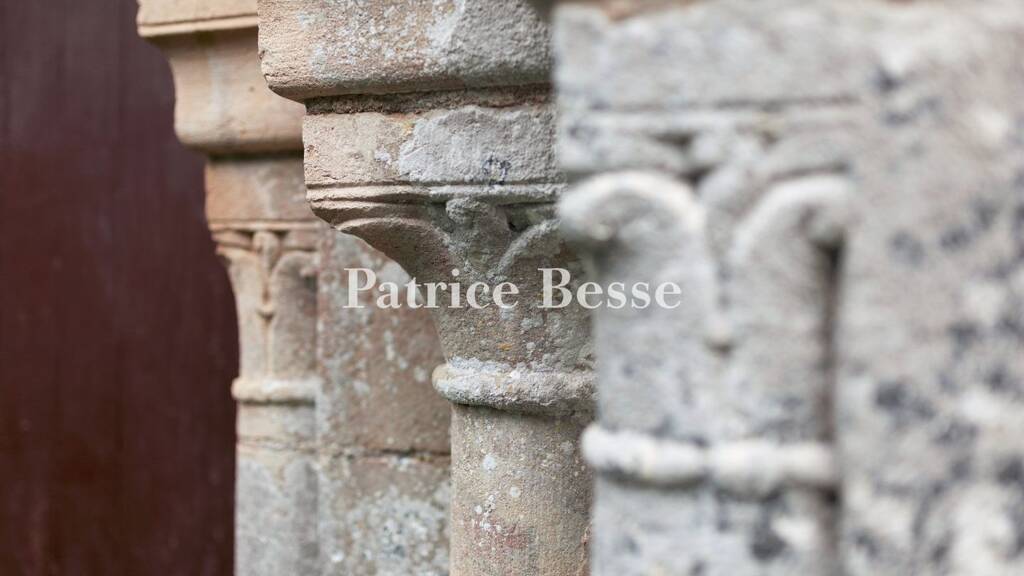
Saint-Jean-des-Bonshommes priory was a monastery that was part of the Order of Grandmont. It was built at the start of the 13th century where an antique sanctuary once stood. Anséric VI, Seigneur of Montréal, ordered construction of the edifice. The monastery underwent the French Wars of Religion in the 16th century. And in 1772, when Pope Clement XIV disbanded the Order of Grandmont, it was made available to the diocesan archbishop. Following the French Revolution, the monastery was sold as national property in 1791 and became a family property up to 1846 when it was damaged by a fire that destroyed most of the monastic buildings. The church, however, survived this fire. In 1880, it became a source of stones as building material, rather like an open quarry. Moved by this fate, a learned society acquired the edifice in 1905, requested that it be listed as a historical monument and set about restoring the edifice. The remaining church is characteristic of the architectural principles of the Order of Grandmont. It is the most imposing edifice in this monastic complex. It has a plain elevation without a door, a single nave and a closed chancel, beneath a brick barrel vault that stretches to a half-dome above an apse with three windows. The chapel's elevations are made of different stones. The lower ones, evenly sized, are neatly carved blocks and the upper ones, raw rubble stones, lie where the vault rises up. The apse is ornamented outside with four elegant built-in columns. The remains of the monastic buildings have been preserved, including the cloister arches, the elegant arcades of the chapterhouse and part of the walls of the pantries and refectory. The church has a roof of barrel ties, with conical tiles for the apse, made in a local tile factory.
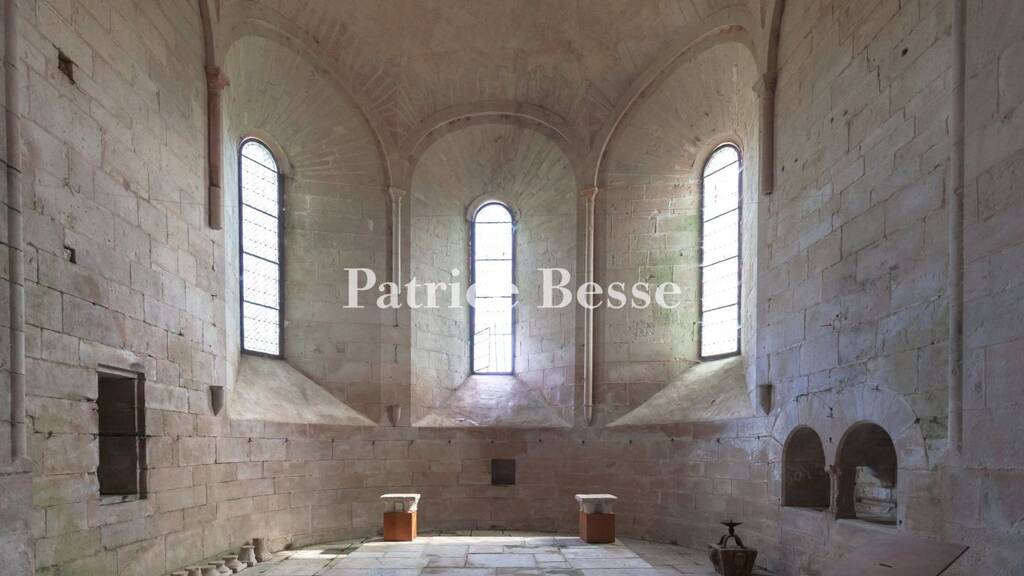
The churchTwo separate entrance doors lead into the church. One was for the monks and the other was for the congregation. The first one, a pointed arch without ornamentation, is plain in style. The second one is less austere, with a more elaborate arch, small columns and crocket capitals. The interior is pared down in style. There is a barrel-vaulted nave and an apsidal chevet beneath a half-dome, bathed in natural light from three windows. In the chancel, there is a built-in cupboard that was used to store liturgical objects. There is also a remarkable double piscina framed within semicircular arcs. It has been well preserved and was used for liturgical ablutions. Along the walls, there are remains of plastering with polychromatic traces that can still be seen.
The former refectory and caretaker's houseThis building once had two levels: a refectory on the ground floor, possibly with a dormitory upstairs. Six semicircular-arched windows set in flared recesses remain today, a seventh one having been walled up. One of them has been enlarged ...