A former shipowner's house nestled in the historical town centre of Tréguier, Brittany - ref 798895
A former shipowner's house nestled in the historical town centre of Tréguier, Brittany.
Tréguier is officially recognised for its quaint charm. It offers a wealth of built heritage. Tréguier lies halfway between the towns of Paimpol and Lannion. It is 20 minutes from each town. From Tréguier, you can easily explore the whole of Brittany's beautiful Pink Granite and Goëlo coastlines. The nearest train station with the most connecting train journeys is in the town of Guingamp, 30 minutes away. From here, you can get to Brittany's biggest towns and even Paris - in 2 hours and 45 minutes - by rail. On foot, you can easily reach all the town's shops and amenities from the property. Tréguier's deepwater marina offers 310 moorings, 35 of which are reserved for visitors. The coastal cycle route "Vélomaritime" runs through Tréguier, along the River Jaudy, offering a picturesque ride among country lanes and architectural heritage, as well as remarkable views of the whole town.
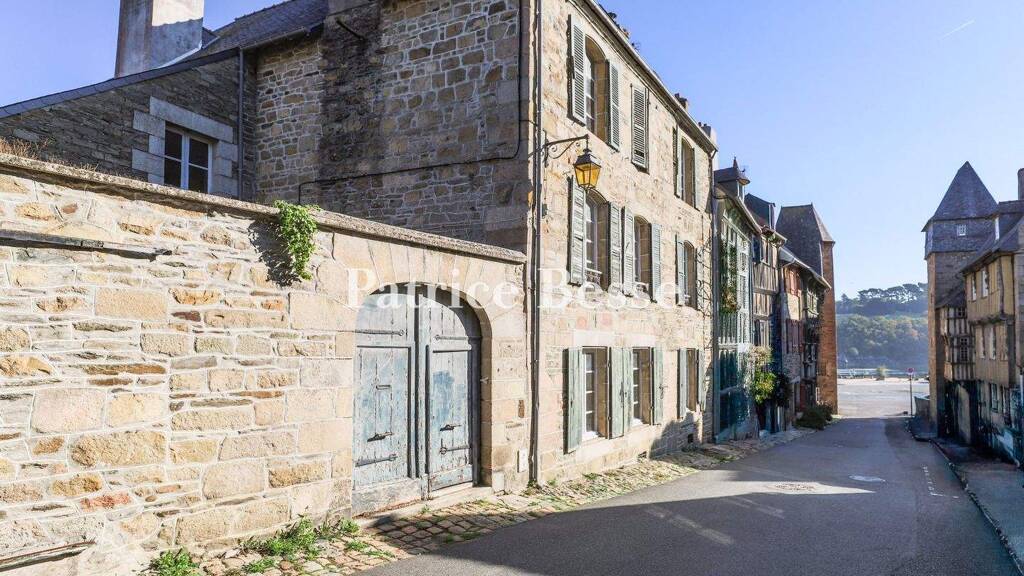
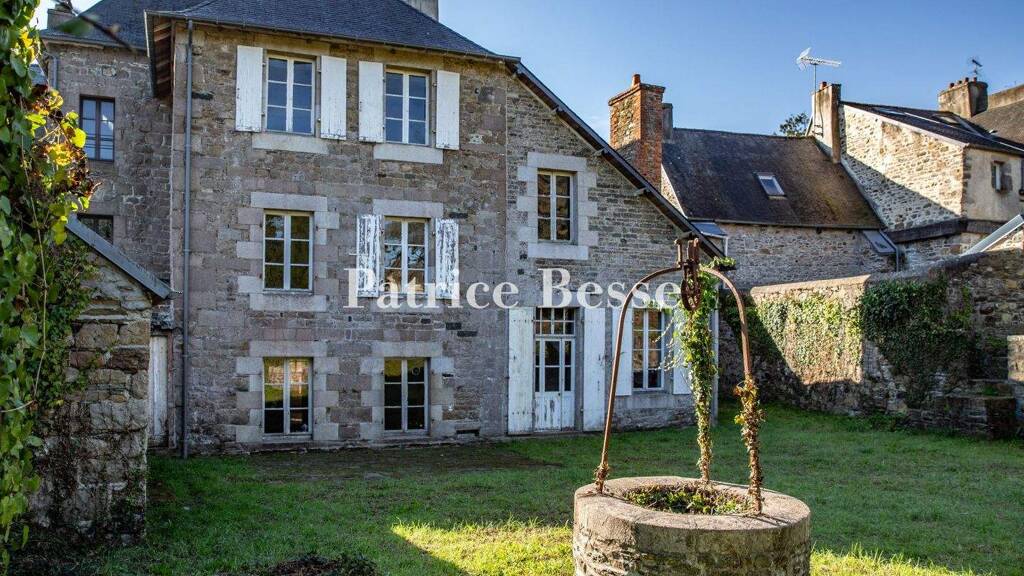
The property lies between the town's port and historical centre. It lies on one of the oldest, most emblematic streets of Tréguier. Indeed, this street was mentioned as early as in the 14th century. In climbs gently upwards, with a cobbled pavement on each side. It used to be an important shopping street in the town. The street is lined with stone houses and timber-framed dwellings. Several of these buildings are former shipowners' homes, with their watchtowers and terraced gardens. The property's main building is L-shaped. It is crowned with a hipped slate roof that gently flares out at the bottom. The facade is made of rubble granite and exposed ashlar. The windows are neatly spaced out. With authentic charm, this facade includes a ground floor, a first floor and a second floor. There are nine windows, fitted with louvred shutters and black wrought-iron guardrails. A wall lantern protrudes from the edge of the facade. The main entrance stands out for its basket-handle arch above a monumental carriage gate: a wooden double door painted greyish blue. This entrance gate leads into an enclosed paved court. Straight ahead, an extension dating back to the 19th century is crowned with a single-slope slate roof. On one side, this extension has two windows and a wooden door beneath a glazed fanlight. On the left, there is a white wooden gate. This rustic-style gate is made up of vertical bars. It leads into a covered entrance area - a dual-aspect space beneath a loft. This covered entrance area takes you from the street straight to the garden behind the house. On this side, the rear elevation is punctuated with many windows, some of which are fitted with wooden shutters painted white. This elevation faces the garden with its well and outbuildings. Several trees dot this garden, including a large thuja and a majestic cedar. The garden is almost entirely enclosed with walls. It leads straight to the River Jaudy estuary and the boats moored in the marina. A former watchtower stands at the far end of the garden.
The house
The ground floor
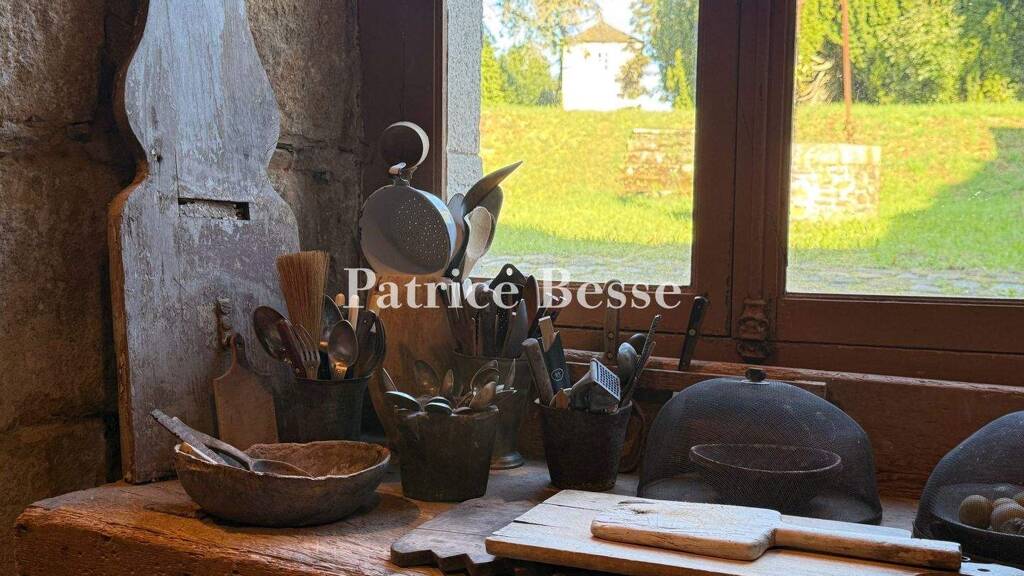
The hallway is authentic and plain. The walls here are lime-coated. The floor is covered with old cement tiles with a geometric motif. This motif alternates between solid burgundy squares and a blue floral design on a cream background. Beside this hallway there is a lounge with wood strip flooring and a wooden Louis XVI fireplace with a trumeau panel that stretches up to the ceiling. This lounge leads out to the garden, behind the house, through a large glazed door. A small corridor leads from the hallway to a dining room, a kitchen, a shower room, a lavatory and a secondary hallway. Thick beams and joists of solid wood run across the kitchen ceiling. Granite slabs cover the kitchen floor. Some walls are made of exposed stonework and others are lime-coated. The kitchen also features a monumental stone ...