Five former flour mills for commercial use, with water rights, at the entrance to a medieval town 25 minutes from Limoges - ref 492305
Five former flour mills for commercial use, with water rights, at the entrance to a medieval town 25 minutes from Limoges.
In the Haute-Vienne, between Limoges and the vast expanses of the Millevaches Regional Nature Park in Limousin, the medieval town of the Monts et Barrages region, with its 4 300 inhabitants, is part of a landscape where tradition and a gentle way of life come together. Its admirably preserved old town is home to a Romanesque collegiate church listed as a UNESCO World Heritage Site. Tradition is still alive and well here, with age-old skills such as Limoges porcelain, handmade paper and leatherwork. The surrounding unspoilt countryside is a haven for contemplation and rejuvenation, while the local gastronomy highlights the welcoming art of living here. The town is home to all essential shops and services; medical, educational, cultural and sporting. A dense network of associations (over 80 organisations) and 325 businesses are a sign of real economic dynamism. Paris can be reached in 4 hours 15 minutes on the A20 motorway, Clermont-Ferrand can be reached in 1 hour 20 minutes, and Limoges airport, which is 35 minutes away, has regular flights to Lyon, Marseille, Marrakech and several UK destinations.
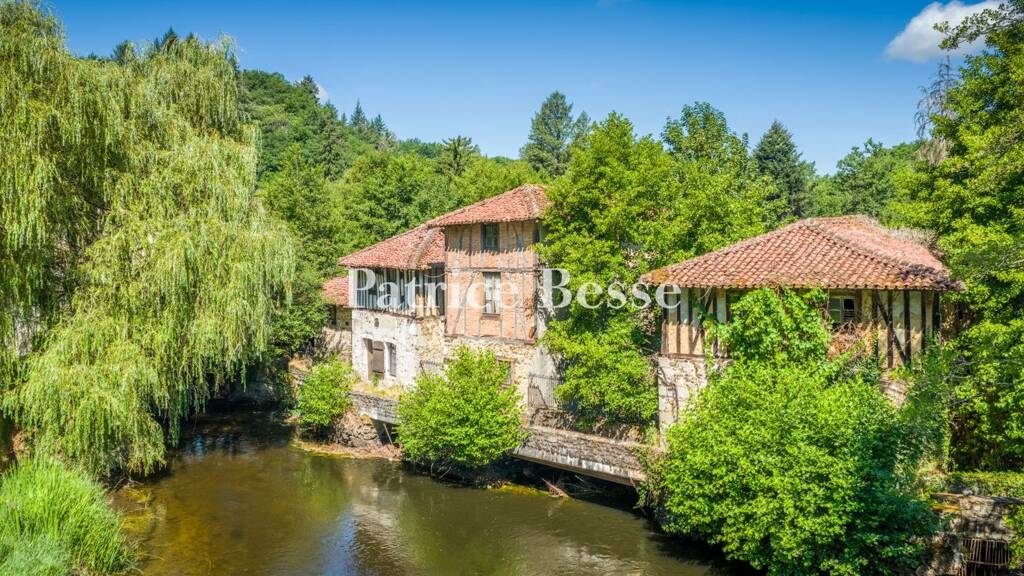
Seen from the air, the four mills built in a row have a remarkable layout, which ingeniously hugs the rugged relief of the banks of the Vienne. Their presence on an island, which divides the course of the river into two arms within a natural loop, has been attested to since at least 1224. At the front, an imposing rock like a ship's bow seems to be holding the island up. It also serves as a fulcrum for the dyke that crosses the river and allows the water to be diverted into a regulation canal. Each of the small mills, built with "limousinerie" masonry and one or two storeys high, has its own unique architecture, with timber-framed walls filled with cob. The earthy tones of the rendering from the local soil, combined with the canal tile roofs laid without lime, ensure perfect harmony with the surrounding landscape. On one bank, a larger former flour mill, built more recently and set back from the main road, consists of two three-storey buildings. Most of its original mechanisms have been preserved. This industrial heritage is complemented by a number of garden plots and coppice groves scattered around the island, as well as two parking areas.
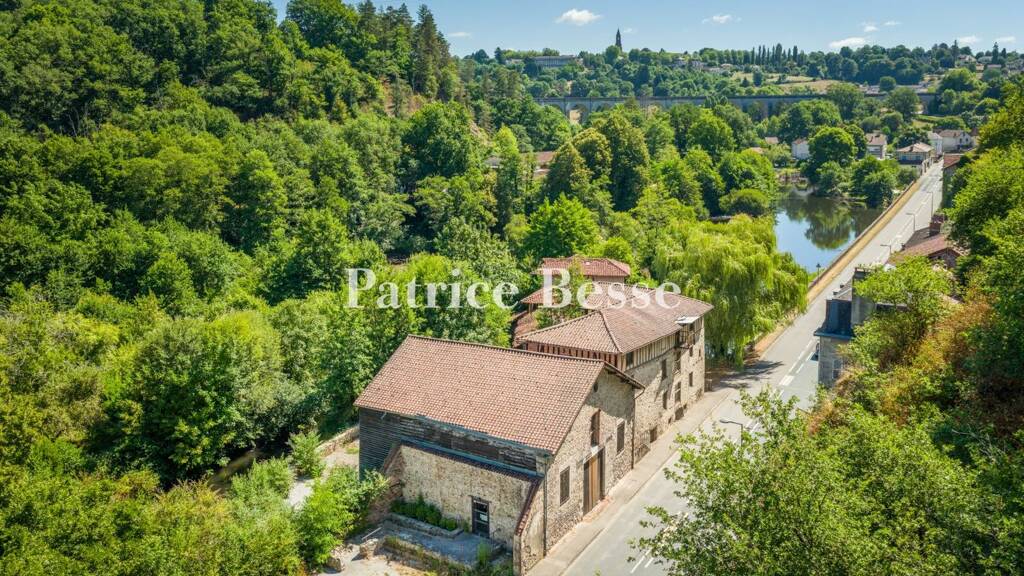
The large millThis is located on the edge of the departmental road, with easy access, a dedicated parking area and a ramp to facilitate entry for people with reduced mobility. It comprises two separate spaces which are connected on the inside and have canal tile roofs in good condition. The stonework on the south-facing façade is dressed in rubble stone, while the north-facing façade is covered in wooden cladding. On the top floor of the second building, an elegant façade with timber-framed gables underscores the care taken with the architecture. On the north façade, an external staircase houses a 4 m diameter paddle wheel at its base, an imposing vestige of the former milling activity. It remains connected to a second wheel, located in the basement, inside the building. The original mechanisms used to make flour are still intact and carefully preserved: fixed and rotating millstones in their casings, hoppers, water tanks fitted with spinning wheels, sieves, gates, flour bins, as well as all the belts needed to put the mill back into service.
The ground floor
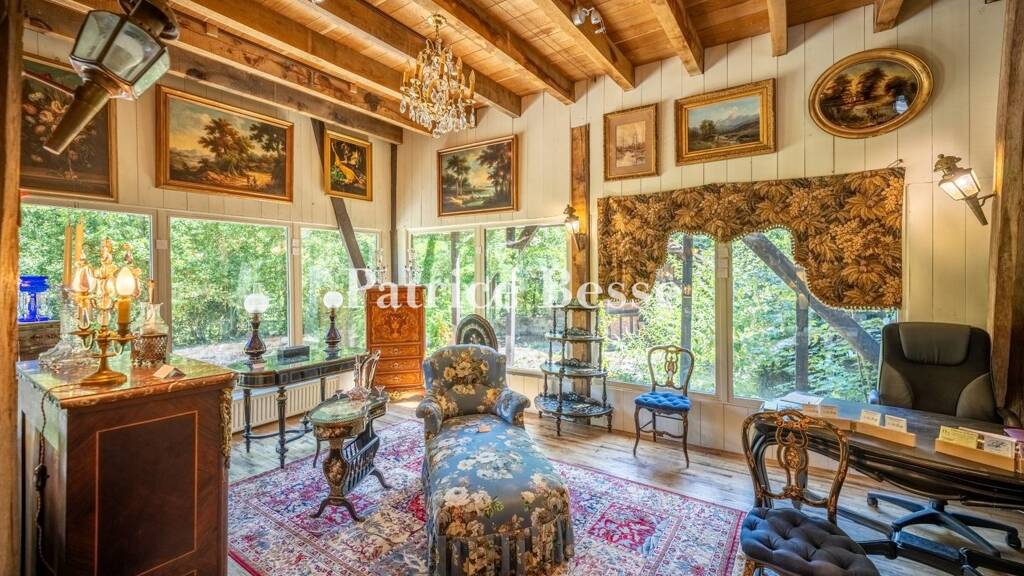
A large, light-filled showroom with oak parquet flooring and French-style ceilings adjoins an open-plan workshop area, both on the roadside and in the courtyard. A staircase leads from this room to the basement. A former professional kitchen with a cold room is a reminder of the restaurant that once occupied the site.
The first floor
Two staircases and an electric lift ...