The former courthouse and its chapel listed as a historical monument, in Burgundy, in the historical centre of Joigny - ref 953203
The former courthouse and its chapel listed as a historical monument, in Burgundy, in the historical centre of Joigny.
Joigny, a riverside town renowned for its architecture, history and remarkable medieval heritage, is located in the northern half of the Yonne area, amidst vineyard-covered slopes and wooded valleys. This property is located in the residential and peaceful Saint André district, one of the town's oldest, which overlooks the historical centre. Shops, schools and essential services for everyday life are very close by, while Sens and Auxerre can be easily reached by the area's main roads. A junction on the A6 motorway is 10 minutes way, meaning Paris can be reached in 1 hour 30 minutes by car, while several daily trains put Joigny within 1 hour 10 minutes reach of Paris-Bercy station.
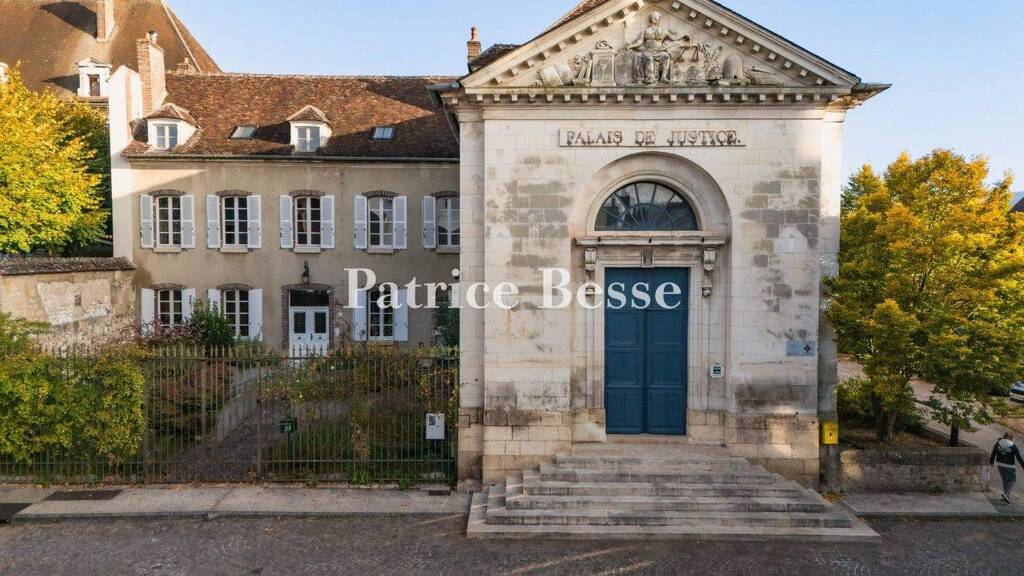
The former courthouse, situated in the heart of the Saint André district, occupies an emblematic position on Place de la République, a vast cobbled esplanade dominated by the church after which the district is named, historically populated by craftspeople and winegrowers as well as being the cradle of medieval Joigny.
The property is made up of three separate sections standing around an inner courtyard away from prying eyes. The edifice was erected in the early 19th century and boasts the solemn architecture typical of the era's public institutions. The main façade, made of dressed limestone, overlooks a wide flight of stone steps leading up to an immense double-leaf door. Moulded capitals frame the door, above which there is a cornice topped by a semi-circular opening in which there is a large fanlight window. The triangular pediment atop the central avant-corps is adorned with an allegorical high relief depicting a female figure that is most likely Themis, who was the incarnation of justice during the Greek Antiquity. On both sides of the building, the façades are punctuated with tall, vertical, brick-framed windows, topped with semi-circular fanlight windows, reminiscent of the central opening on the pediment.
The Ferrand chapel adjoining the northern end of the courthouse is a precious reminder of Joigny's religious heritage. It was built in 1530 and used as a family funeral chapel before being incorporated into the courthouse in the 19th century. Behind wrought-iron railings stands its octagonal structure boasting sculpted pilasters and ornamental alcoves. Its upper part is adorned with a bas-relief macabre art frieze depicting scenes from the Last Judgement and the resurrection. A double-curved slate dome previously adorned its roof but today it is topped by a more sober conical roof, paying witness to the transformations carried out throughout the centuries.
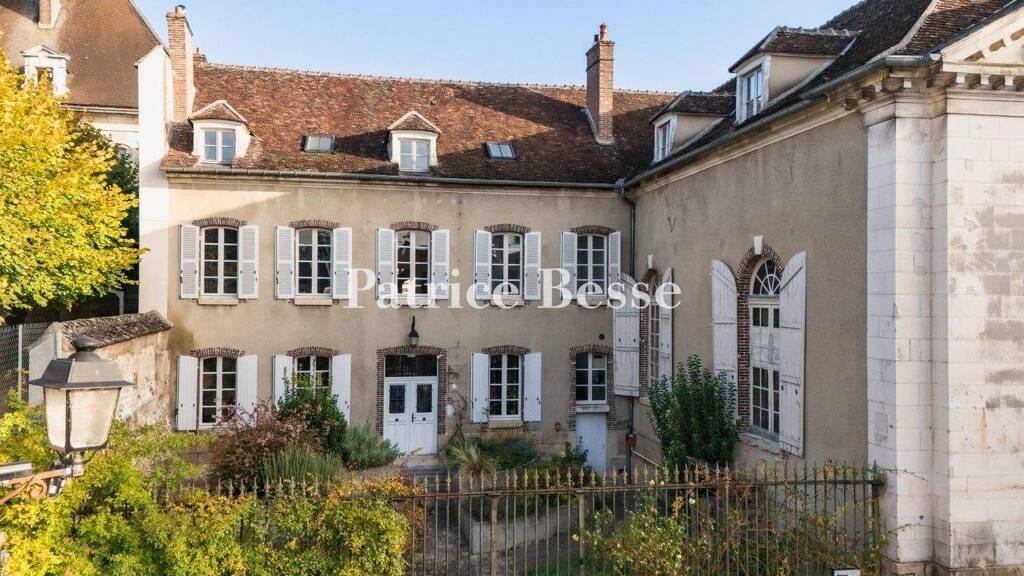
To the west, another building connects with the courthouse and was formerly the court administration and magistrates' offices. With the appearance of a townhouse, this two-storey building is today used for residential purposes. The stone-coloured rendered façade is punctuated by five vertical rows of openings with red brick frames fitted with louvred shutters. From the square, to the left of the courthouse's façade, a wide, double-leaf wrought iron gate opens into the reception courtyard. The roofs, punctuated with dormer windows, are made of traditional Burgundy flat tiles.
To the rear, there is a courtyard boasting flowerbeds, a Virginia creeper and a large-leaved Paulownia tree.
The main residence
The ground floor
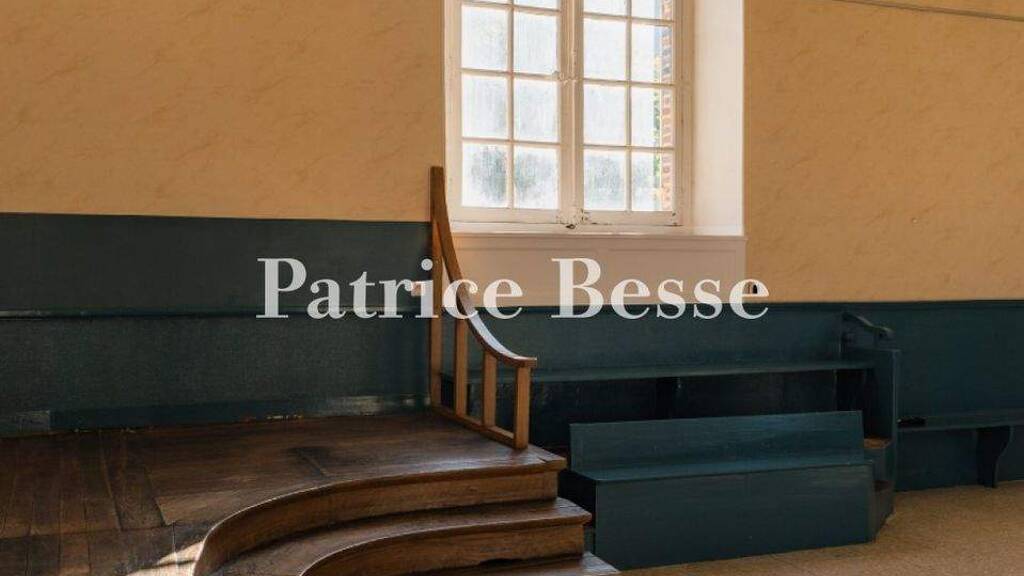
At the rear of the reception courtyard, several steps lead to the moulded wooden and glazed, double-leaf entrance door. It opens into a vast living room from which the upper floors, inner courtyard and the former courtroom of the civil court can be reached. The red clay coloured terracotta floor tiles underline the presence of a winding wooden staircase with a wrought-iron balustrade.
To the left, a hallway precedes the ...