An 18th-century chapel, listed as a national Historical Monument, in the middle of downtown Arras, one hour from Paris - ref 199325
An 18th-century chapel, listed as a national Historical Monument, in the middle of downtown Arras, one hour from Paris.
Within the greater Hauts-de-France region, the property is located in Arras, the historical and administrative capital of the Pas-de-Calais department, as well as the second most populated city in the department (after Calais), known for its two Baroque squares, which create an architectural composition unique in Europe, as well as its belfry and citadel, both Unesco World Heritage Sites. With 225 edifices under Historical Monument protection, Arras boasts the highest density of listed monuments among French cities, while as a university town, Arras also stands out thanks to its young population: 33% of inhabitants in the urban area are less than 25 years old.
As for the property, known as the Chapel of the Chariottes and listed as a national Historical Monument since 27 May 1921, it is located five minutes from the Place des Héros and near the Arras Cathedral, whereas a variety of services, amenities and shops are all within walking distance. In addition, Lille, Amiens and Calais are 45, 56 and 100 kilometres away, respectively, while, Paris, 160 kilometres away as the crow flies, is accessible via the high-speed rail station, which provides train service to the capital every 50 minutes.
The name "Chariottes" comes from Jean A. Chariot, who founded, with his wife Emmelet Huquedieu, a hospital in Arras in 1339. Later on, in 1556, twelve Franciscan nuns from Saint-Pol-sur-Ternoise settled here and took the name "Chariottes", while, in 1767, the sisters acquired the neighbouring Montmorency private mansion, located on the corner of the rue des Lombards (now the rue des Chariottes) and the rue de Jérusalem. As for the actual chapel, it was built between 1769 and 1775, according to plans drawn up by the architect and sculptor Louis Posteau, who carried out an immense urban beautification project of the lower city, known as the "City of Lights", in the 18th century.
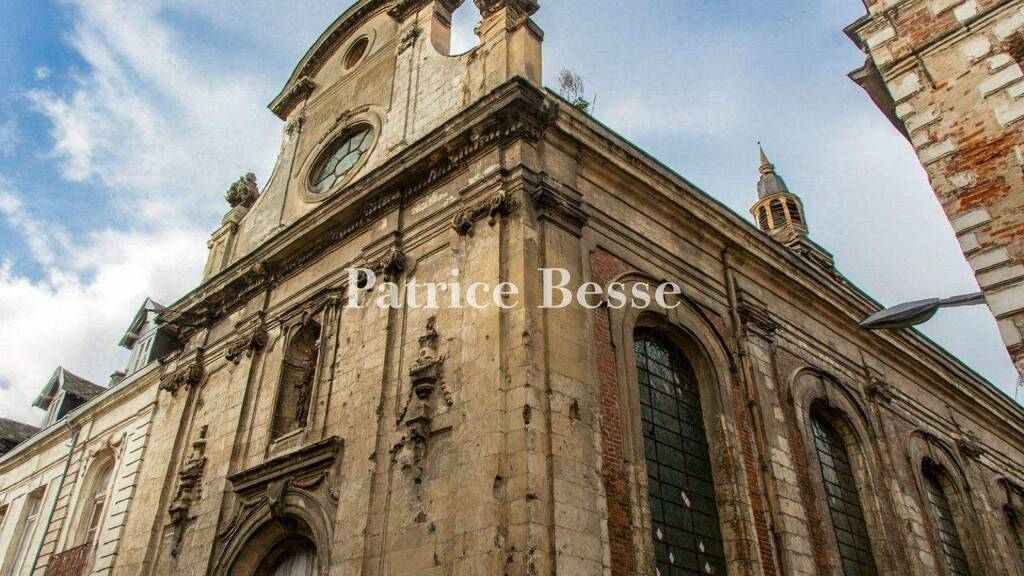
Constructed with two levels, the chapel's main façade features three bays and a large arched portico on its lower section and one bay topped with a triangular pediment and an oculus on its upper section, while lateral volutes mark the transition between these two architectural entities.
Although the French Revolution may have drove out the nuns momentarily, they returned in 1815, but the chapel was then bombed twice during World War I before the architects Fleury and Gagey partially rebuilt the chapel based on its original design.
As for the main façade, in white stone, it was inspired by the façade of Rome's Church of the Most Holy Name of Jesus, which was used as a canonical model for many churches with religious orders in Europe, and specifically for missionary orders. Decorated with four pilasters with ionic capitals, a statue of the Virgin holding the Baby Jesus set within a central niche above the entrance, an oculus and the Roman numeral inscription of 1775 (MDCCLXXV), in addition, several chips and pockmarks on its exterior bear witness to the different global conflicts that it has endured over the years.
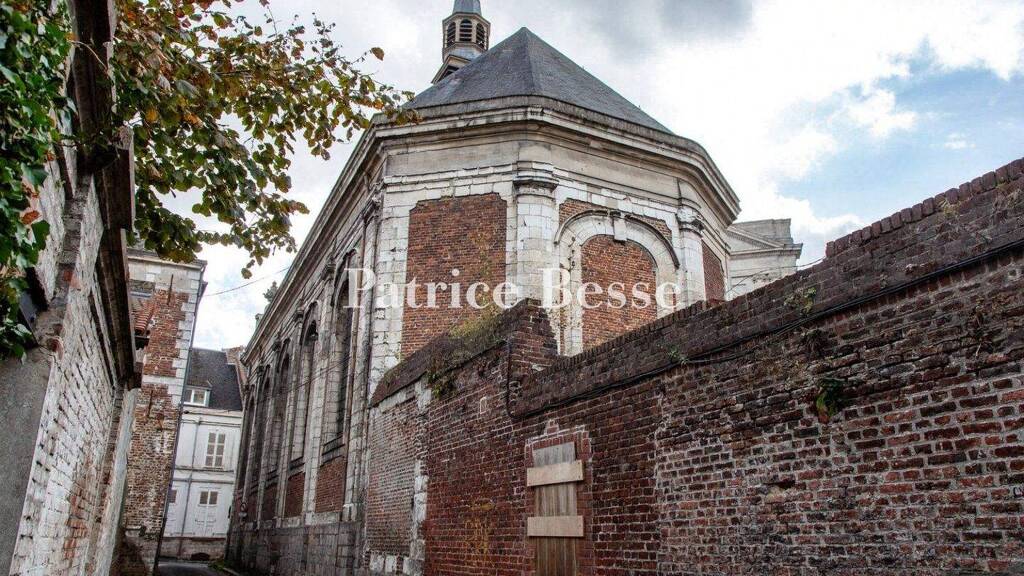
Lastly, the nave is topped with a gable roof, which is, in turn, crowned by a spire located between the choir and the nave.
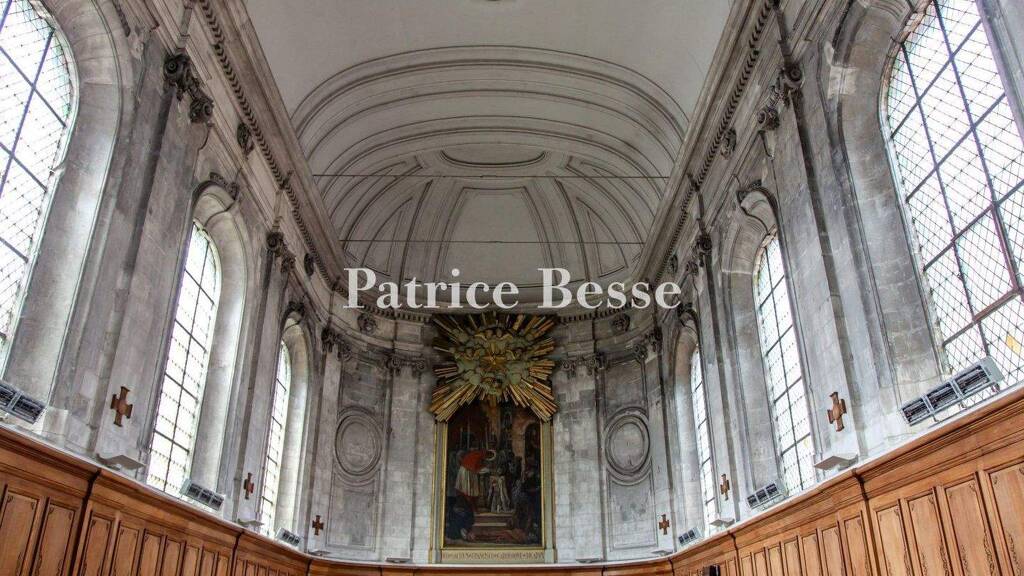
The NavePast the chapel's entrance, a wide narthex with heavy carved wooden doors, a symbol of the border between the profane and sacred worlds, gives on to the chapel's long nave, whose liturgical layout includes an immense main altar made out of carved and gilded wood, placed in the middle of the choir.
Facing north, the nave features five bays and a polygonal apse on one end, while ten arched windows, five on each side, alternate with pilasters topped with floral-patterned capitals. As for the original stained glass, now gone, it has been replaced by clear glass that provides a soft light ...