A former 17th-century convent, once home to the Order of the Most Holy Annunciation and in need of a complete renovation, nestled within a historical
A former 17th-century convent, once home to the Order of the Most Holy Annunciation and in need of a complete renovation, nestled within a historical town with shops and services, in the middle of the Jura department.
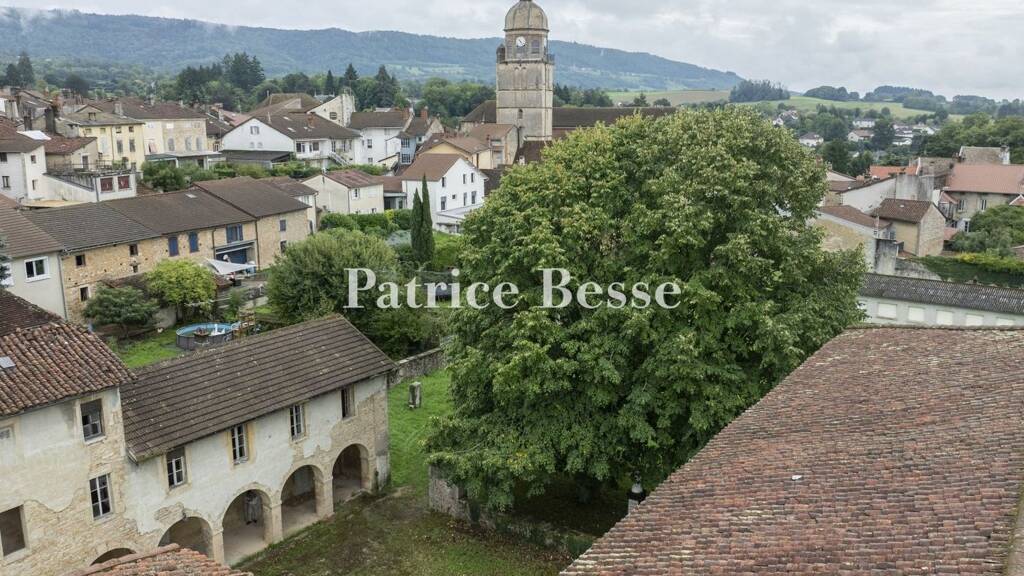
Located in the southwest of the Jura department, along the outskirts of the Bresse plain and abutting the first foothills of the Jura Mountains, the lively historical town of Saint-Amour, with a variety of shops and services, is 28 kilometres north of Bourg-en-Bresse, 90 kilometres northeast of Lyon, 33 kilometres southwest of Lons-le-Saunier and 95 kilometres from Geneva.
In addition, the Saint-Amour train station provides rail service to Lyon in a little more than an hour, via the line connecting Lyon to Strasbourg, while the A39 green motorway, three kilometres away from the downtown area, connects Dijon to Bourg-en-Bresse in a little more than 1.5 hours. Boasting a rich multi-century history, Saint-Amour also draws on the attraction of its prime location, immersed within a natural environment protected, to the south, under a type-1 Natural area of ecological, faunal and floristic interest.
The convent of the Order of the Most Holy Annunciation, located in the middle of Saint-Amour, was founded in 1621. Facing mainly east-west and extending over nearly 5,930 m², the property is mostly enclosed by walls, while the buildings themselves feature a combined floor area of approximately 1,026 m², in addition to their attic levels (providing approximately 226 m² of extra floor space) and a cellar of about 137 m².
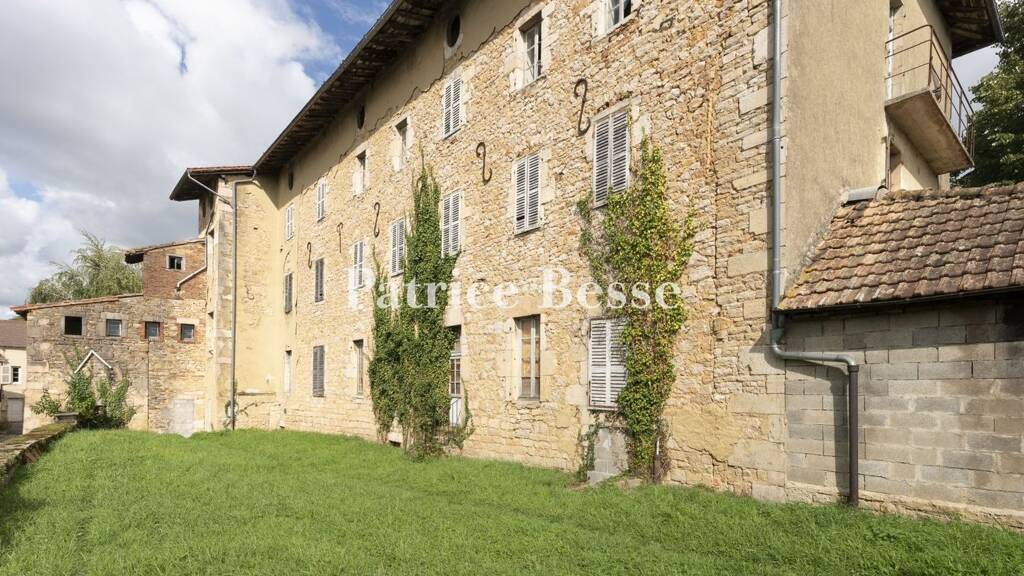
Having undergone a significant construction campaign during the 18th century, which resulted, specifically, in the extensions surrounding the cloister, as well as the destruction of the chapel (except for its choir, still standing today) and the cloister's southern wing, today, the convent is made up of two 18th-century three-storey buildings, each with their own attic level. Featuring arcaded galleries topped with ribbed vaults that frame either side of the cloister's courtyard, the latter blends in seamlessly with the adjacent grounds, where an orchard once stood.
Listed as a regional historical monument since 7 June 2013, the convent features traditional gable, three-sided or hipped roofs, topped with either flat, barrel or interlocking tiles, as well as stone walls, partially covered in roughcast rendering, and rectilinear windows, some of which are safeguarded by louvred shutters, while their window/door surrounds, arcades and quoins are in ashlar stone.
The East Building
The ground floor
An arcaded gallery with seven arches, giving on to the courtyard of the former cloister, provides a pleasant place to stroll around its periphery, while still remaining protected from the elements. Under one of the arches, a wooden door opens on to an initial room, of approximately 34 m², which communicates with the choir in the former chapel, featuring a floor area of nearly 104 m², moulded ribbed vaults, narrow-plank hardwood floors, walls clad in wainscoting, as well as understated, clear stained glass windows, surrounded by scarlet red panes, which bathe this immense space in abundant sunlight.
The first floor
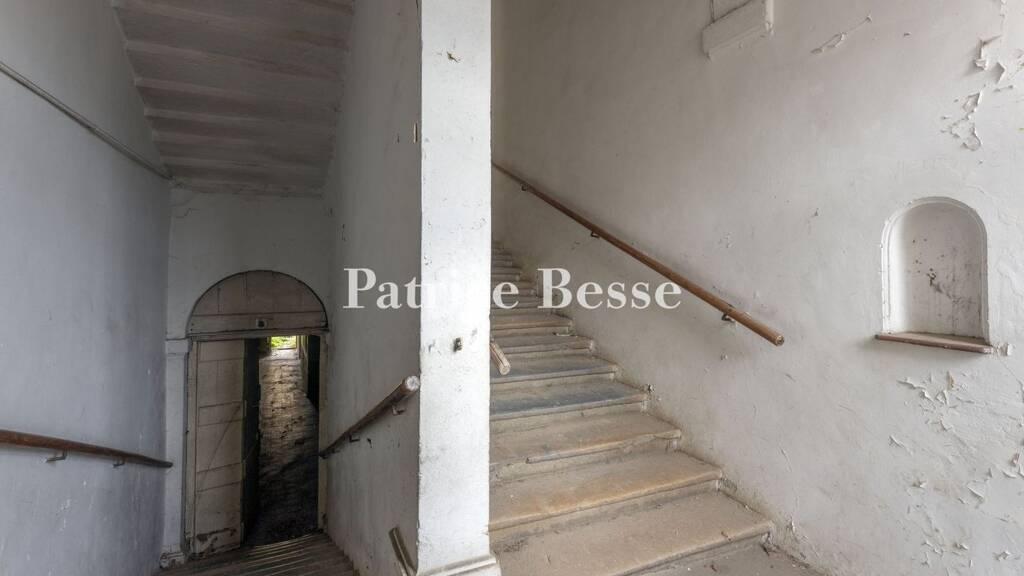
With a total floor area of 89 m², the first floor, formerly used for classrooms, offers interesting potential for a wide range of uses, once it has undergone a complete renovation.
The second floor
Once a dormitory for boarders when the building was used as a school, this floor features two adjacent rooms, with approximately 16 m² and 114 m², respectively, in need of a full restoration.
The attic
With a floor area of approximately 38 m², this level is not convertible.The West Building
The ground floor
Perfectly symmetrical with its eastern counterpart, directly opposite, the ...