A 16th century château, outbuildings, including two 18th century lodges, and 4 hectares of parkland overlooking the Forez plain, 20 minutes from Saint
A 16th century château, outbuildings, including two 18th century lodges, and 4 hectares of parkland overlooking the Forez plain, 20 minutes from Saint-Etienne.
In the Auvergne-Rhône-Alpes region, on the southern border of the Monts du Lyonnais, the property is 20 minutes from Saint-Etienne and its train station. Lyon and its TGV station are 1 hour 10 minutes away via the A47 motorway, and Lyon-Saint-Exupéry airport is 1 hour 15 minutes away via the A47, A46 and A43 motorways.
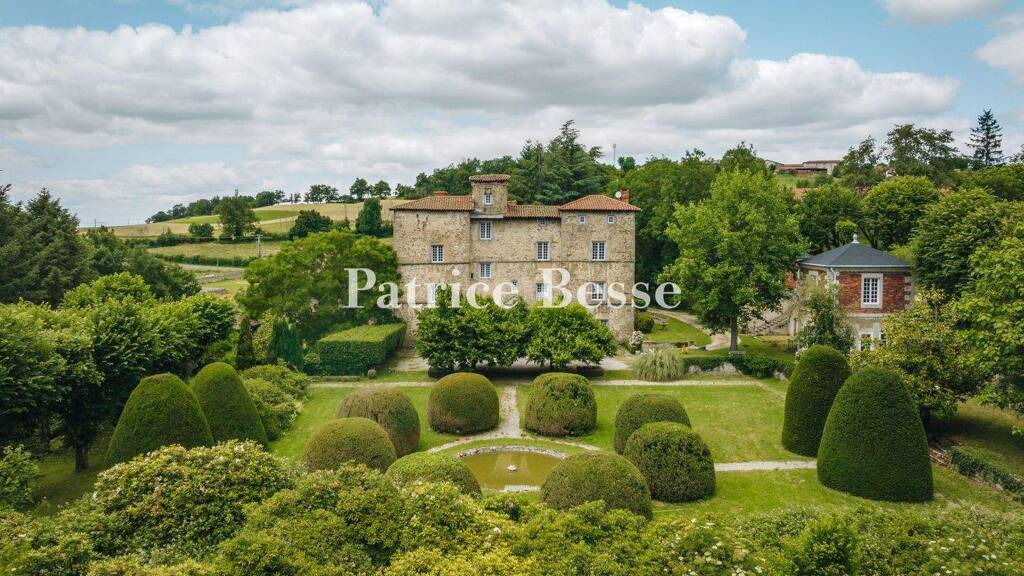
Once you have passed through the large entrance gates at the end of a country road, a French-style formal garden unfolds, followed by the main courtyard, which leads to the imposing, elegant château that faces the setting sun. The garden is bordered to the north by a barn and to the south by a caretaker's cottage. A wide stone staircase leads to a second French-style formal garden to the south of the building, where large topiaries surround a circular pool with a fountain at its centre. The château, built at the end of the 16th century under Henry IV on 11th century foundations and cellars by a lord of Saint-Victor, has a rectangular tower at each of its four corners, as well as a round tower to the south, which was incorporated into the rest of the building. It is three storeys high, the first two of which are fully completed. The château is built in a light ochre-coloured stone, which becomes warmly coloured in the setting sun. To the east of the château, a two flighted staircase around a monumental fountain provides access to the upper part of the parkland, between two typical 18th-century lodges. A long barn, measuring around 300 m², run alongside the north façade of the château and closes off the main courtyard. The property has two entrances, one leading to the main courtyard, and the other leading to the main entrance to the château and its Renaissance garden.
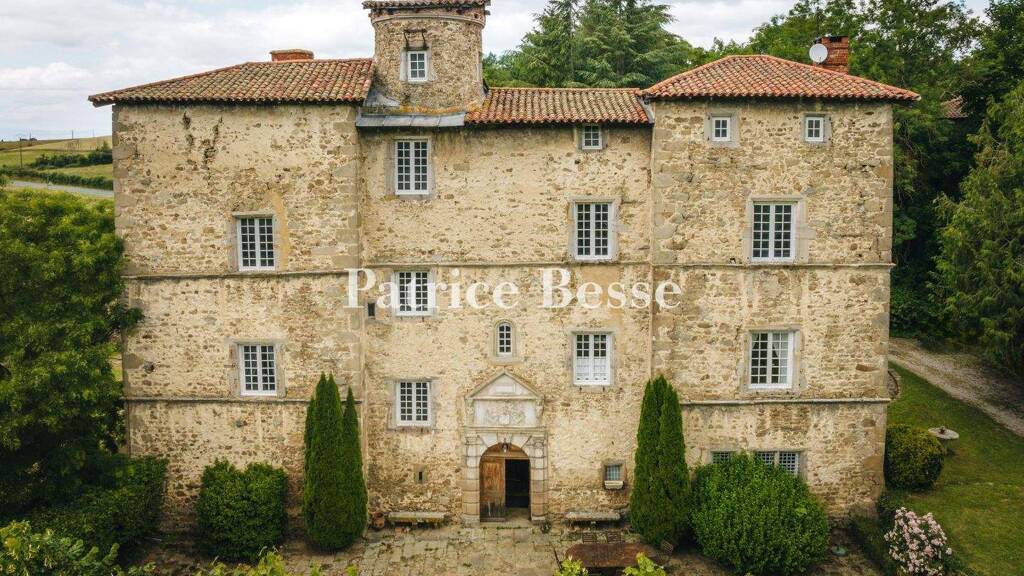
The châteauDue to being built on gently sloping ground, the cellars are accessed from the main courtyard, while the ground floor is accessed from the south. The 15th-century west facade has two rectangular towers and receives natural light from large, small-paned windows that have replaced the old mullioned openings. On the garden level, we see the thick door reinforced with forged nails and the basement windows. The château adjoins the long barn to the north. The Renaissance-style south façade is set between two rectangular towers, with a round tower at the top. There is a Renaissance rusticated door surmounted by a triangular pediment. From here there is a view of the French-style formal garden. To the east, a flight of long curved steps leads down to the three large arched windows that bring light to the ground floor gallery in the morning. The roofs and façades are listed in the Supplementary Inventory of Historic Monuments. The roofs were completely repaired in 1995.
The ground floor
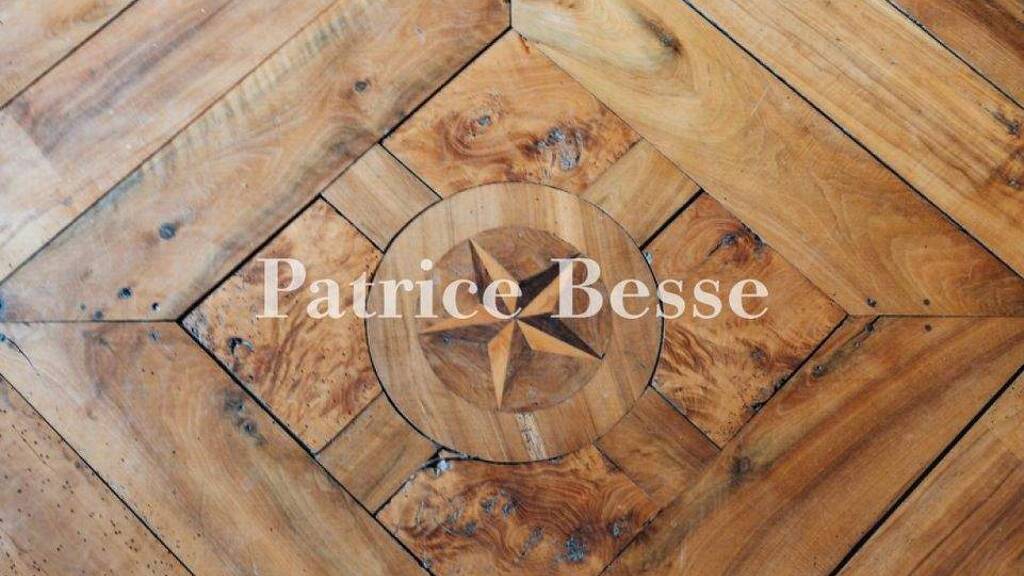
After passing through the Renaissance doorway, a small hall leads to the large vaulted gallery measuring some 56 m², which receives natural light from the east via two windows and a French window with curved lintels. Its groined vaults and length make it simple, yet imposing at the same time. The château's 32 m² kitchen, adorned with an imposing stone fireplace is to the right. There are a 28 m² study and a 39 m² dining room to the west. After an area with a stone slab floor, a door with a capital, flanked by two caryatids, opens onto a large hall that provides access to the 42 m² lounge, illuminated by two windows. The floors of the three reception rooms are Versailles parquet, and the ceilings are "diagonal" in French-style. Toilets, a storeroom and a cellar complete this floor.
The first floor
Accessed via the spiral staircase in the round tower, it has a gallery similar to the one on the ground floor, but with one difference: the vaulted ceiling has been ...