A former outbuilding of a mansion with an Anglo-Norman appearance, near the banks of the River Seine, in the Essonne area, 30 minutes from Paris - ref
A former outbuilding of a mansion with an Anglo-Norman appearance, near the banks of the River Seine, in the Essonne area, 30 minutes from Paris.
This property is located in the Essonne area, in Évry-Courcouronnes, 40 kilometres from Paris and close to the banks of the River Seine. The river and its towpaths can be found a short walk away, in a peaceful atmosphere close to a resolutely dynamic town. Évry-Courcouronnes is the administrative hub of the Essonne area and plays host to a first-rate economic and scientific centre: the Génopole, which includes the head offices of several major businesses and institutions such as Safran Aircraft Engines, the Corbeil-Essonnes Sud Francilien hospital and the Évry Paris-Saclay University. It is at the crossroads of motorways and major roads such as the A6, A5, N104 and N7. As such, it enjoys easy access to Orly airport, just twenty minutes away. It also boasts an especially well-developed public transport network: direct trains to Paris can be taken on the RER D line, while the bus network, including the Viry-Châtillon-Corbeil-Essonnes bus line, makes getting around easy. A tram line also links the town to Massy and its high-speed TGV train station.
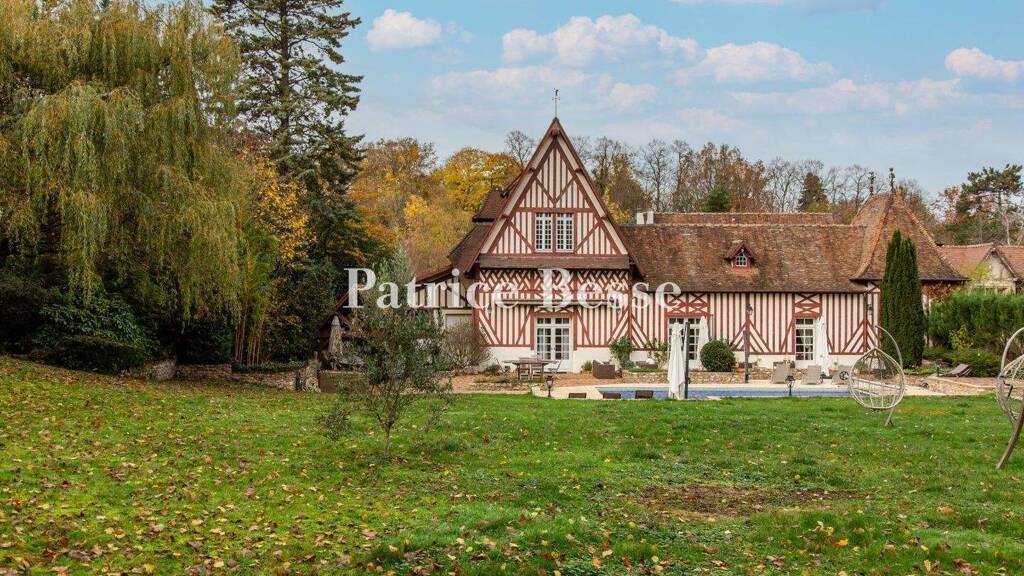
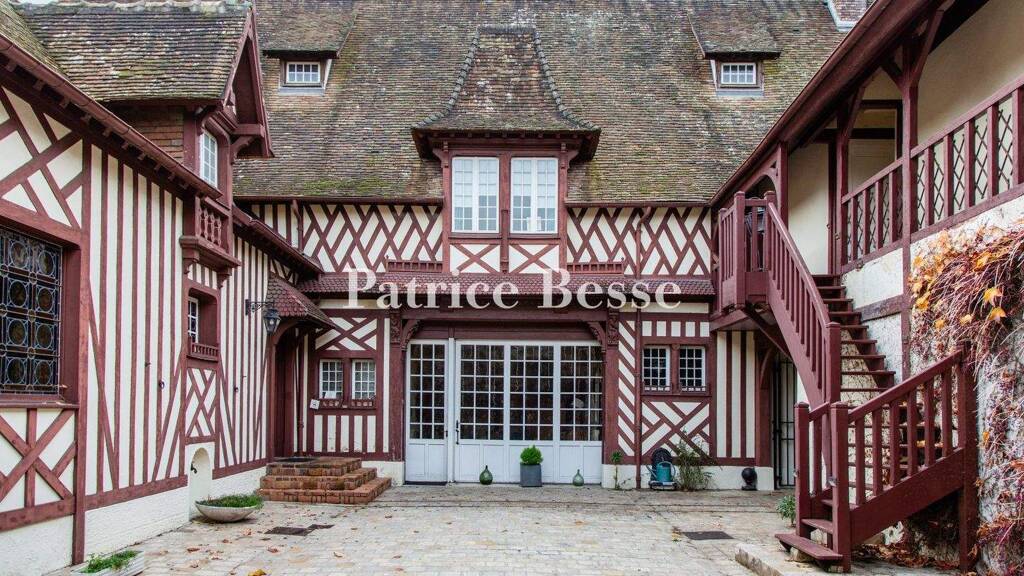
Since the 18th century, the banks of the River Seine in Évry, between Paris and Fontainebleau, have welcomed havens of peace for illustrious travellers, including Madame de Montespan, Louis XIV's famous mistress. This Anglo-Norman style property is a former outbuilding of a mansion erected in the late 19th century. It is a vestige of the passages of illustrious personalities, seeking solace far from the hustle and bustle of a city that has since expanded. The residence, situated between two parks, boasts almost 400 m² of living space set around a paved courtyard and framed by two gardens - one in front and one to the rear - on a plot of almost 4,000 m². The house, behind the gate and hedges enclosing the property, is punctuated with brown half-timbering, roofs made of flat tiles, gable, shed as well as hipped dormers and small-paned windows with white joinery.
The first cobbled courtyard, in the shade of tall plane trees, is of sufficient size to park several vehicles. It leads to a house divided into two apartments as well as a garage topped by an elegant, corbelled overhang. In the middle, an entrance porch reserved for pedestrian access opens onto a rectangular second cobbled courtyard that leads to the half-timbered main house, its annexes and outbuildings.
The half-timbered houseThis 276-m² L-shaped building can be reached from the second courtyard adorned with a fountain crowned with a stone mascaron. The white rendered facade is adorned with brown half-timbering, plus geometrical patterns and moulding. The entrance is protected by an awning made of flat tiles and is watched over by mischievous characters carved into the woodwork.
The ground floor
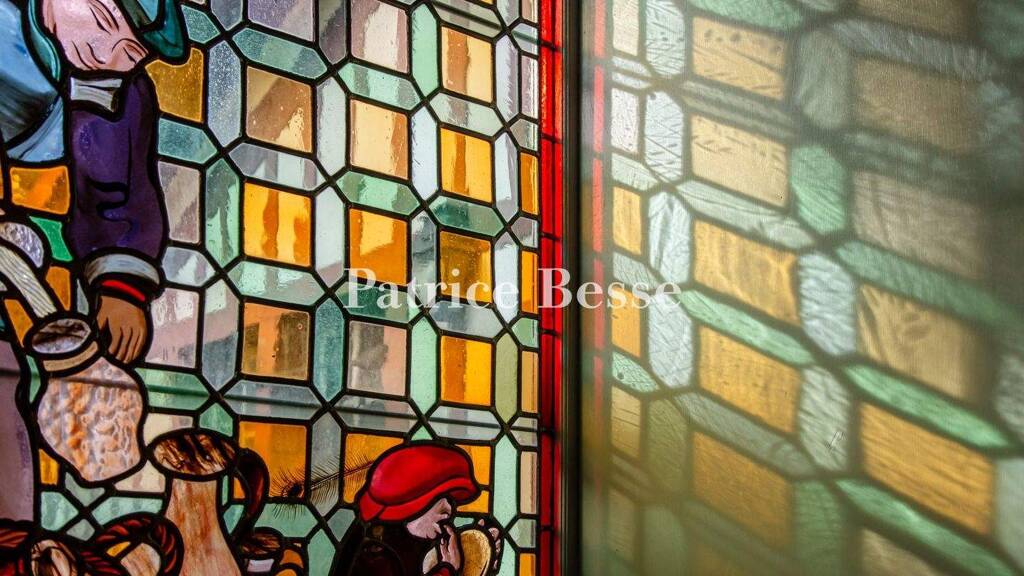
The entrance opens onto a vast, approximately 60-m² reception room used as a lounge and dining room with a fireplace at one end. The exposed beams, crimson red painted ceiling and stained glass depicting rural life give the room a both warm and cosy atmosphere. One of the stained-glass windows depicts the twelve Flemish proverbs of the painter from Antwerp, Peter Bruegel. The approximately 27-m² kitchen is made up of greyish-green wooden units. It is separated from the dining room by a glass wall, while the central island unit can accommodate several people for everyday meals. French windows open onto a patio and the garden, creating a natural link between the inside and outside. Opposite, there is a lavatory next to the door to a wine cellar in the basement and the bottom of the stairs to the upper floor. Behind the lounge, a double-leaf door leads to a study with a high ceiling under which a mezzanine has been converted into a bedroom.
The first ...