A stately 18th-century property, typical of the Loire Valley and fully restored, with more than 6 hectares of woods and pastures, to the north of Tour
A stately 18th-century property, typical of the Loire Valley and fully restored, with more than 6 hectares of woods and pastures, to the north of Tours.
On the border of the former Maine and Touraine provinces, the property is located in the countryside, on the outskirts of a village characteristic of the Loir River valley. This small wine-making region, which attracts many tourists each year, is 40 kilometres to the north of the Loire Valley, while its mild climate is ideal for producing wines with such appellations as Coteaux du Loir and Jasnières.
Ten kilometres away, the Bercé public woodland extends over more than 5,000 hectares, and boasts more than 280 kilometres of hiking trails, whereas an outdoors activities centre, on a nearby lakeshore, is only a few kilometres away.
As for the neighbouring village, it contains all essential services for daily life, while two small towns, including La Chartre-sur-le-Loir, are less then a dozen kilometres away and offer additional amenities, such as a flea market, supermarket, lower secondary schools, cultural and athletic facilities, as well as a medical centre.
With Paris, Le Mans, Tours and Vendôme accessible via the motorway in 250, 50, 40 and 45 kilometres, respectively, the Montval-sur-Loir slip road to the A28 motorway is less than 15 kilometres away, while from Le Mans and Vendôme, high-speed rail service provides connections to Paris in under an hour, as well as Charles-de-Gaulle airport in one hour and 45 minutes.
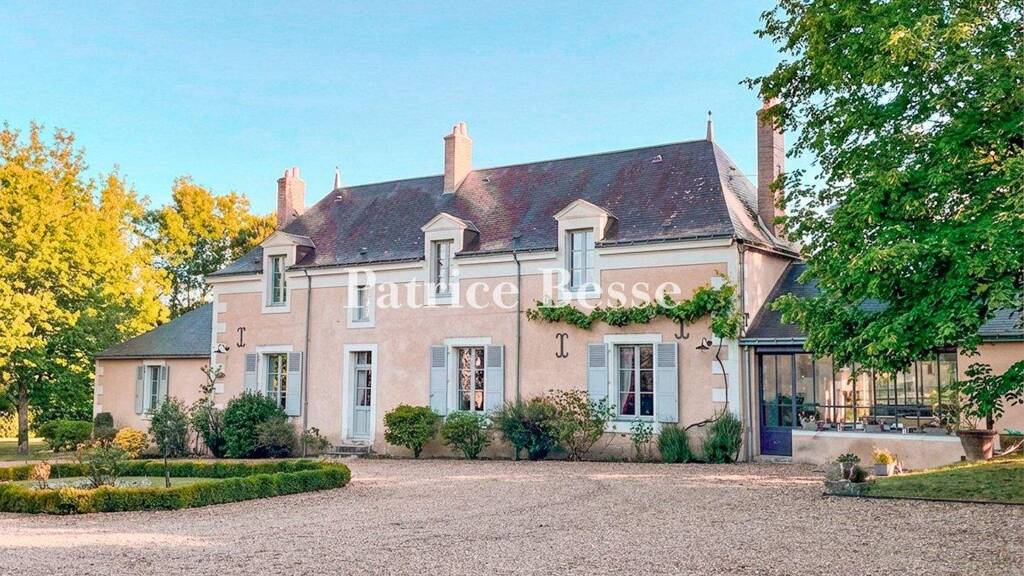
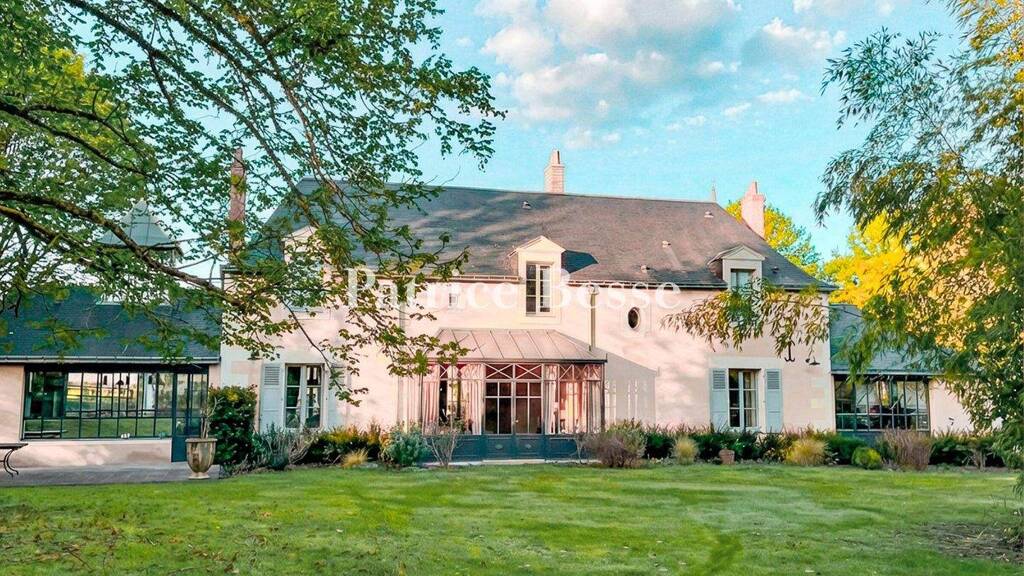
A former wine-growing estate, which was completely restored 15 years ago, the property gets its name from local lore, while, once past the gate, the dwelling stands out thanks to its symmetrical appearance and high-quality materials. Rectangular in shape, with approximately 320 m² of floor area and flanked on either side by reconstructed partially glazed pavilions, the main structure features two stories and is topped with a thin slate roof, punctuated by pedimented dormers, whereas the main façade, facing west and cadenced by windows and doors surrounded by ashlar stone, as well as simple cornices, is a testament to the understated classicism of the 18th century as well as the more lavish adjustments made in the 19th and 20th centuries.
As for the property's former service quarters, they are organised around a main courtyard, while, in the back, the dwelling conceals a garden enclosed by tall verdant hedges and sheltered from view. Featuring a series of patios overlooking the landscape, the latter of which is made up of a large pasture and a wooded hillside, behind the woods, a plateau includes two more pastures and a private landing strip for microlight aircraft, whereas paddocks, as well as an outbuilding for horses, are located behind the former service quarters.
The Manor House
The ground floor
In addition to a staircase, as well as an inconspicuous lavatory, the entrance hall also provides access, on one side, to the living areas and, on the other, to a private suite with a bedroom, study, wardrobe and bathroom with a steam room. Looking out towards nature, the latter provides access to a private patio with an outdoor Jacuzzi, while original terracotta floor tiles, in a palette of warm hues, can be found throughout this level, except for the kitchen - boasting a number of high-quality amenities and organised around a central island - which features polished Belgian blue stone tiles, as well as the private suite with solid oak parquet floors.
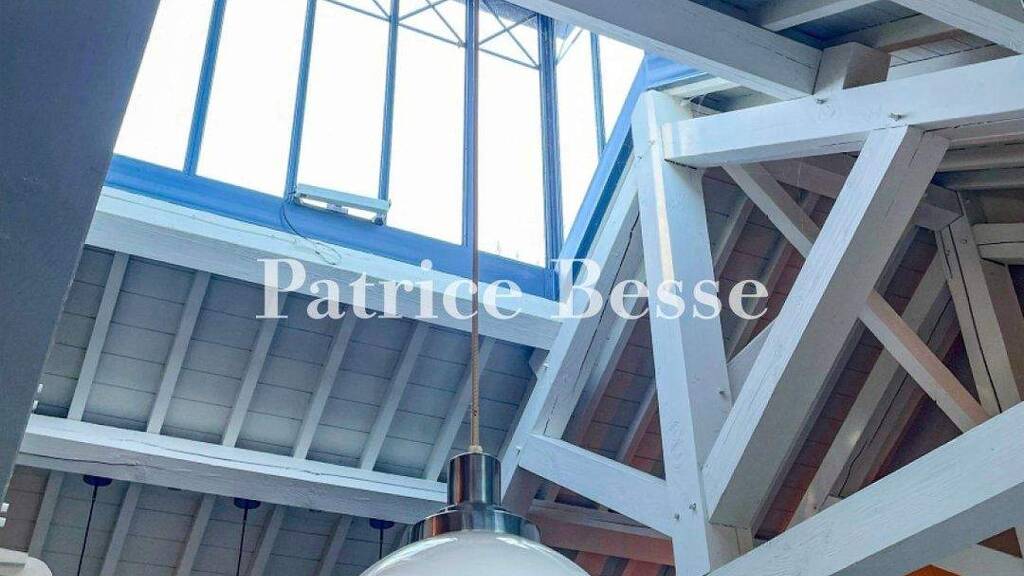
With visible ceiling beams and ashlar stone fireplaces, the dwelling's interior is bathed in light thanks to wide windows, especially in the extensions on either side, with their vast wood and metal-framed openings, whereas, to the east, a series of patios create inviting places to sit and enjoy the sunshine.
The first floor
A staircase with burnished wood steps provides access ...