A 19th-century chateau and its outbuildings, on 10-hectare grounds in the natural and historical region of Haut-Anjou - ref 127438
A 19th-century chateau and its outbuildings, on 10-hectare grounds in the natural and historical region of Haut-Anjou.
Surrounded by woods and at the intersection of the former Anjou region, Brittany and the Loire-Atlantique department, the property is located not far from the historical centre of Pouancé, with all local shops and services. In addition, the property, equidistant from the cities of Angers, Rennes and Nantes, is 20 minutes away from Chateaubriant and its train station, which provide rail service to Nantes and Rennes in 1.5 hours, while, by car, the Angers-Rennes dual carriageway is 10 kilometres away.
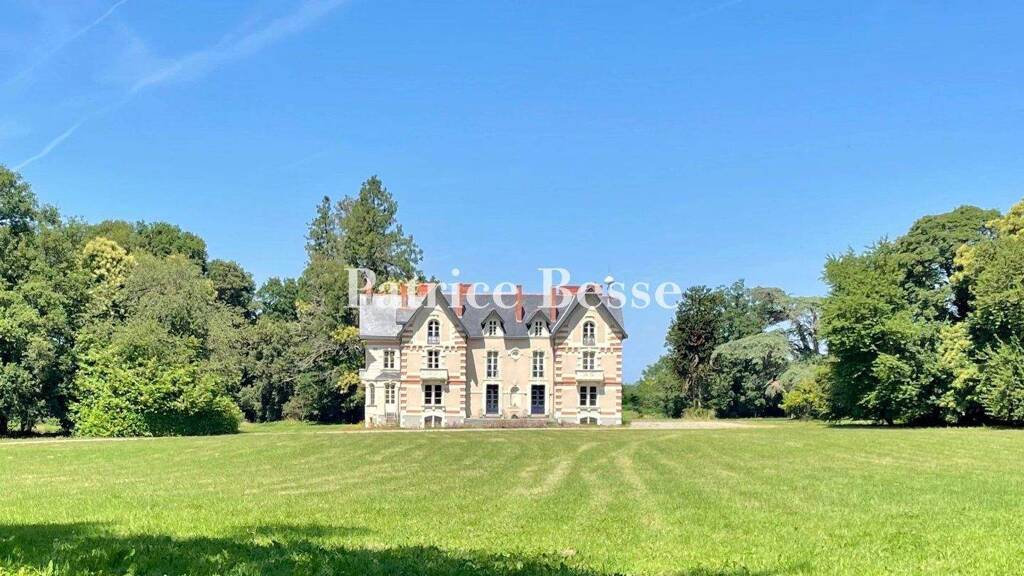
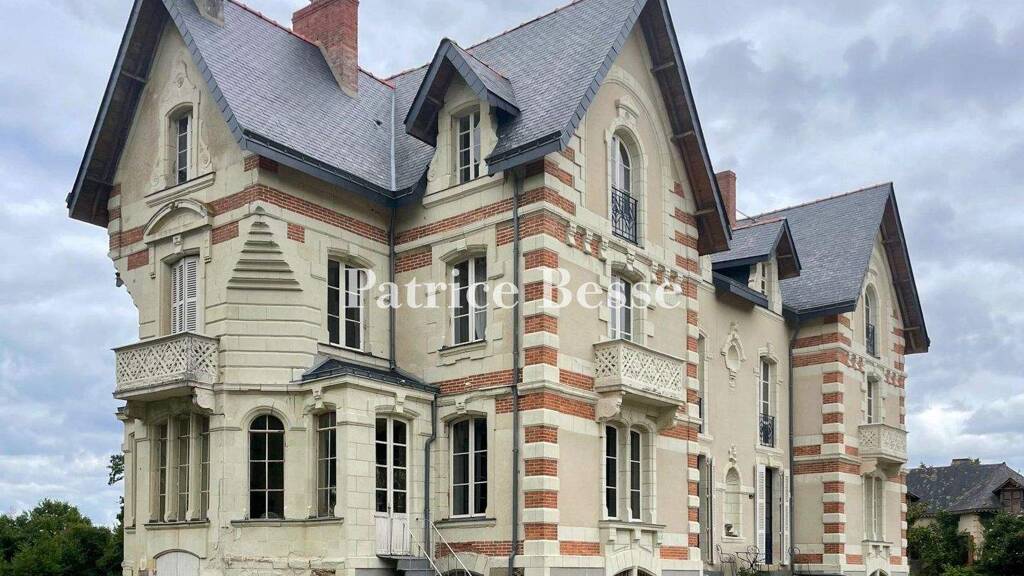
Standing in the middle of the property and surrounded by expansive meadows, the main dwelling is extended to the east by several outbuildings, a vegetable garden and aviaries, which are all easily accessible thanks to a second entrance located on this side of the property. With its front door on its southern side, the dwelling, built with an eclectic architectural style typical of the middle of the 19th century, was constructed in 1853. Commissioned by the Wolfcatcher royal in a region abounding with game and ideal for hunting, it is flanked on either side by two tall gable ends linked by a central building, while its asymmetrical exteriors were built out of ashlar tuffeau stone, sculpted in some places and highlighted with red brick in others. As for its slate multi-pitched roof, it is punctuated by brick chimneys, tuffeau stone dormer windows and a small bell tower, while in the middle of the main façade, the front door is accessible via wide slate steps, typical of the region.
The Chateau
The ground floor
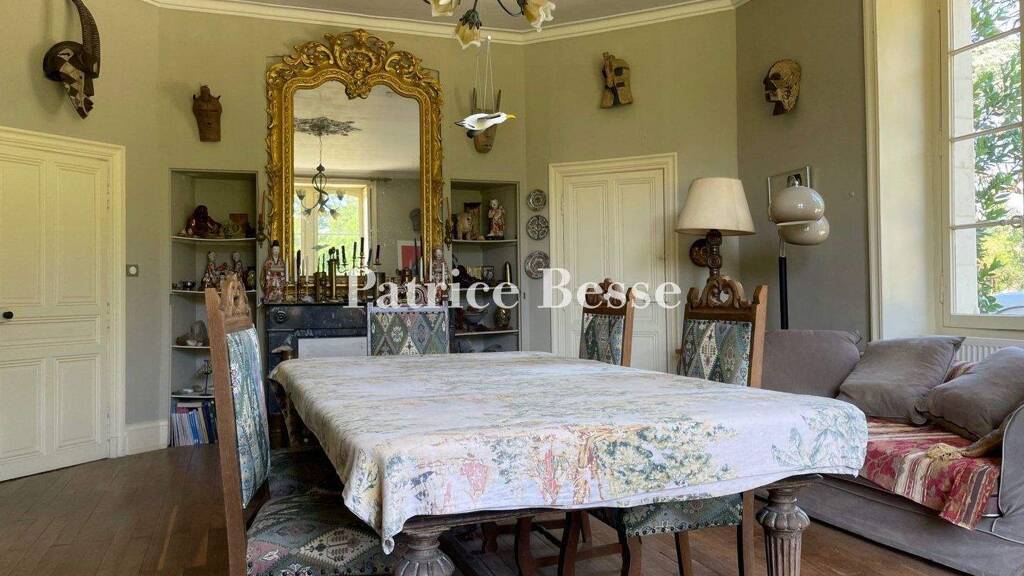
The front door opens on to a vast entrance hall, at the back of which is the dwelling's central wooden staircase. On either side are two sitting rooms, one of which is extended by a winter garden with exotic plants, followed by two dining rooms. Each of these rooms comes with its own marble fireplace in red, white or black, while a kitchen on each end of the chateau, as well as a second wooden staircase, makes it possible to split the building into two separate dwellings. With straight-plank hardwood floors throughout, with the exception of one of the kitchens with original cement tiles and the entrance hall, with colourful floor tiles, each room has preserved its original wood panelling and wooden doors.
The first floor
The main staircase opens on to a landing, extended by a long hallway, which traverses the dwelling from one end to the other and provides access to six large bedrooms - some of which contain wardrobes - with straight-plank hardwood floors, marble fireplaces, bathrooms or shower rooms and lavatories.
The second floor
This level, with terracotta tile floors, is accessible via the second staircase and contains a long hallway, which provides access to four large bedrooms, a study, an artist's studio, two attics and two shower rooms with lavatories.
The basement
Accessible via the two staircases in the dwelling as well as directly from the grounds, this floor extends underneath the entire dwelling and is divided up into different rooms, such as a woodshed, wine cellar, furnace room, storage areas, etc. The OutbuildingLocated approximately 30 metres from the dwelling, the former outbuilding, with flagstone floors throughout and in need of a renovation in terms of its roof, window frames and interior layout, includes three horseboxes, four rooms and several bedrooms under the eaves.The Guest CottageBehind the former stables and dating from the 17th century, this vestige of the property's original manor house was restored in the early 2000s and includes a living room, kitchen, two bedrooms, a bathroom ...