A 16th and 19th century château and 27 hectares of woods, ponds and river, 2 hours from Paris, between Lyon and Geneva, in the Auvergne-Rhône-Alpes re
A 16th and 19th century château and 27 hectares of woods, ponds and river, 2 hours from Paris, between Lyon and Geneva, in the Auvergne-Rhône-Alpes region.
In the heart of the Auvergne-Rhône-Alpes region, between the plains and the foothills of the Revermont natural region, in a peaceful village surrounded by fields and forests, next to a dynamic urban centre. The area has a rich rural and religious heritage, and has a varied landscape combining valleys, woods, waterways and uninterrupted views of the mountains. The surrounding area offers a wide range of outdoor activities: walking, cycling or horse-riding, water sports on the nearby lakes, as well as remarkable cultural and historical sites. Life here is tranquil yet active, with by a vibrant community life, local events throughout the year, and infrastructure that makes everyday life easier: shops, schools, health facilities and public services, are all within easy reach. Access is easy thanks to the immediate proximity of the A40 motorway, via which Lyon is 1 hour away. The train station, which is around ten minutes away, has TGV connections taking you to Paris in 1 hour 50 minutes. Lyon-Saint-Exupéry and Geneva international airports can be reached in 45 minutes and 1.5 hours respectively.
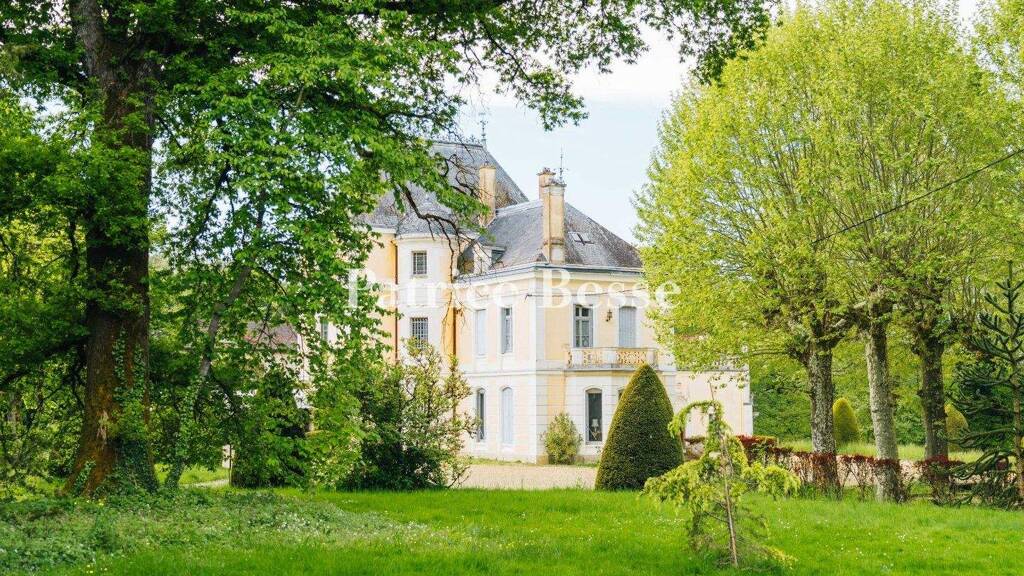
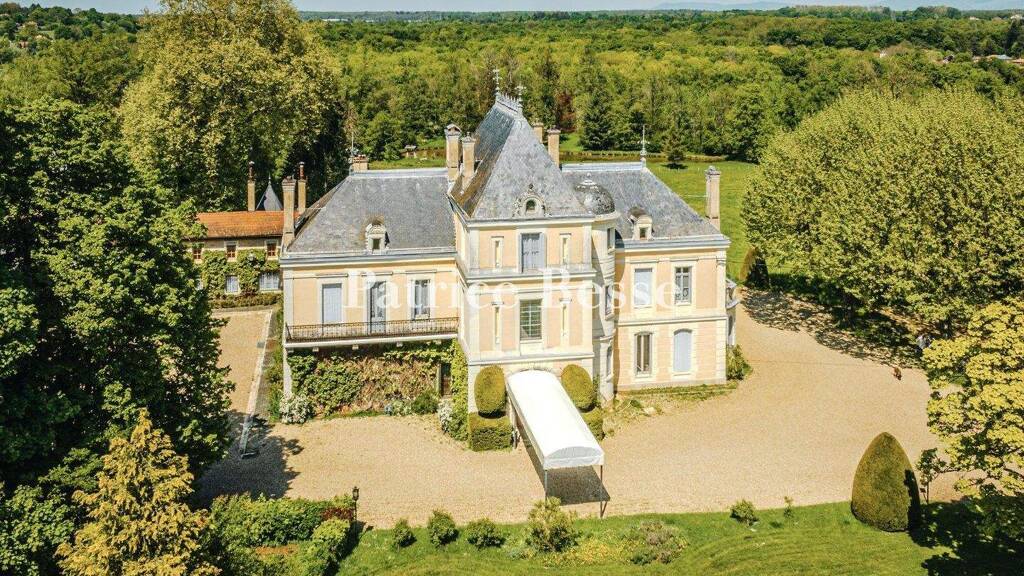
After passing through the entrance gates with their limestone pillars at the end of a country road, a majestic driveway leads up to the main residence. The French-style formal gardens, with their structured flowerbeds, contrast harmoniously with the more natural areas of the estate, looked after by the caretaker. A path lined with ancient trees stretches up towards the château, whose imposing outline is revealed as you turn the bend. Circular towers, topped with conical roofs with traditional-style tiles, frame a parapet walk. The complex is arranged around a courtyard bordered by hedges and a stone perimeter wall. The main building, which is L-shaped and three storeys high, is topped with a French-style dark slate roof dotted with ornate dormer windows. The light-coloured stone façade has tall mullioned windows. A central staircase, flanked by balusters, leads to a huge door, in fitting with the grand building. In the immediate vicinity there are a courtyard and outbuildings, with stone walls and brown tiled roofs, once used as outbuildings and farm buildings as well as monastic cells. The enclosed parkland, covering some 27 hectares, stretches out behind the château, with various formal gardens. Its many springs, stream and pond make it a very special place. A two-storey caretaker's cottage with wood and gas heating, two stables, a workshop, a joiner's workshop, two closed barns and one open, a garage for three cars and a boules area complete the estate.
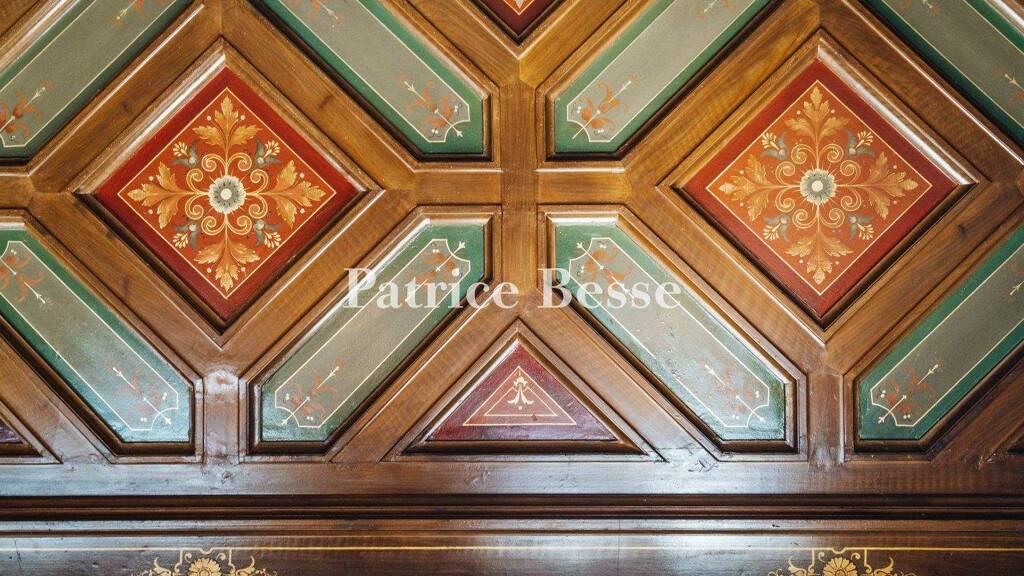
The château Its harmonious outline stands out against a backd-rop of ancient greenery. The weathered ashlar façades feature regular windows with original frames. The slate roof, adorned with finials and finely worked dormers, completes the clean architectural composition. The ornamentation is discreet but refined. The decorative elements, pediments, sculpted capitals and wrought ironwork display case the work of exceptional craftsmen. This singular property offers a unique mix of two eras. On the one hand, a classically styled château bearing witness to the aristocratic art of living in the 18th century, with its delicate woodwork and refined gilding. On the other, the older outbuildings, where the local stone reveals its raw, authentic beauty. This architectural dialogue, far from being dissonant, creates a harmony where magnificence rubs shoulders with rustic authenticity, in a balance between different expressions of French heritage. Each room still has period features such as wood panelling, fireplaces, old parquet floors and stone or solid wood staircases. The dwelling combines the elegance of ...