A manor house from the late 18th century with a courtyard, garden and swimming pool, between Montpellier, Nîmes and the wild Camargue countryside - re
A manor house from the late 18th century with a courtyard, garden and swimming pool, between Montpellier, Nîmes and the wild Camargue countryside.
On the outskirts of the Camargue, this property features a prime address in Aigues-Vives - Aqua Viva in Latin - a name that recalls the prolific natural springs that enabled humans to settle here during the Gallo-Roman period, whose ancient presence is confirmed by the proximity of the Via Domitia, which once connected Italy to Spain.
As for the village, famous for being the birthplace of several major political figures from the Third Republic, including a president, it boasts a green market, shops, schools, medical services and a rich community life centred around bullfighting and winemaking traditions.
In addition, Aigues-Vives is twenty kilometres from Nîmes' high-speed rail station and thirty kilometres from the one in Montpellier, whereas the centre of Nîmes can be reached in 10 minutes from the TER train station in Vergèze, three kilometres away. Lastly, the airports in Nîmes, Montpellier and Marseille, with flights to both domestic and international destinations, are easily accessible, while the A9 motorway, four kilometres away, makes it possible to reach Spain in two hours, ideal for a weekend getaway.
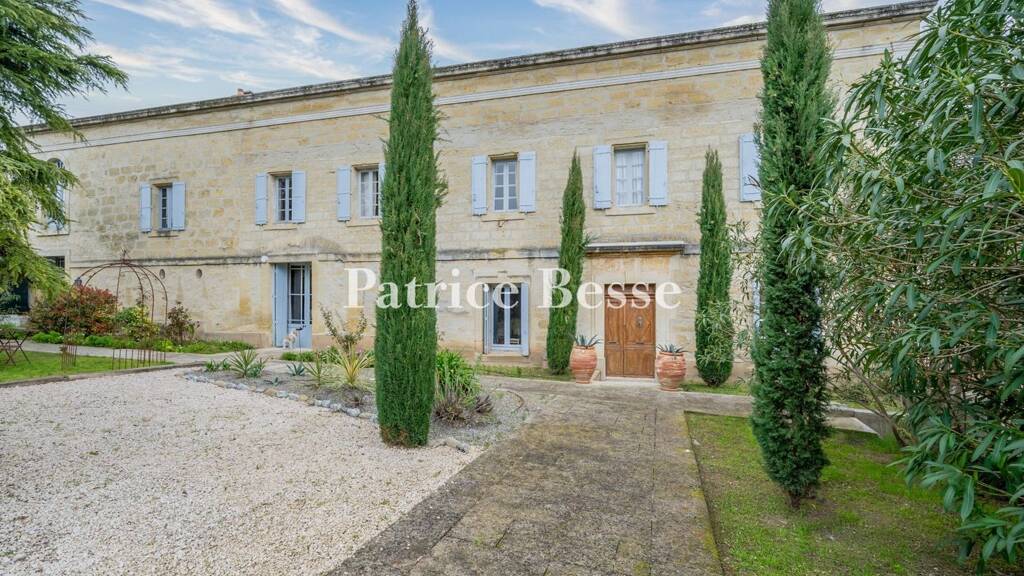
The manor house, which was once part of a winegrowing estate, is nestled within a peaceful village in the Gard department with approximately 3,000 people, while, accessible from the village square via an impressive 19th-century wrought-iron gate, which opens on to a stone path lined with cypress trees that leads to the dwelling, it also features another entrance, via a more modern gate, on the northern side of the square, providing direct vehicular access to the garden on the left side of dwelling.
Built along a northwest/southeast axis, the L-shaped edifice was designed with a rectangular main building facing east, whereas the architectural complex extends over nearly 500 m² and boasts a minimalist façade with uniformly coursed ashlar stone masonry. As for the blond ochre-colour limestone, it was probably extracted from the nearby Pondres quarry, while the two-storey dwelling is cadenced by 11 rectangular windows/doors, including three evenly spaced glass double doors.
With a projecting cornice highlighting the top of its long-wall façade and creating a clear separation with the dazzling blue sky, the edifice is topped with a barrel tile gable roof, whereas, on its courtyard side, each window and door, flanked by "grey-blue" shutters, very characteristic of the region, opens on to an enclosed courtyard planted with a variety of Mediterranean shrubs, such as lavender, rosemary and agave, under the watchful branches of a centenary Lebanese cedar.
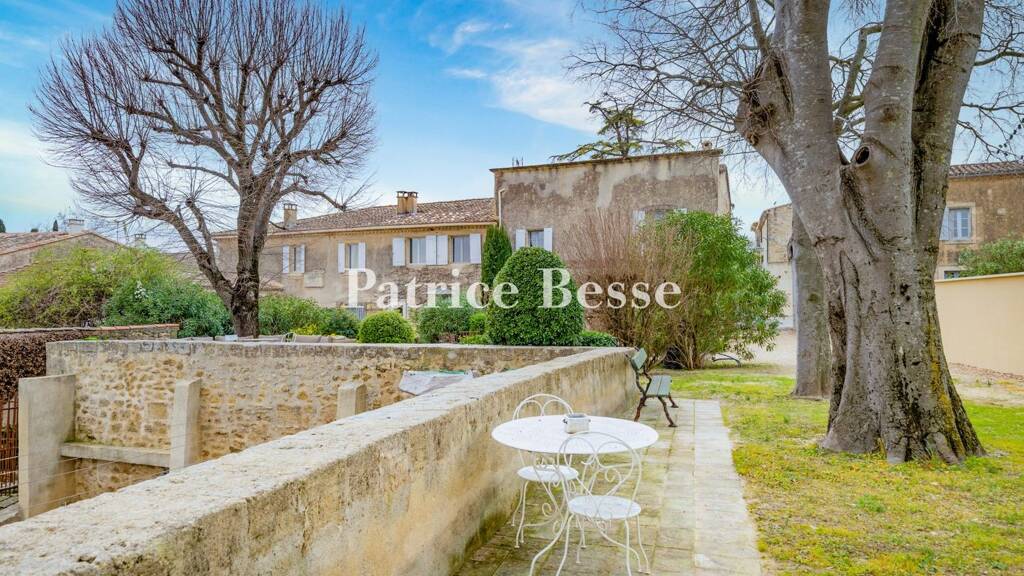
Lastly, its eastern-facing exterior, coated in sand-colour lime plaster, which matches perfectly with the local stone, and topped with a double genoise cornice, providing an elegant touch, faces an initial stone patio, followed by the garden, which combines both stone and vegetation as well as offers unobstructed views of the surrounding hillsides.
The Main DwellingLocated to the south, the dwelling's oak front door, which still features its original metal hinges and whose warm tones elegantly contrast with the dwelling's stone façade, opens on to a foyer with a terrazzo marble floor that traverses the dwelling all the way to the garden on the other side. As the house's backbone, this initial room provides access to a small sitting room and a dining room, which illustrates the sumptuous Second Empire period, whereas the dining room's sculpted white marble fireplace, woodwork decorated with trumeau panels depicting pastoral scenes, and wide limestone floor tiles also illustrate the opulence of this house's past.
The ground floor
Between the courtyard and garden, this floor includes, not far from ...