A spacious Chalosse-style farmhouse, listed as a historic monument, 20 minutes from Mont-de-Marsan, in the Landes - ref 727262
A spacious Chalosse-style farmhouse, listed as a historic monument, 20 minutes from Mont-de-Marsan, in the Landes.
This property which is full of character is just a stone's throw from a village centre, 15 minutes from the A63 motorway which runs from the Basque coast to an iconic village in the Chalosse region, in Nouvelle-Aquitaine, in the Landes department. Built in local 17th-century tradition, it embodies the spirit of the old Capcazalière residences, of which it is a particularly fine example. Classed as one of the most authentic properties in the region, it evokes a rural heritage where the architecture, passed down through the centuries, retains all its clarity and balance.
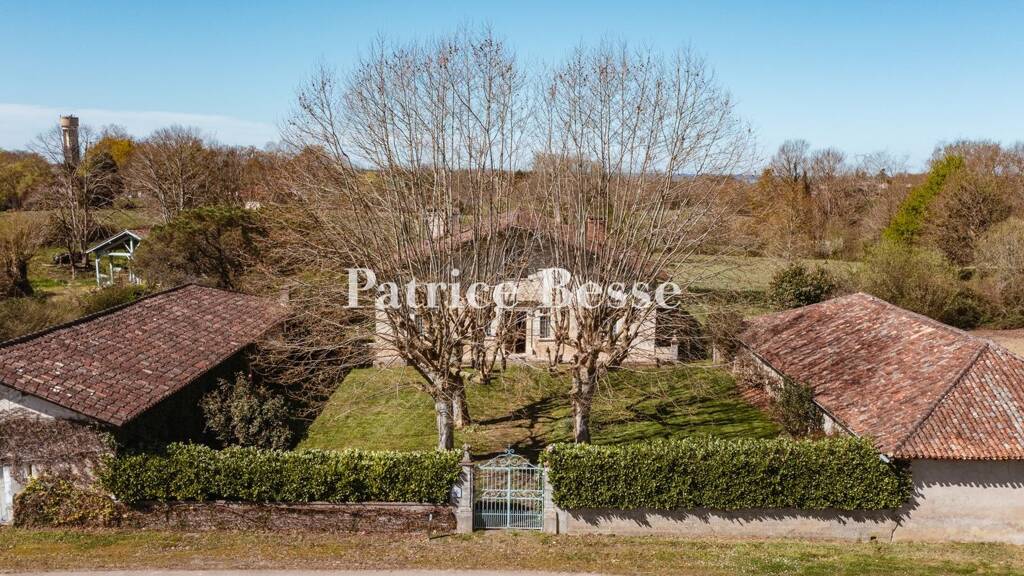
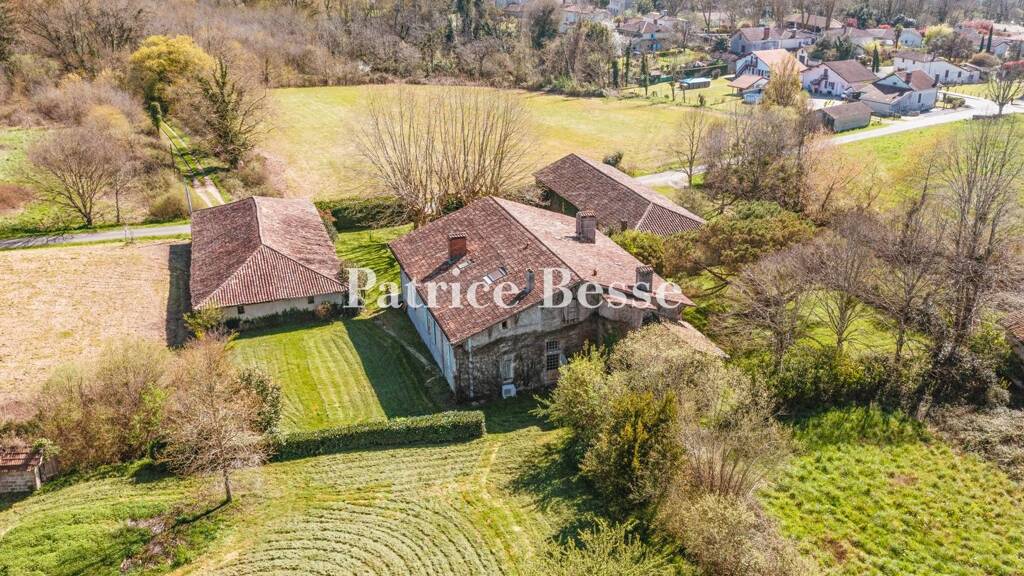
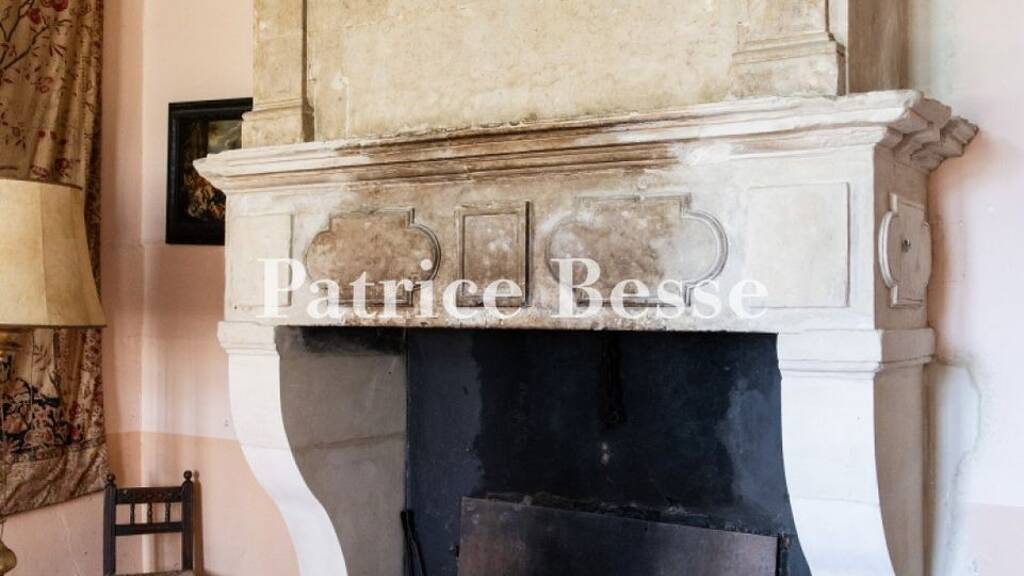
Built around 1600, the property has approximately 500 m² of living space spread over two floors, combining elegance and robustness, on a plot of around 5,000 m². The house is organised around three courtyards, which are alternately sunny or shaded. Its tall facade, characteristic of Chalosse residences, impresses with its geometric rigour, which is almost austere, yet softened by a moulded Renaissance door. Inside, a wooden staircase, four finely crafted stone fireplaces and the Louis XIV-style panelling in a dining room have been preserved, as have Gascon floors and numerous terracotta tiles. During the turmoil of the Revolution, the house provided a secret hiding place for refractory priests, the discreet entrance to which still remains today.
The house
The ground floor
Access is via a carved Renaissance-inspired front door, which opens onto an entrance hall paved with antique terracotta tiles. From this hallway, the first reception room corresponds to the current living room, formerly the dining room as seen by the preserved wood panelling, including a large dresser which is still in use. There is a stone fireplace with a wooden mantelpiece here. The high ceilings, entirely wooded, define the space, whilst tall windows framed by panelled mullions have retained their original sliding-bar opening mechanism. A door discreetly integrated into the panelling leads to a ground-floor bedroom. This room features a ceiling with exposed beams and a carved stone fireplace. A second door leads to a corridor leading to several utility rooms: the kitchen, bathroom and laundry room. Returning to the entrance hall, a dining room is situated opposite this first suite of rooms. Featuring three windows and centred around a monumental fireplace, it connects both to a small kitchen and to a long, open-plan room opening onto the south-facing garden, the centre of which is occupied by an impressive pine tree. Depending on the proposed plans, this space could become a key feature of the house. Two wooden doors set into its walls provide access to two small, separate rooms, suitable for a variety of uses.
The upstairs
From an impressive wooden staircase, a vast space with exposed beams and cob walls leads to three doors. Behind the first, with small window panes, lies an east-facing bedroom with views of the surrounding countryside, again featuring numerous preserved period features. Further on, several attic spaces - a workshop, a TV room and a loft - are in need of renovation. The gardensThe outdoor areas are organised into three distinct gardens situated to the north, east and south. The first garden lies behind a wrought-iron entrance gate, which leads directly to the house and is flanked on either side by two long outbuildings. Set back from the main building, a square-shaped meadow bears the traces of a protohistoric ditch, evidence of a 1000-year-old occupation of the site. Some of the finds are now on display in the house. Several boundary pillars are topped with stone polyhedrons, a distinctive mark of the special rights once awarded to the owners ...