A 13th-century chateau and cultural landmark with conference rooms and rental accommodations, one hour from Paris, in the Oise department - ref 972862
A 13th-century chateau and cultural landmark with conference rooms and rental accommodations, one hour from Paris, in the Oise department.
Sixty kilometres to the north of Paris, nestled within the Oise River valley, the Creil basin, a region that has been marked by a long industrial history, has preserved a vibrant economic fabric, while the chateau, perched on a wooded promontory overlooking the town, is sheltered from the urban tumult, and enjoys enchanting views of the plain and the Oise River's meanders.
A former fortress, it recalls this site's defensive role, chosen for its strategic position between the valley and the Beauvaisis plateaus, whereas immense forests as well as the nearby cities of Chantilly and Senlis endow the region with a completely different facet, namely one that encourages residents and visitors alike to unplug from the demands of daily life and discover its breath-taking natural and architectural heritage.
In addition, the chateau enjoys optimal accessibility: the Creil train station, a few minutes away, provides access to the Paris-Gare-du-Nord train station in less than 30 minutes and, by vehicle, Paris and the Roissy-Charles-de-Gaulle airport can be reached in one hour and 40 minutes, respectively.
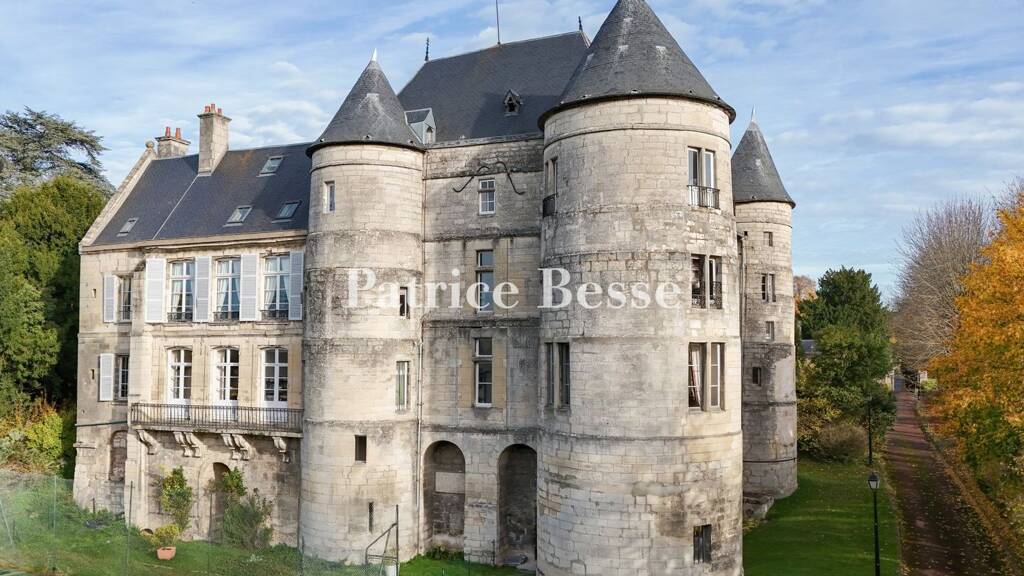
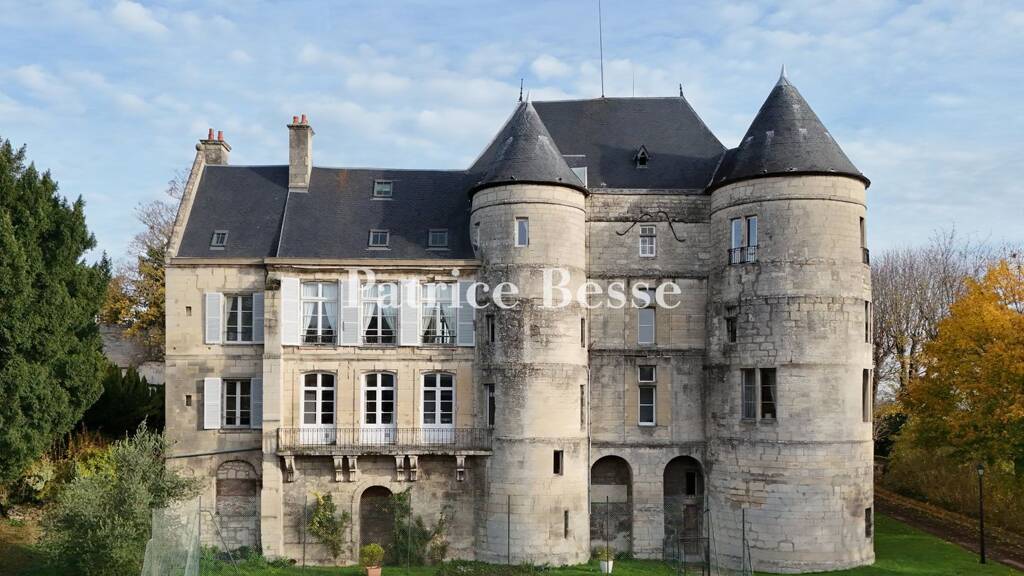
The chateau, built in the 13th century by the Count of Clermont, stands out thanks to its location overlooking the Oise River valley. Built out of Saint-Maximin ashlar stone, extracted from local quarries, it was originally a medieval fortress, and has preserved its right-angle layout and three irregular-shaped round towers, which bear witness to its initial defensive role, while over the centuries, the chateau has undergone a number of adjustments, specifically under the aegis of the de Madaillan de Lesparre family, who carried out significant renovations between the 15th and 17th centuries.
In addition, King Henri IV, a friend of Jean de Madaillan, stayed here on several occasions, as did Cardinal Odet de Coligny, whereas years later, as the dwelling of the Baron de Condé in the second half of the 19th century, the chateau was once again transformed, while still preserving much of its original character.
As for the edifice, it features approximately 1,000 m² of inhabitable floor area spread out over five floors: a basement, a ground floor, two upper levels and an attic. With three drawing rooms on the ground floor, including one that is located in the former armoury, the upper floors are, today, divided into four separate flats, as well as workspaces, which combine residential life with the chateau's professional activities.
Featuring an imperial double stone staircase, which provides access to an upper patio safeguarded with stone balustrades, as well as regularly placed windows, a steep slate roof and an austere appearance, the chateau is a testament to its many transformations, which succeeded in combining medieval asceticism with a classical composition, whereas the grounds, with approximately two hectares, share a portion of its land with a commonhold property, dotted with several villas, which blend in seamlessly with the rest of the estate.
The ChateauThe chateau, impressive and stunning, features both medieval and classical exteriors, which, together, create a visually pleasing composition overlooking its wooded grounds.
The ground floor
An initial entrance, accessible from the patio, opens on to an entrance hall that provides access to the ground floor's main rooms. On the right, a 17th-century solid wood staircase, with deep steps and a bannister safeguarded by carved thick spindles, ascends to the upper floors, while the stairwell, illuminated by tall windows, is highlighted by pointed stone walls and a painted frieze under its cornice.
In addition, a side corridor leads from the entrance hall to a professional kitchen and two offices, whereas, ...