15 minutes from Avignon, a stately home with a proud 600-year history, converted into a boutique-hotel, with a garden, swimming pools and a fitness ce
15 minutes from Avignon, a stately home with a proud 600-year history, converted into a boutique-hotel, with a garden, swimming pools and a fitness centre.
The municipality in the Gard area where the property can be found, on the frontier between the PACA and Occitanie regions plus the Bouches-du-Rhône and Gard areas, is the only one on the left bank of the River Rhône. It is part of both the Pays Garrigues et Costières de Nîmes sector and the catchment area of Avignon. History has linked the village to the turbulent flow of the River Rhône since the very early Antiquity and determined its main source of activity: basketwork.
The Rhône aval site has been preserved from the region's large flows of tourists and has been certified as a Natura 2000 zone for its habitats, wildlife and plant-life.
The property is 20 minutes from Avignon's high-speed TGV train station, without having to cross the papal city, 40 minutes from the one in Nîmes, 30 minutes from Arles and 90 minutes from the international airports of Marseille-Provence and Montpellier-Méditerranée as well as the high-speed TGV railway station in Montpellier.
This stately home, which was built in several stages, has been tucked away for 600 years in a Provence village, through which flow two waterways, and is framed to the east, west and south by three very quiet small streets. The previously omnipresent basketwork activity, helped by the presence of neighbouring waterways, is today still represented by a prestigious and internationally renowned workshop, located not far from the property, which, over time, has experienced a stately, agricultural and now commercial destiny. It was owned by the same family from the 14th to 20th century. The approximately 1,150-m² building complex is very harmonious and is made up of a large residence and a neighbouring, smaller one, formerly used for the domestic staff's quarters and as stables. In the late 20th century, the house was virtually in ruins when a financier fell in love with it, before selling it to the current owners, who completed the restoration of the entire property.
It is possible to distinguish three different eras through the architecture of the larger residence.
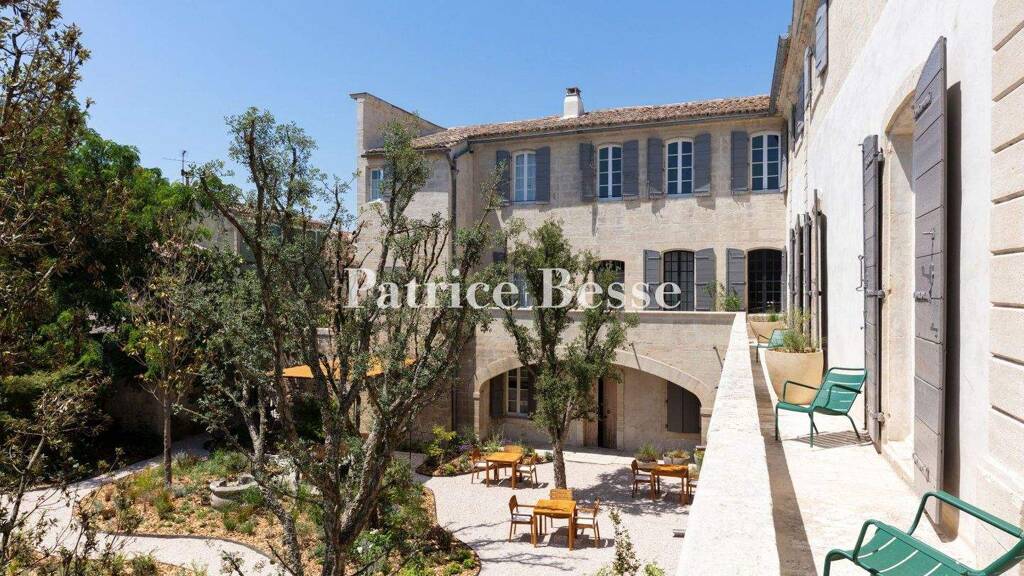
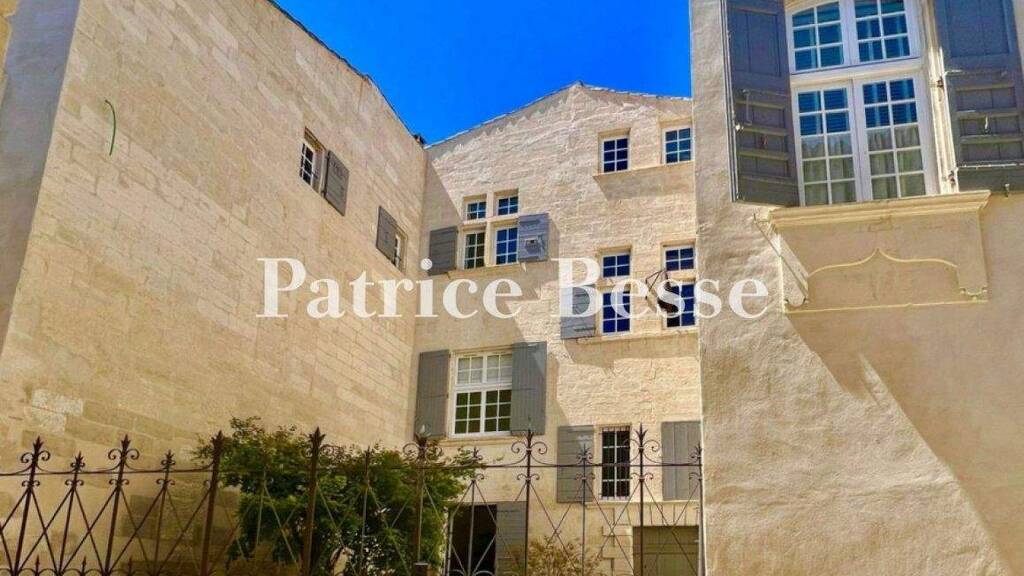
The first, contemporary with the establishment of the papacy in Avignon in the 14th century, displays many characteristics of the era, such as mullion windows and medieval mouldings. This part makes up the current entrance to the hotel. Another era can be made out in the neo-classical pyramid topped terminal of the southern façade dating from a wide-ranging restoration in the 17th century. Two storeys were added, above the vaulted medieval rooms on the ground floor with their vast, arched French windows. On the first floor, a balcony-terrace runs along the façades. The penultimate restoration was carried out in the 18th century with the addition of a wing, giving the building its current U-shape, and a large carriage gate.
The south-facing smaller residence is linked to the larger one by a discrete gate opening to the west, below the tree canopy, through a garden wall.
Lastly, the stables, which are located on the other side of the narrow street, have been fully renovated in the 21st century as a fitness centre.
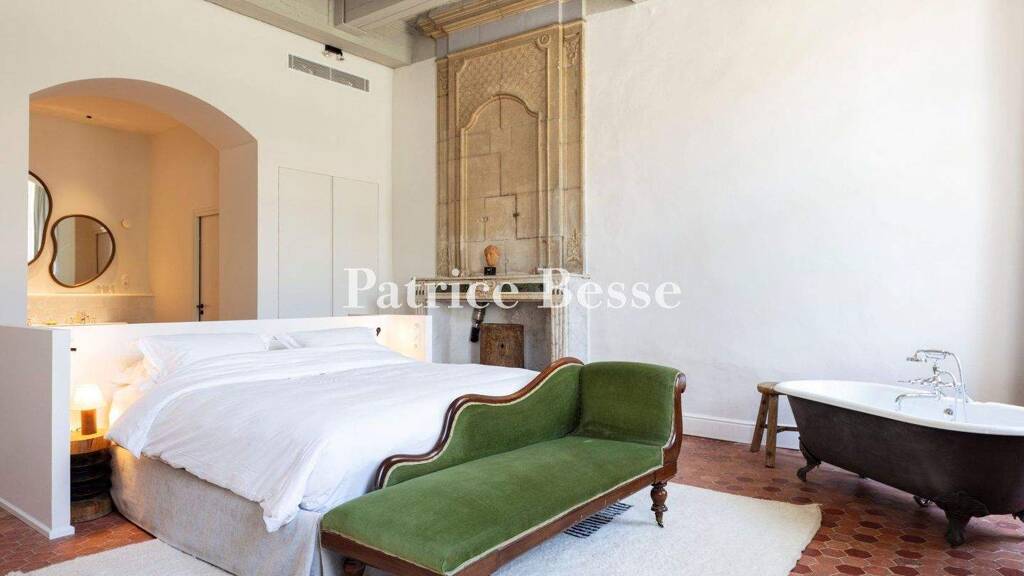
The larger residenceThe vast rooms on the ground-floor with their monumental volumes still bear witness to the ostentatious way in which people lived in such noble residences. The later part - the two upper floors, atop of the original medieval structure - was entirely renovated in 2022 with the aim of preserving the soul and authenticity of the façades. Depending on the rooms, the dressed stone blocks - and in places rough-hewn blocks of stone - have either been left exposed to exalt their mineral beauty or limewashed with the utmost care and know-how of the local craftspeople or preserved with their original moulding ...