A 17th-century monastery and its tree-filled, wall-enclosed grounds, less than one hour from Paris, within the town of Senlis in the Oise department -
A 17th-century monastery and its tree-filled, wall-enclosed grounds, less than one hour from Paris, within the town of Senlis in the Oise department.
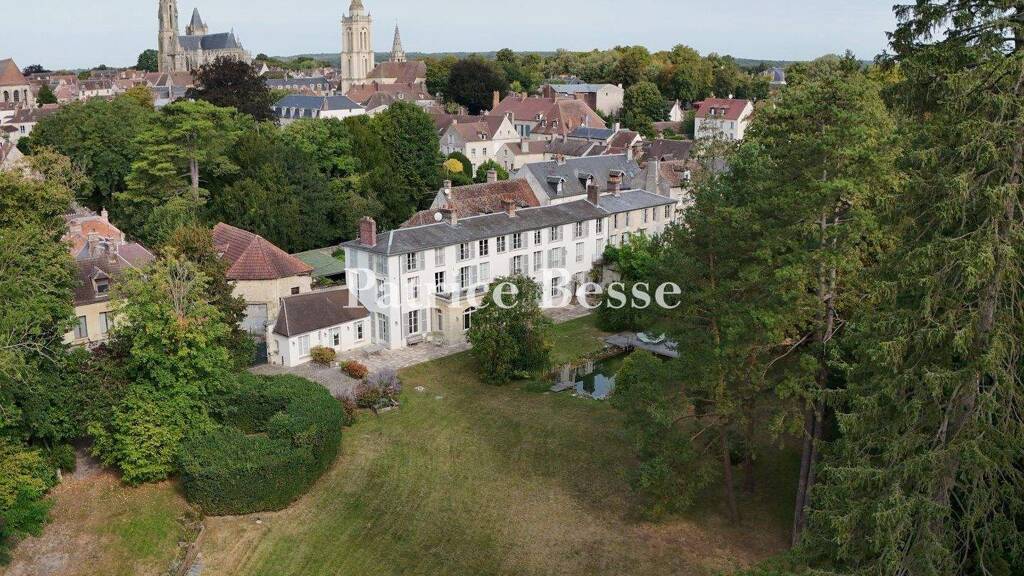
Approximately forty kilometres to the north of Paris, Senlis is undoubtedly one of the most enchanting historical towns in the Oise department. As the former royal residence during the High Middle Ages, the town has preserved a remarkable heritage: Gallo-Roman ramparts, medieval lanes, a Gothic cathedral, private mansions from the 17th and 18th centuries, etc. Thanks to the variety of its heritage, supplemented by its museums and an active community life, Senlis boasts a strong cultural identity and a dynamic economy with its local shops, weekly green market, academic establishments and medical facilities.
In addition, its access is facilitated by the A1 motorway, which makes it possible to reach Paris in less than one hour and the Roissy-Charles-de-Gaulle airport in twenty minutes, while the train stations in Chantilly, Orry-la-Ville or Creil provide daily connections to the capital and other major cities in the region.
Located within the Oise-Pays de France Regional Natural Park, Senlis is also surrounded by immense woodland ideal for outdoor activities, such as the forests of Halatte, Ermenonville or that of Chantilly. As for the nearby cities of Chantilly and Compiègne, both linked to France's royal and imperial history, they represent major cultural hubs, while Chantilly is also known for its international racecourse, its Living Museum of the Horse and golf courses, which only add to the region's undeniable prestige.
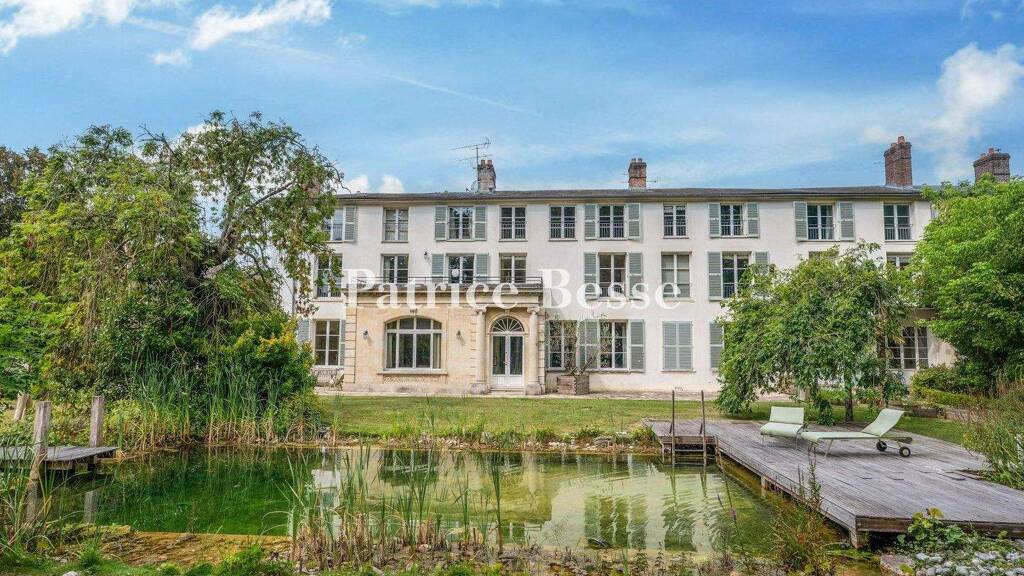
On a small medieval lane, not far from the town's centre, the property, peacefully sheltered behind its tall walls, is nestled within its one-hectare grounds that run parallel to Senlis's ancient ramparts. Built in the 17th century by the Capuchins and sold as a "National Good" during the Revolution, in the 19th century the edifice was transformed into a private dwelling. From this earlier period, the building has preserved the austerity of its original architecture, which is characterised by an immense three-storey rectangular building with plaster-coated exteriors, small-paned windows safeguarded by louvred shutters as well as a slightly sloping roof cadenced by chimneys.
As for the garden side, its 19th-century adjustments provide the dwelling with a more residential feel: larger windows and a stone patio highlight the dwelling's central axis, while the main entrance is highlighted by a forepart decorated with fluted columns supporting an entablature and a balustrade. In addition, the vaulted cellars, still intact, recall the monastery's utilitarian and community function, whereas the wall-enclosed grounds are crisscrossed by pathways and feature a natural swimming pool bordered by wooden pontoons.
The DwellingWith three storeys in total, the dwelling's ground floor, primarily looking out towards the exterior patio and grounds, is dedicated to the living areas, placed side by side: a dining room, sitting rooms, a study and a roomy kitchen. As for the first floor it contains three bedrooms, including one with an adjacent bathroom, while the two others share another bathroom and a wardrobe. Lastly, the second floor, under its visible ceiling beams, includes five bedrooms, two bathrooms and an immense central space, which could be easily converted into another use. In total, the house includes eight bedrooms in all spread out over its two upper floors.
The ground floor
On one end of the building, an immense fitted kitchen with a pink sandstone tile floor is located in the former service wing and features glass double doors that give on to the garden. In addition, it also communicates with a large furnace room, while, nearby, a sunny hallway with black and white cabochon floor tiles communicates with several different ...