A chateau from the 18th and 20th centuries with outbuildings, horse-riding facilities and 25 hectares of woods and meadows, north-west of the city of
A chateau from the 18th and 20th centuries with outbuildings, horse-riding facilities and 25 hectares of woods and meadows, north-west of the city of Tours.
In the north of France's Indre-et-Loire department, in the beautiful Gâtine tourangelle province, there are vast woods punctuated with fields and meadows in an area that is perfect for pleasant strolls and hikes. Here you can quickly reach the majestic chateaux that have given the region its renown. And you can enjoy many leisure activities too. Indeed, a golf course lies only around 15 minutes away. The estate is less than two kilometres from the centre of a town with shops and amenities, including a school and a doctor. The city of Tours is around 20 minutes away. And from several nearby high-speed train stations, you can get to Paris in 55 minutes and Paris Charles de Gaulle airport in 2 hours and 30 minutes.
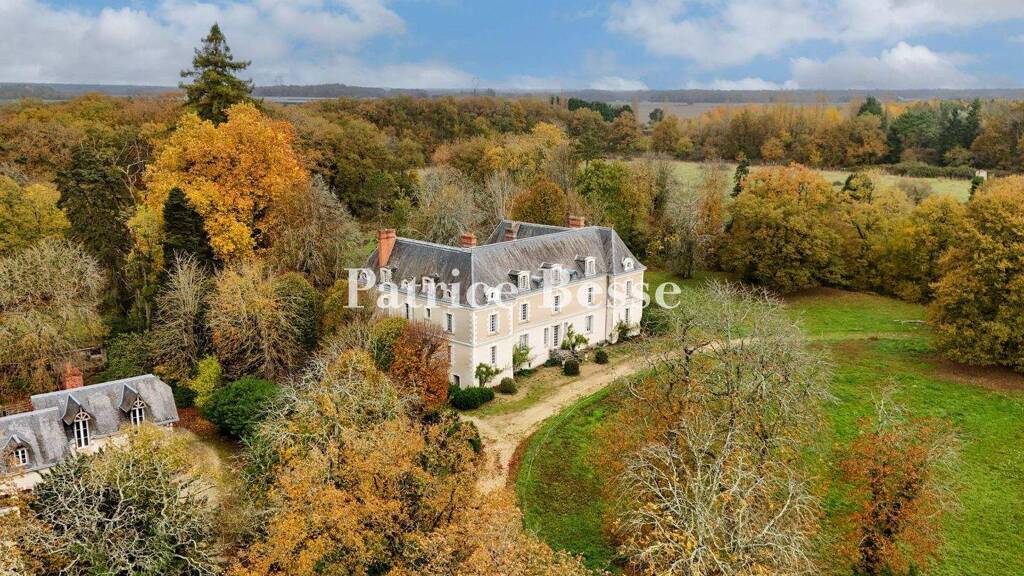
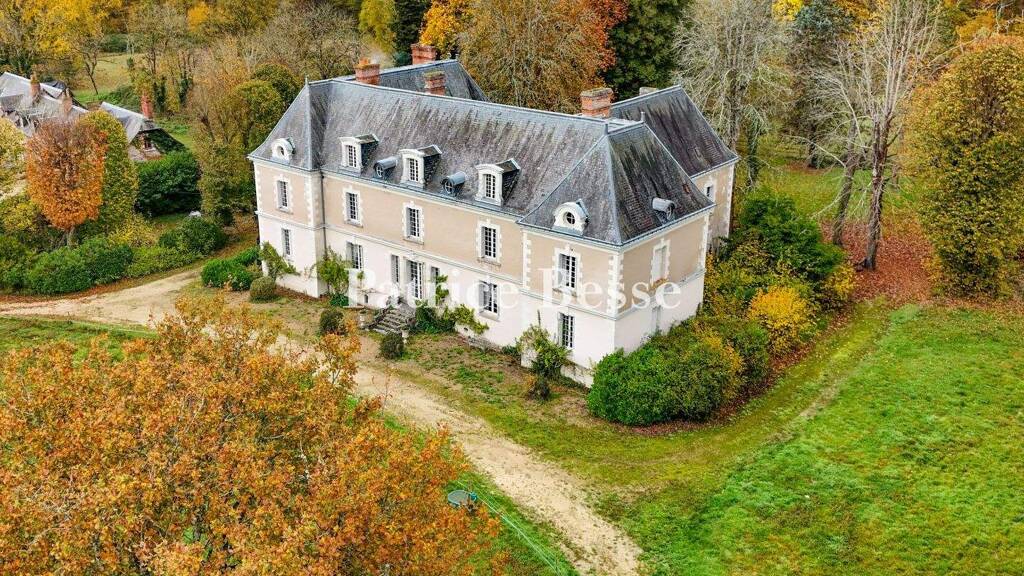
On a plot of unbroken land that covers over 25 hectares, the estate is made up of meadows and woods with bridlepaths and clearings. From a road, a long driveway lined with tall trees leads to the chateau and its outbuildings. The chateau was built in the 18th century, then redesigned in the early 20th century by the local architect Marcel Meffre. The edifice faces east and west. It has a garden-level floor, a first floor and a second floor in the roof space. On the garden-level floor, several reception lounges frame a vast entrance hallway that is extended with an elegant glazed gallery at the back. The north wing houses a self-contained studio apartment. On the first floor, a long corridor connects to eight bedrooms with shower rooms. The roof space needs to be renovated. The outbuildings, some of which are devoted to horse-riding, include a saddle room and a stable. Seven looseboxes are currently used. Two more could easily be created. A building that could be turned into a garage stands opposite a long dwelling to be restored. Behind the outbuildings, a drive leads to a former dovecote and a horse-riding arena. The grounds are dotted with remarkable trees and groves.
The chateauThe estate's history goes back to the 15th century. Today's edifice, which was built in the 18th century and redesigned in the 20th century, has a central section with two wings. The western elevation is rendered. Its quoins and its window and door surrounds are made of exposed tuffeau stone. The elevation is punctuated with large windows and a stringcourse cornice between the garden-level floor and the first floor. The doorway lintel bears a finely sculpted family crest. The slate roofs have dormers with slightly arched pediments and scrolled ailerons, as well as bull's-eye dormers. On the west side, there is a gallery with three large basket-handle-arched openings with broad glazing and French windows. This gallery links the central section to the two wings. The wings look outside through windows set in tuffeau stone surrounds.
The garden-level floor
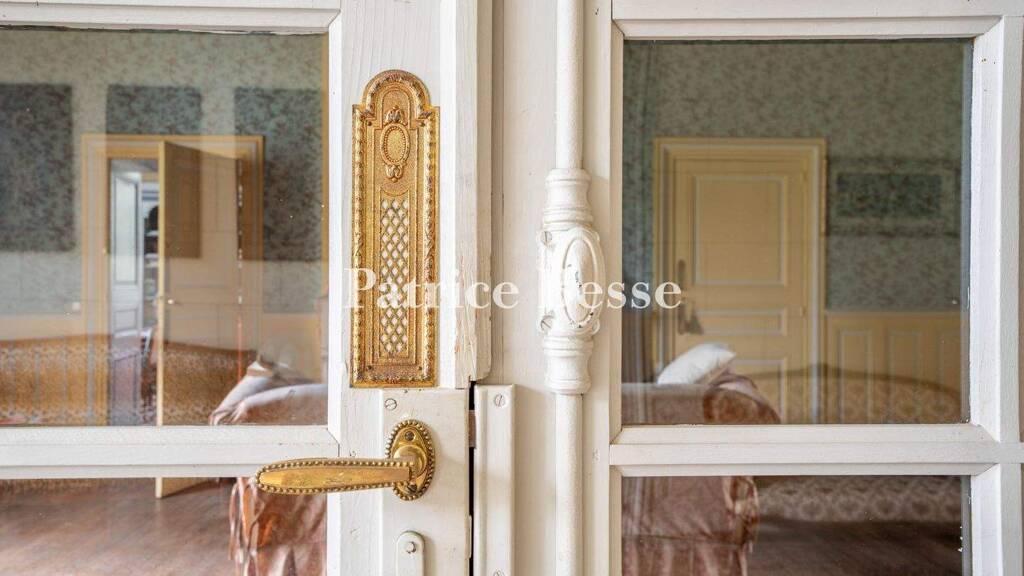
A few stone steps lead up to the main entrance door. This door leads into a spacious hallway with a terrazzo floor that features a floral motif in the middle. Straight ahead, there is a large gallery with a floor of tiles laid in a checked pattern. This gallery looks out at the grounds. On either side of the hall, two lounges connect to each other. The reception rooms have wood strip flooring. The walls have dado panelling and stone fireplaces. The ceilings reveal their old timber beams. A first lounge, which needs to be restored, has kept its wood strip flooring, wooden panelling and fireplace. A second lounge, which is a dual-aspect space, has painted walls and a floor of tiles laid in a checked pattern. A side door leads to a hallway that takes you to a flight of backstairs, the kitchen and the gallery. The kitchen, which has a scullery, takes up half of the south wing. There, a corridor also ...