An 18th-century house with outbuildings, in a walled, tree-filled and more than 2,000-m² garden, near to the banks of the River Rance and Dinard - ref
An 18th-century house with outbuildings, in a walled, tree-filled and more than 2,000-m² garden, near to the banks of the River Rance and Dinard.
This property is located in north Britanny and the northwest of the Ille-et-Vilaine area, near to the Côte d'Émeraude coastline and the banks of the River Rance, in a cul-de-sac in the centre of a village with a population of 1,500. The address is situated less than 10 kilometres from a lively seaside resort with sandy beaches and less than 2 kilometres from the riverbanks. The region is ideal for outdoor pursuits, seaside leisure activities and also discovery of the area's wealth of historical and architectural heritage. All essential services and shops are less than 10 minutes away, while within 20 minutes' reach there is Saint Malo and its port, plus other infrastructures, such as its railway station, from which high-speed TGV trains put Paris within 2 hours 15 minutes' reach. Lastly, Rennes and its international airport are less than 1 hour away by road.
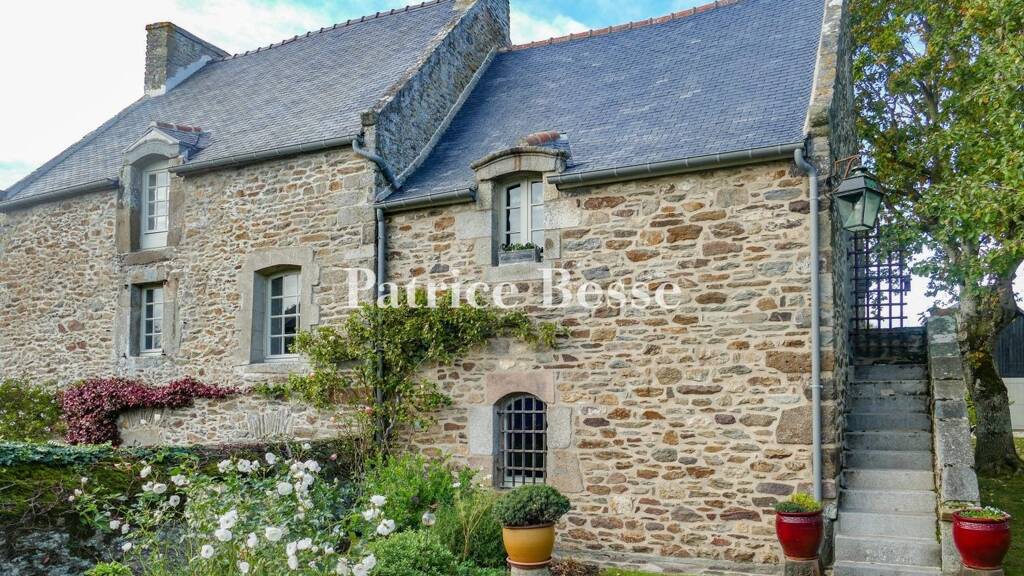
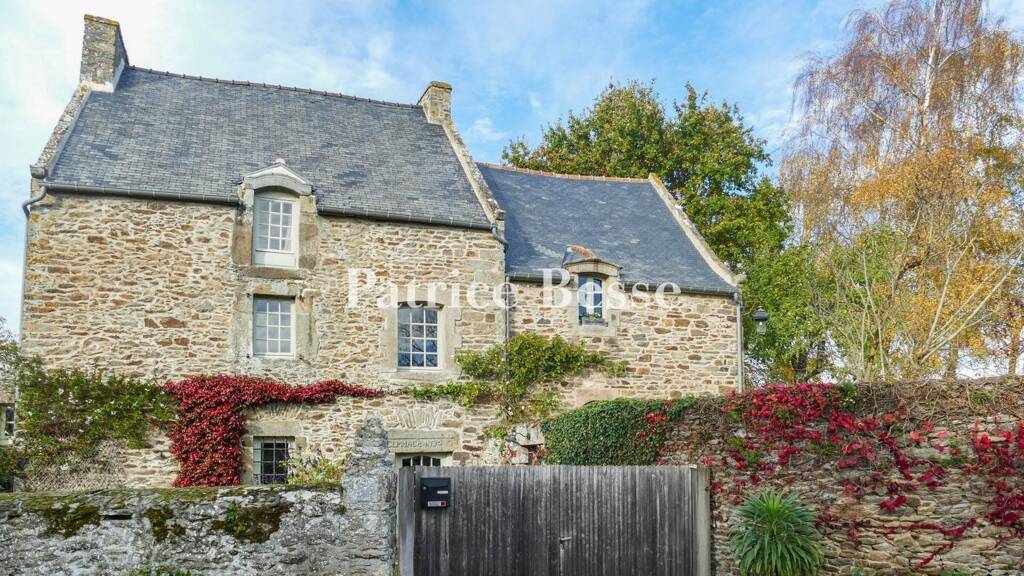
In the village, less than 500 metres from the church square, the property is enclosed by stone walls and an entrance pavilion. It includes the south-facing house, which can be seen from the street, and a vast outbuilding with a garage and an upper floor, at the rear of the plot, both of which are surrounded by a vast, tree-filled and landscaped garden. The western part of the three-storey main residence, with two offset rows of windows, dates from the early 18th century, as demonstrated by the inscription of 1730 on the lintel above the entrance door. The building is made of rough-hewn blocks of granulite, with ashlar window and door frames, and is topped by a gabled slate roof, itself punctuated on its attic level by an ashlar-framed wall dormer with a pediment. The attic level of the more recently built section shares the same characteristics and adds a further vertical row of openings as well as an external flight of stone steps on the eastern gable end.
The houseThe inner courtyard can be reached from the street to the south, via a gate, or from the garden through a passage in the wall.
The ground floor
The entrance door stands under a lintel on which the date 1730 has been engraved. The older part of the residence is made up of a vast lounge / dining room with a high ceiling. A significant part of the first floor above this room is open, leaving a mezzanine behind a wrought-iron guard-rail. There is a wealth of decorative features, including wooden wall panelling, beams in a wide range of colours and sizes, spiral staircases and a stone Welsh dresser. The floor is paved with limestone slabs and a monumental fireplace with stone jambs plus a lintel as well as a mantelpiece made of wood stands against one of the walls. Light streams into this vast room through many windows. It is followed by a functional and welcoming kitchen, to the north of the lounge, running along the length of the house and boasting views of the garden through large picture windows. Next to the kitchen, there is a laundry room, a lavatory and a cellar. The laundry room opens out into the garden to the north or the interior courtyard to the south.
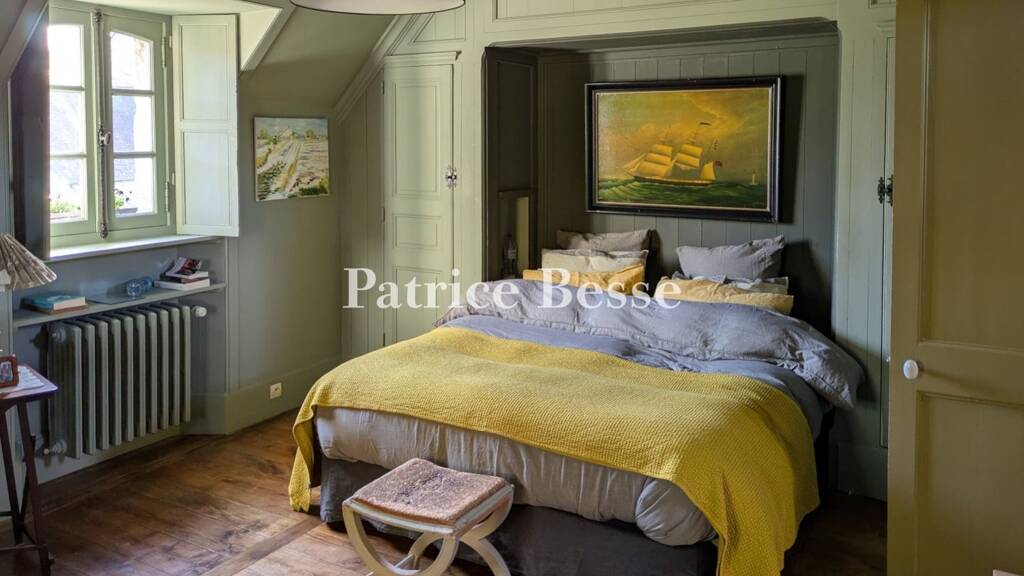
In the more recent part, which can be reached from the entrance via a flight of steps, there is a small, boudoir-like lounge with period wooden flooring. The walls are adorned with elegant, grey and white painted wood panelling, in which cupboards and storage space are concealed. The rest of the decoration includes interior shutters, cornices and ceiling roses in the same colours. A period stone fireplace with a small hearth stands against one of the walls. An office is set slightly back and can be reached through a double-leaf door. It has been decorated in similar shades and possesses two small windows that look out onto the garden. It is followed by a shower room as well ...