A long rural house from the 19th century with an outbuilding and two hectares of grounds, 15 minutes north of the city of Angers in France's Maine-et-
A long rural house from the 19th century with an outbuilding and two hectares of grounds, 15 minutes north of the city of Angers in France's Maine-et-Loire department.
The property lies in France's Maine-et-Loire department, in the Pays de la Loire region. It lies north-west of the city of Angers, near the town of Le Lion-d'Angers. This corner of France's Anjou province draws many tourists, especially around the River Mayenne. It also hosts international equestrian events. Angers city centre is only 22 kilometres away, as are the banks of the River Loire. From Angers train station, you can get to Paris in around 1 hour and 30 minutes by high-speed rail.
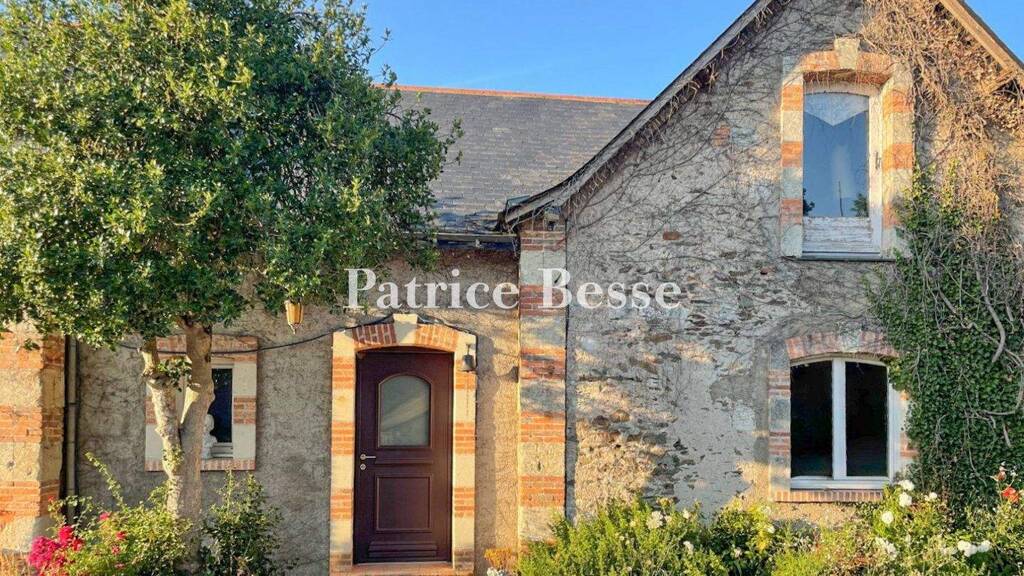
A gate leads from a country lane into the property's court. The long house stretches from north-west to south-east, in parallel with its outbuilding. The rectangular dwelling is made of rubble schist and sandstone, coated with lime rendering. The quoins, cornices and door and window surrounds are made of tuffeau stone and brick. The roofs are slated. The facade has two tall gable ends, which are typical of rural architecture of the second half of the 19th century in France's Anjou province. Near the house there is a swimming pool and a tennis court. The grounds extend to the east and south of the buildings.
The house
The ground floor
An entrance hall with a lavatory and staircase connects on both sides to a lounge with a fireplace and an open-plan kitchen. Beside the lounge there is a bedroom with a shower room. Beyond the kitchen there is a dining room, extended with a south-east-facing conservatory. All the floors are tiled.
The attic
From the entrance hall, a wooden staircase leads up to two bedrooms next to each other and a bathroom with a lavatory. From the kitchen, a second staircase takes you up to the other section in the roof space, where there is a shower room, a lavatory and a bedroom that leads out onto a vast terrace upon the conservatory.
The outbuildingThe outbuilding dates back to the 18th century. It is built of rubble schist and sandstone and is crowned with a hipped slate roof. The window and door surrounds are made of brick and the dormers are made of tuffeau stone. The building is divided into several sections. The first one houses a bedroom with a shower room and lavatory that have tiled floors. The second one houses a boiler room. And the third section is a former stable, converted into a storeroom. The other sections are former pig sheds that form small units. One of them is now a workshop. At the back, there is a 60m² garage that can house two vehicles.
The lean-toThe lean-to can be used to store the tools and machines that are needed to maintain the grounds. It has a sheet metal roof. It covers around 27m².
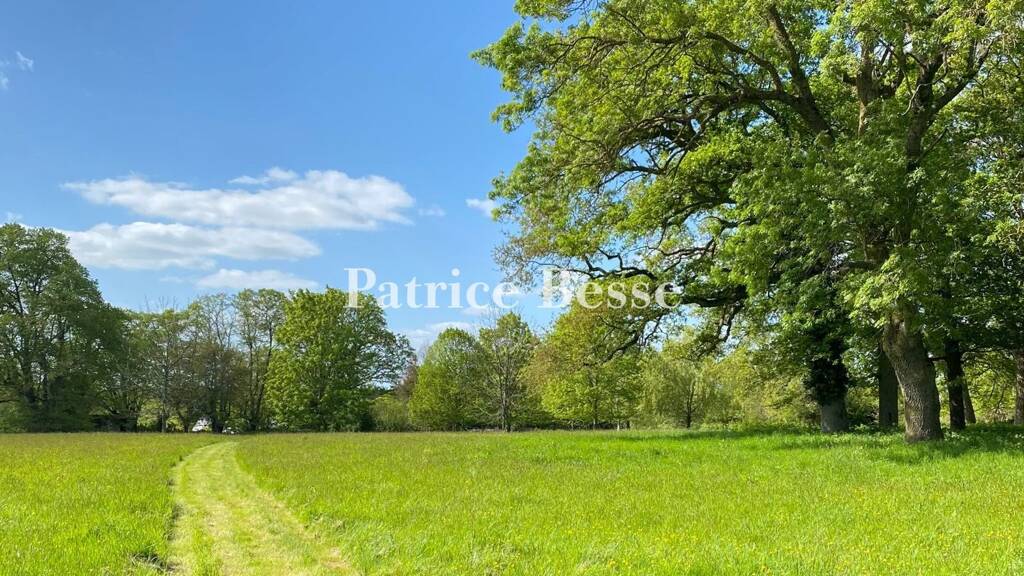
The groundsThe grounds include a garden beside the buildings. This garden has a pond. There is also a large field in which animals can live. The whole plot is dotted with many ornamental trees of different varieties, including pines, catalpas, liquidambar trees, oaks, horse chestnuts, linden trees, Lebanese cedars, olive trees, Judas trees and eucalyptuses, as well as fruit trees of different kinds, including fig trees, apricot trees, peach trees, medlars, almond trees, banana trees and vines. Lastly, there is a small garden building made of stone and crowned with a slate roof. It houses the swimming pool's technical installations. A second garden building lies in ruins.