A 17th-century manor, transformed in the 18th century, restored to the highest standards, in the Pyrénées-Atlantique area, in the inland Basque Countr
A 17th-century manor, transformed in the 18th century, restored to the highest standards, in the Pyrénées-Atlantique area, in the inland Basque Country.
This residence is ideally situated, less than one hour from the Basque Country's coast - 44 km from Bayonne and 46 km from Biarritz - as well as Pau, the capital of the former Béarn province, and its airport. The closest Pyrenean ski resorts are around one hundred kilometres away. Orègue, a village in Basse-Navarre, one of the three zones that make up the Basque Country, lies in the hills dotted with streams and paths, with the silhouette of the Pyrenees on the horizon. The municipality is only 15 minutes from Saint-Palais, which is a well-known stop on the Saint James' Way pilgrimage. It boasts, shops, health services and public as well as private schools.
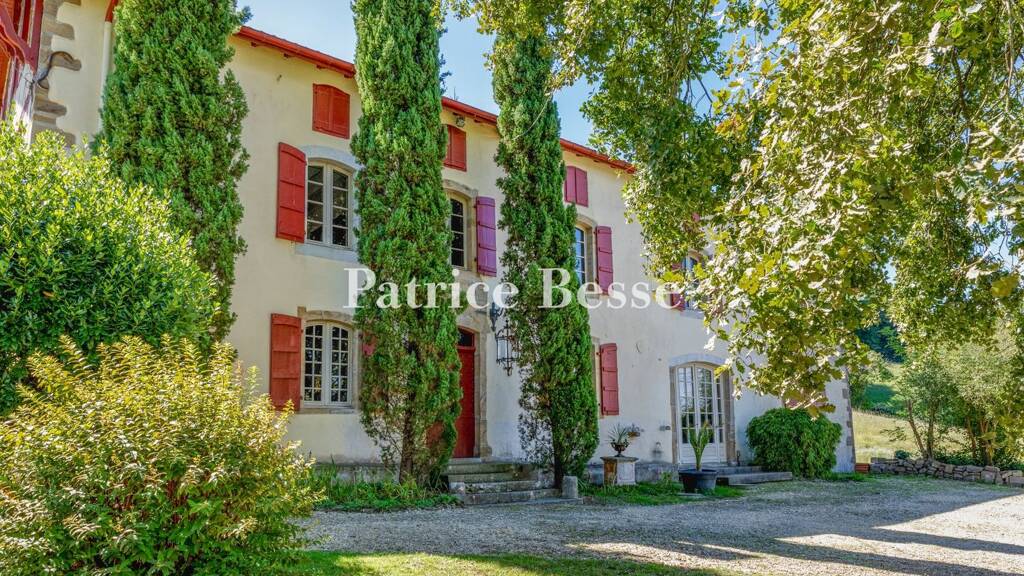
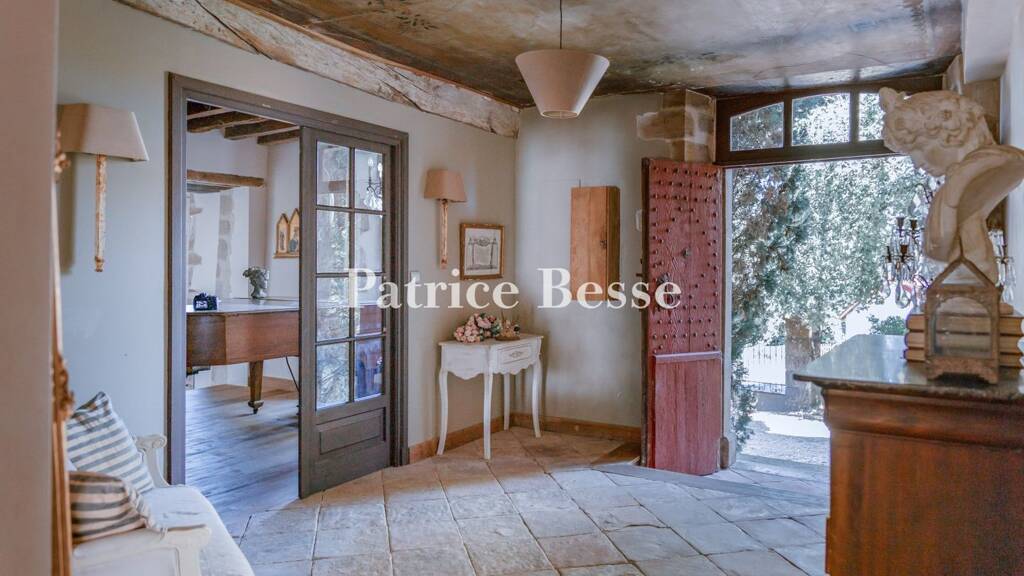
On the way into the village from Bidache, the house stands on its outskirts, against a gentle slope, facing the nearby fronton court. It still bears the traces of its first occupants. In the entrance hall, a fresco with the initials of Bertrand Sabarotz evokes the memory of an owner keen to leave his mark on the place. Above the entrance door, several words in French have been engraved including his and his wife's names translating into English as "made by Bertrand Sabarotz and Catherine Hitta". A wide metal gate opens onto the gravel courtyard in front of the building. The exposed stonework elevations of the edifice, built in the 17th century, are dotted with Basque red painted shutters. It was transformed during the following century and then restored in 2015 in keeping with its original identity.
Behind the old entrance door flanked by wrought iron lanterns, there is a series of rooms: an office, a dining room with a period fireplace hearth, as well as a lounge with a still working fireplace boasting a decorative mantelpiece. The two reception rooms opening out onto the garden and the swimming pool have retained their noble volumes and many period decorative elements, such as beams, fireplaces and solid oakwood flooring, all carefully renovated. A vast, fully fitted kitchen is set around a cooking range. A kitchen area and a scullery complete this main room of the house, which opens onto the property's front yard via French windows. A long garage, built along the western façade, pays witness to the edifice's successive transformations, while the rear of the house opens into a spacious hallway leading to a wooden staircase.
On the first floor, a mezzanine with windows overlooking the surrounding greenery, is used as a lounge for relaxing. It also leads to several bedrooms. The first of them is the master bedroom and is adjacent to a walk-in wardrobe and a renovated bathroom. The four others, one of which has a fireplace in the corner, share a vast bathroom which has also been restored. Many of the rooms still boast exposed stonework on the walls. The attic with its high ceiling is in good condition and possesses windows with shutters, making it possible to convert further living space.
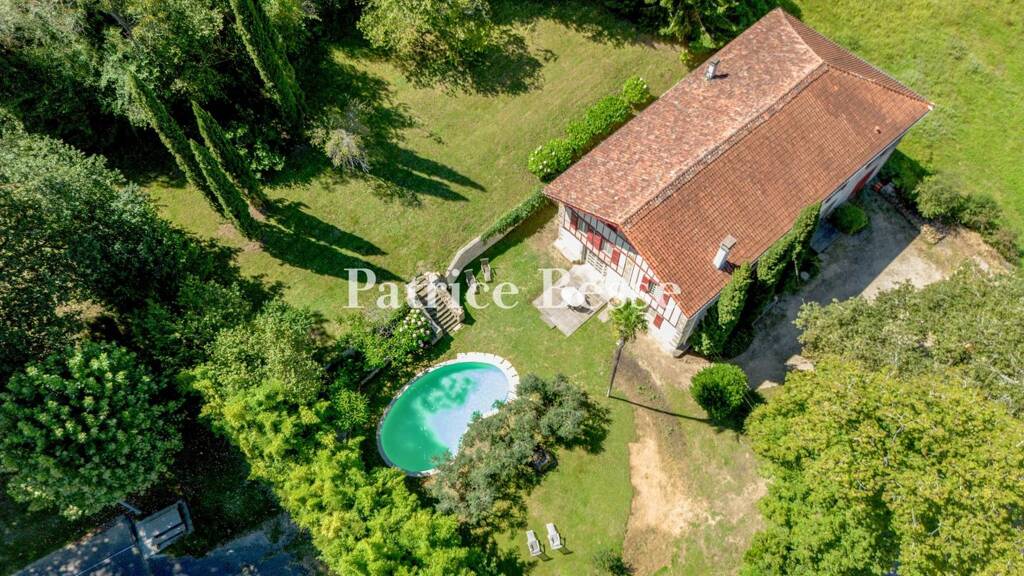
Outside, to the east, next to the house there is a stone patio, followed by the swimming pool, all of which is surrounded by the garden. A variety of trees and plants, such as oak, lime, olive, staghorn sumac, cypress, plum, apple, fig, hazelnut, magnolia and hydrangeas are dotted about its upper part.
The propertyFrom the courtyard, the entrance to the house is via a flight of several stone steps and a wooden door with a fanlight window. The typically Basque red double-leaf door is punctuated with ornamental, round-headed, steel nails and a finely crafted iron door handle. The presence of a plated steel figure of Christ pays witness to the occupation of the premises by Abbot Sabarotz, the last member of this family to reside here.
The ground floor
The entrance hall boasts a ceiling adorned with a ...