A 16th-century village house, listed as a historic monument, with outbuildings, a main courtyard and gardens situated 30 minutes from Saumur - ref 570
A 16th-century village house, listed as a historic monument, with outbuildings, a main courtyard and gardens situated 30 minutes from Saumur.
In the Pays de la Loire region and the department of Maine-et-Loire, the property is set in a village near the riverbank. The area is a UNESCO World Heritage Site. The property is less than 10 minutes from a small town with all essential shops and amenities. Saumur and its railway station, providing a link to Paris via Tours, are approximately 30 minutes away. The A85 and A87 motorways are easily accessible and provide connections to Angers and Cholet in under 45 minutes.
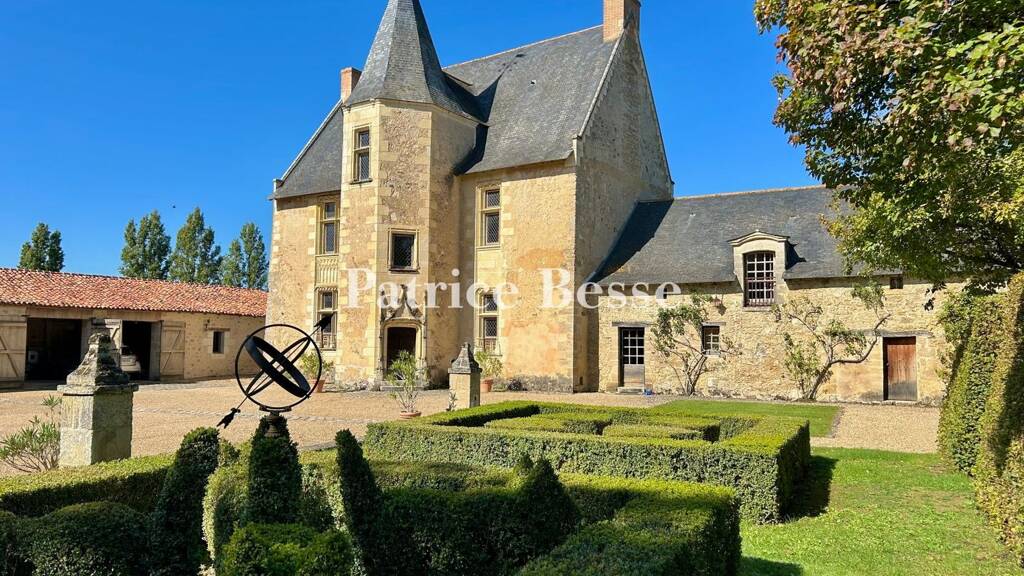
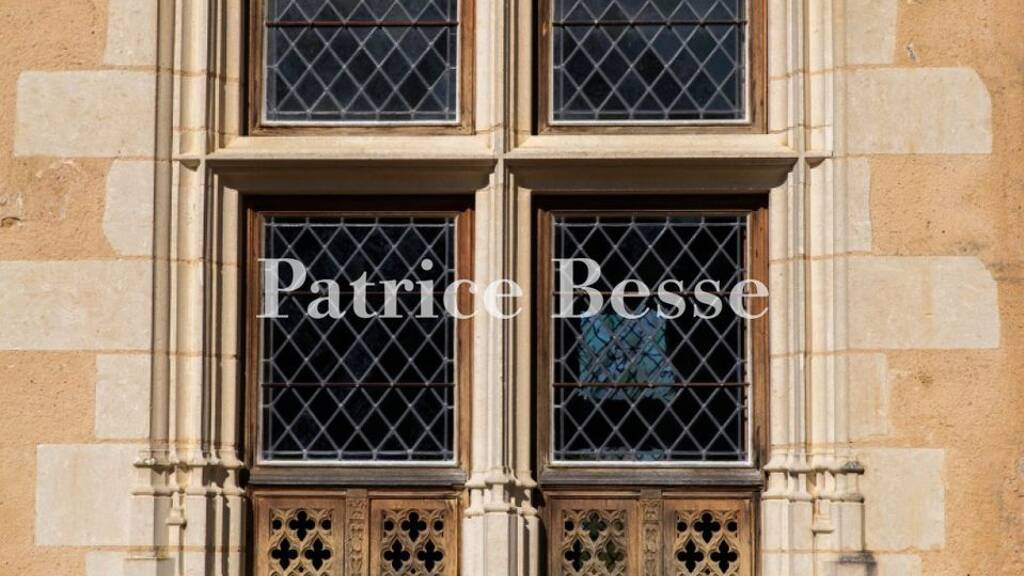
Flanked by two pillars made of local stone, an entrance gate opens onto a gravel courtyard. The imposing silhouette of the manor house rises opposite, with a wing of outbuildings on one side and, on the other, the beginning of a garden that runs around the building. The manor house dates back to the 16th century, but its origins are older. This is evidenced by the walls of its north and south gables, extended by later, smaller-scale buildings. Built of rubble stone and lime-plastered, the main house is three storeys high, one of which is an attic. The roof is clad in Angers slate. At the centre of the front facade, a pentagonal tower conceals the entrance and a staircase, flanked on either side by four windows, two of which are mullioned. The door and window frames are adorned with prismatic mouldings and flamboyant friezes. A square tower at right angles adds interest to the rear facade. Converted into a farmhouse for over two centuries, the property was saved from ruin by the current occupants. The restoration work undertaken was carried out in accordance with best practices. The facades, roofs and two 15th-century chimneys have been listed as Historic Monuments since 1987.
The manor house
The ground floor
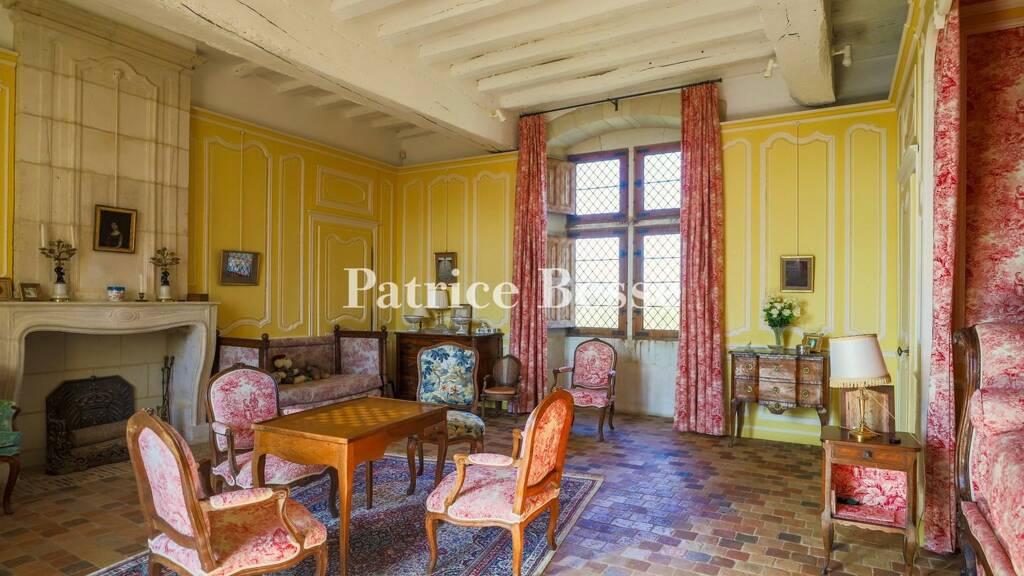
The tower door opens onto an entrance hall with two doors leading to a living room and a dining room, as well as a stone spiral staircase. The living room connects to the dining room, a study and a corridor leading to a bedroom with a shower room and toilet. The dining room leads to a kitchen, followed by a utility room and a passageway to a summer dining area situated under the canopy of a terrace at the rear of the manor house. A staircase leads to the first floor of the north wing. The kitchen is connected to a service entrance with a toilet, a utility room, a cloakroom, a laundry room and a boiler room. The service entrance and the laundry room open directly onto the courtyard. The floors of the living room, dining room and study are tiled in terracotta and the ceilings are French-style. Two tuffeau stone fireplaces are set against the walls of the living room and dining room. The one in the dining room, listed as a historic monument, dates back to the 15th century. The walls of the study are panelled with 18th-century woodwork, whilst those of the other rooms are simply whitewashed.
The first floor
A landing leads to two bedrooms, each with a shower room and toilet. In the first, which has an adjoining wardrobe, Louis XV-style panelling with an alcove adorns the walls. In the other, an original half-timbered wall has been preserved and restored. The floors are tiled in terracotta and the ceilings are French-style. Both rooms also feature a tuffeau stone fireplace, one of which, listed as a Historic Monument, dates back to the 15th century. It is adorned with a carved male head and a monkey. Finally, two further bedrooms with exposed beams, bathrooms and toilets are housed in the building extending from the north gable of the manor house, above the kitchen and its utility room.
The attic
A landing provides access to a wardrobe, two bedrooms (one of which has no external windows), a shower room with a toilet, and an attic of approximately 12 m².